The #1 Running Form Mistake That's Causing Your Knee Pain (and How to Fix It)
Most runner knee pain isn't from bad knees - it's from where your foot lands. Overstriding loads your joint with forces it was never designed to absorb. Here's the fix.
· 6 min read · Technique
The single most common running form error doesn't look dramatic. You won't see it on a treadmill video unless someone slows the footage down and draws a line. But it's responsible for a massive proportion of the knee pain, hip complaints, and shin stress injuries that show up in every running clinic.
It's called overstriding. And the fix is not new shoes or a knee brace.
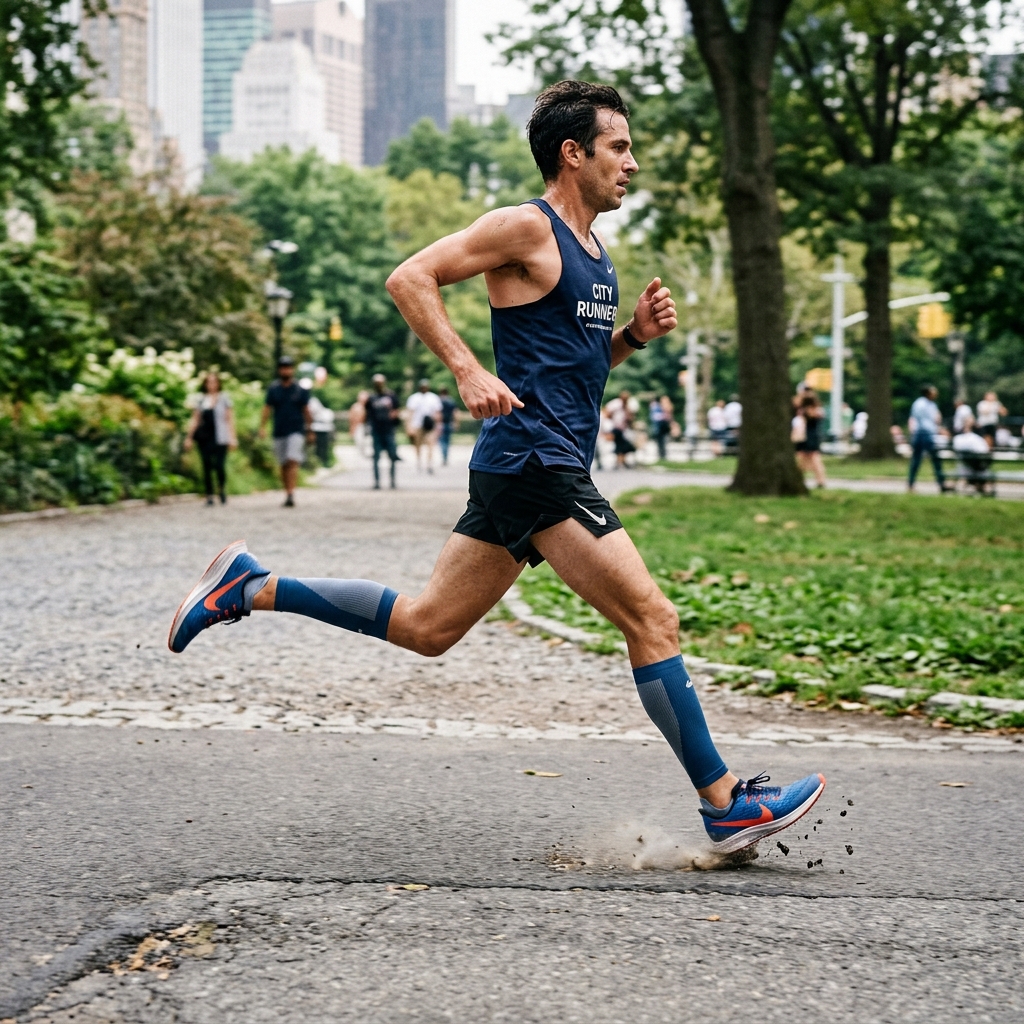
!Overstriding biomechanics illustration showing foot landing ahead of center of mass
What overstriding actually is
When you run, your foot needs to land roughly underneath - or very slightly in front of - your center of mass. That's your hips. When your foot hits the ground well in front of your knee, that's overstriding.
Here's why it's a problem. At the moment of ground contact, a foot landing in front of the body acts like a braking mechanism. Your leg is effectively pushing forward against your momentum rather than propelling you forward. That braking force has to go somewhere. It goes directly into your knee joint.
Research has consistently shown that a heel strike ahead of the knee increases patellofemoral load by 30 to 50% compared to a midfoot strike under the hips. Over thousands of footstrikes per run, that's a lot of accumulated stress. Patellofemoral pain syndrome (runner's knee), tibiofemoral joint stress, and lower back tightness all have documented links to this pattern.
The tricky part is that overstriding usually feels comfortable, especially for newer runners. A longer stride feels like you're covering more ground. It feels powerful. It's just not efficient, and it's not kind to your joints.
How to tell if you're overstriding
You don't need a gait analysis lab. Here are the signs to look for on your next run.
Check where your foot lands. Ideally, when your foot makes contact with the ground, your knee should be flexed (not straight) and your foot should land underneath or very close to your center of mass (your hips). If your leg is nearly straight at contact and your foot is well ahead of your knee, you're overstriding.
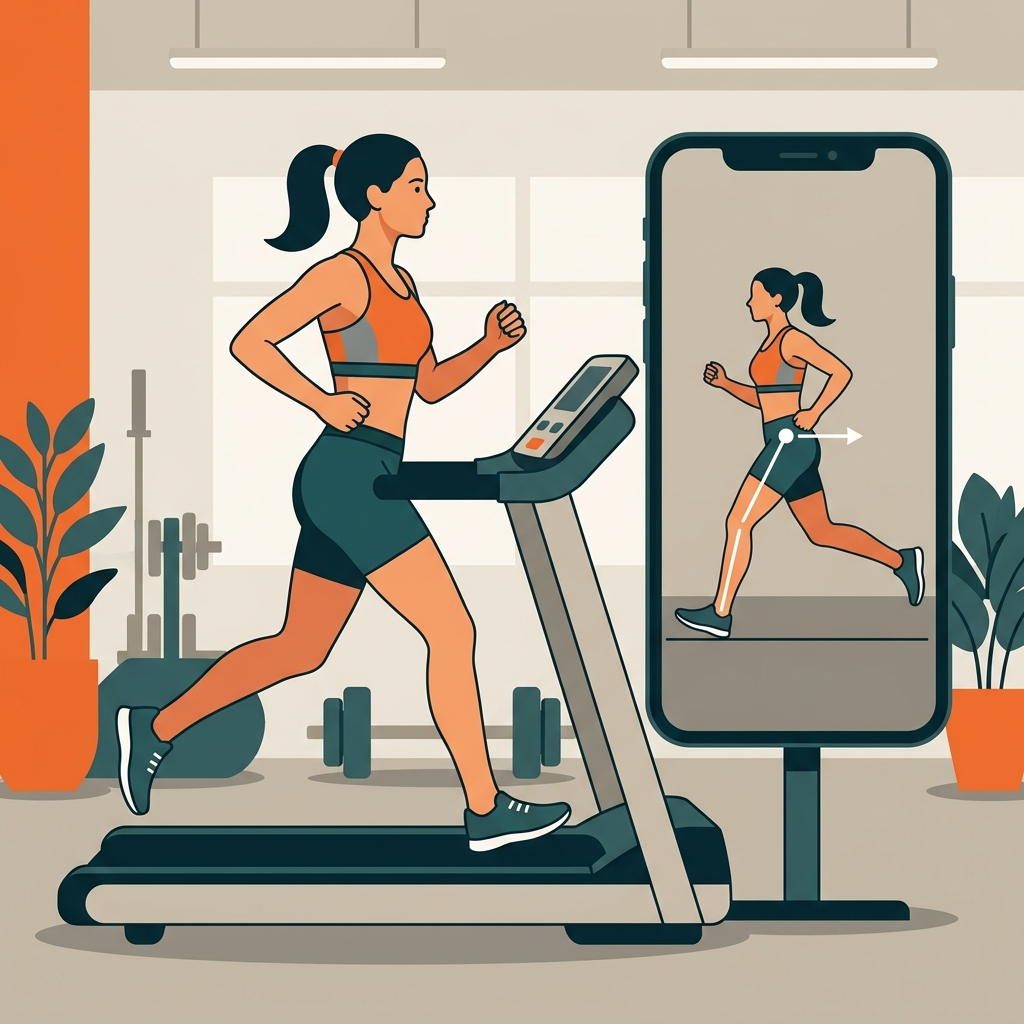
Film yourself on a treadmill. This is the most reliable self-test. Set your phone on a tripod at knee height beside a treadmill and film yourself from the side running at easy pace for 30 seconds. Pause the video at the exact moment your foot hits the belt. If the foot is visibly far ahead of your hips and the leg is straight, you're overstriding.
Listen to your footstrike. Overstriding almost always goes with a heavy heel strike. If your running sounds like clomping - feet slapping down hard - your foot is likely landing too far out.
Look at your cadence. A low cadence (below 160 to 165 SPM on easy runs) is a strong indicator of overstriding. The two tend to go hand in hand. Longer strides mean more time in the air, which means fewer steps per minute.
Check how your knees feel. Pain under or around the kneecap that gets worse going downstairs or after sitting for a long time is classic patellofemoral pain. It doesn't mean surgery or retirement from running. It often means your foot has been landing in the wrong place for a very long time.
!Diagnosing overstriding - what to look for
What causes it in the first place
Several things push runners into an overstriding pattern.
Trying to go faster by reaching. This is the most common culprit. When runners want to run quicker, the instinct is to take longer steps. But elite runners don't run fast by reaching forward - they run fast by pushing off harder and turning over more quickly. The foot lands under the body, and propulsion comes from hip extension behind the center of mass, not from a reaching foot in front.
Sitting too much. Tight hip flexors from hours at a desk can restrict your ability to drive the knee forward properly, leading to a compensatory reaching pattern with the foot.
Weak glutes and hamstrings. If the muscles that drive you forward aren't pulling their weight, your stride mechanics shift. Research from running physiotherapy clinics has shown that overstriders often have measurably weaker glutes than biomechanically efficient runners.
No one told them otherwise. A lot of runners have just never had anyone look at their gait. Overstriding is a learned habit that solidifies over years of training.
How to fix it: what actually works
The good news is that overstriding is correctable, and the corrections are straightforward. Give yourself six to eight weeks of consistent work.
Increase your cadence by 5 to 10%
This is the most evidence-backed intervention for overstriding. When you take shorter, quicker steps, your foot has less time and space to reach forward. A 2011 study in Medicine and Science in Sports and Exercise found that a 10% cadence increase reduced vertical loading rates by around 20% - that's a significant reduction in the forces hitting your knee per stride.
Don't try to hit 180 SPM overnight. Find your current cadence, add 5%, and work with that for two to three weeks before increasing further. Use a metronome app during easy runs.
Run on hills
Uphill running is genuinely one of the best drills for fixing overstriding. It is mechanically impossible to reach forward with your foot when you're climbing a slope. Your body self-corrects. The foot lands under the hips because anything else would just trip you. Use hill repeats not just for fitness but as a form reset.
Focus on pushing back, not reaching forward
The mental cue that works for most runners is to think about pushing the ground behind you rather than stepping forward. Your leg should be extending back at push-off, not reaching forward at contact. Some runners use the cue "step down and back" rather than "step forward."
Strengthen the posterior chain
If weak glutes and hamstrings are contributing to your form breakdown, no amount of cadence drills will hold the fix. You need to build the engine.
Eight to twelve weeks of twice-weekly sessions focused on single-leg deadlifts, hip bridges, and Romanian deadlifts will start to build the strength that supports a better landing pattern. This works in parallel with the technique changes, not instead of them. Find a running coach if you want a personalised strength plan built around your specific weaknesses.
Try the "run in place" drill
Stand still and run on the spot. Notice how your feet land directly under your hips - there's nowhere else for them to go. Gradually transition from running on the spot to moving forward slowly, trying to keep that same foot position. Do this for 30-second bursts during warm-ups.
Managing the knee pain while you fix the form
If you're already dealing with runner's knee or anterior knee pain, the form fix takes time and you still need to run sensibly in the meantime.
Reduce your weekly volume by 20 to 30% for the first two weeks of implementing changes. Your neuromuscular system is relearning a movement pattern, and new patterns are fatiguing in a different way than familiar ones.
Downhill running is the highest-risk surface for patellofemoral stress. Go very easy on descents while your form is in transition.
Use a running plan that builds load progressively rather than jumping straight back to full mileage. The runners who recover fastest from form-related knee pain are the ones who treat the training structure as seriously as the technique change.
If the pain is severe, persistent through a run, or getting worse despite reducing load, see a physiotherapist. A running-specific physio can confirm whether overstriding is the primary issue or whether something structural needs attention.
Most of the time, though, your knees aren't the problem. Your stride is. Fix where your foot lands, and the knees tend to follow.