Overstriding: The Form Mistake That's Actually Breaking You
Forget the heel vs. midfoot strike debate. Overstriding is the real injury villain. Here is how to fix it.
· 4 min read · Technique
The running community loves a debate over foot strike. We argue violently over whether you should land on your heel, your midfoot, or the balls of your feet.
But attacking your foot strike is often treating a symptom while ignoring the disease.
The most common, most damaging form error new runners make has nothing to do with *what* part of the foot hits the ground. It's about *where* the foot hits the ground.
What is Overstriding?
Overstriding happens when your foot lands way out in front of your center of mass.
Imagine running and casting your leg straight out like you are trying to step over a puddle. When your heel slams into the pavement aggressively ahead of your hips, your leg essentially acts as a rigid, bony braking mechanism.
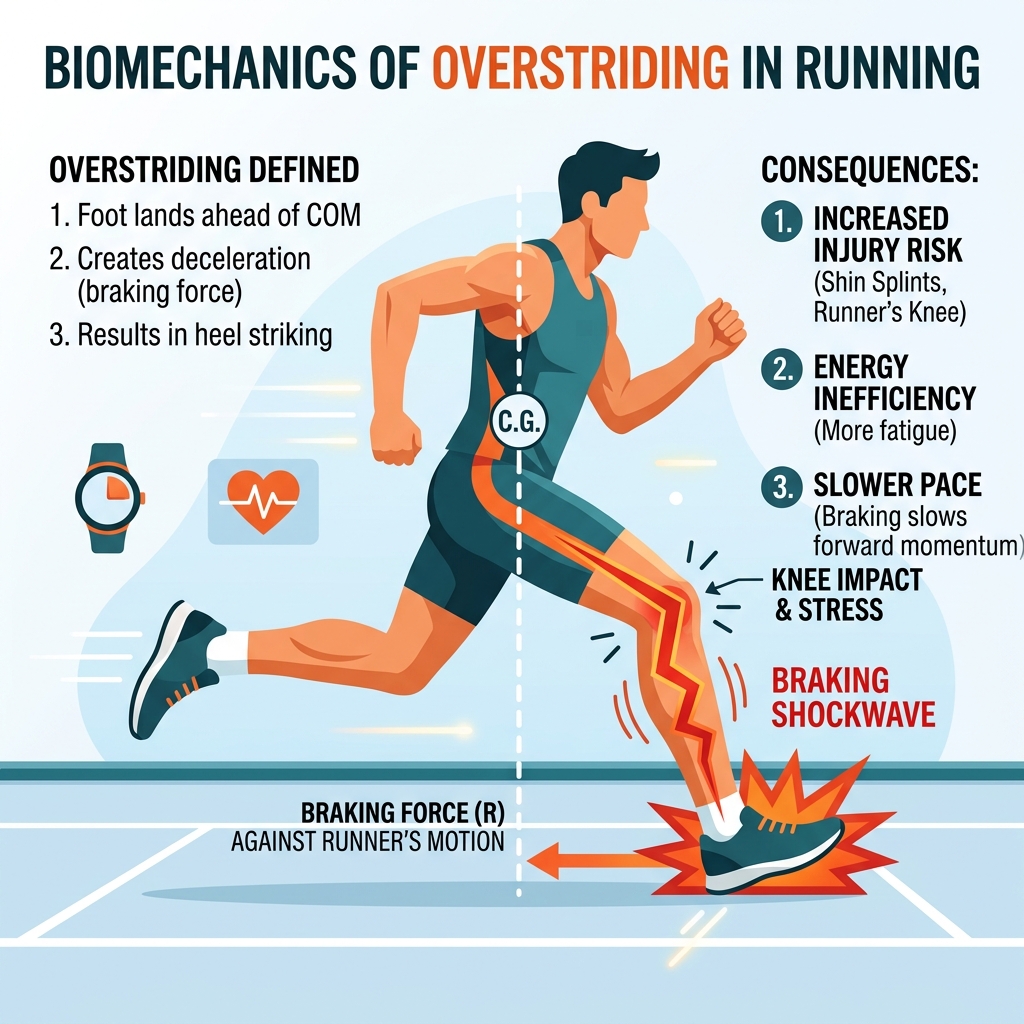
Instead of your leg acting as a spring to propel you forward, you are sending a harsh shockwave directly up your shin bone, through your knee, and into your back. You are hitting the brakes on every single stride.
This causes shin splints, patellofemoral pain (runner's knee), and agonizing IT band syndrome.
How to Diagnose Yourself
You cannot diagnose overstriding while you are running - your brain is terrible at feeling form while in motion.
!Diagnose Overstriding App Simulation
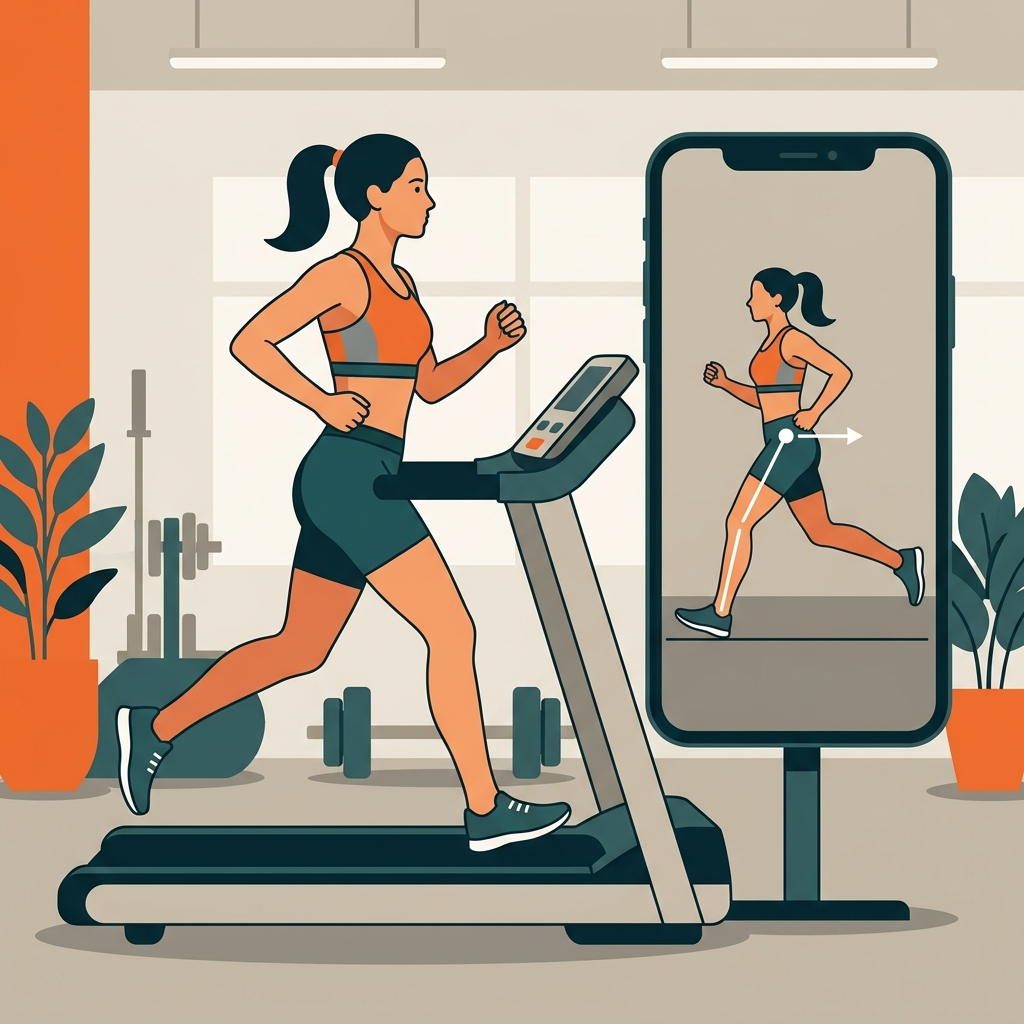
Instead, set up your phone on the side of a treadmill or prop it up against a fence outside and record yourself running past at your normal, easy pace. Pause the video at the exact frame your lead foot hits the floor.
Look at your shin bone. If it is angled aggressively backward toward your torso, you are overstriding. If your shin is perfectly vertical, and your foot is directly below a straight line dropped from your hips (your center of mass), your stride is solid.
The Fix: Shorthanding Your Stride
Do not try to artificially force yourself onto your toes. That is a fast ticket to blowing up your calves and Achilles tendons.
Instead, focus on increasing your cadence - meaning you should aim to glide efficiently rather than bounding through the air.
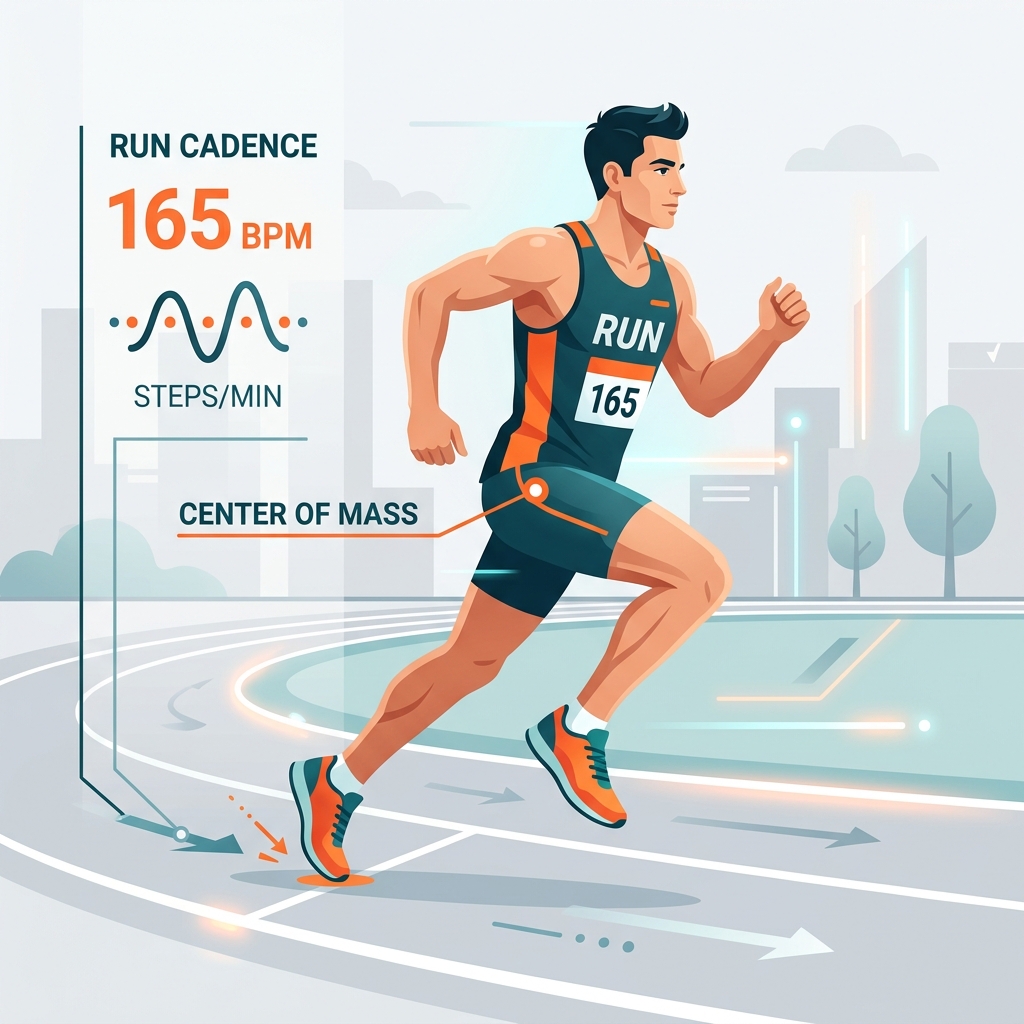
Cadence is how many steps you take per minute. When you actively take slightly faster, shorter steps, your brain physically will not have enough time to cast your foot out in front of your body. Your foot will naturally tuck underneath your center of mass, landing safely beneath your hips and reducing the impact loads dramatically.
Action Plan: Look at your watch data from a recent easy run. If your average cadence is 155 steps per minute, aim for 162 next time out. Try running to a Spotify playlist set at 165 BPM to naturally force your feet to move faster. Keep the effort exactly the same - just take more steps.
Your knees will thank you immediately.