How 13 Runners and Some Hardware-Store Washers Built a Global Movement
On 2 October 2004, thirteen runners and five volunteers showed up to Bushy Park in southwest London. Nobody came last because everybody finished. Twenty years later, more than 10 million people have registered to do the same thing.
· 8 min read · Running Culture
The finish token was a washer from a hardware store.
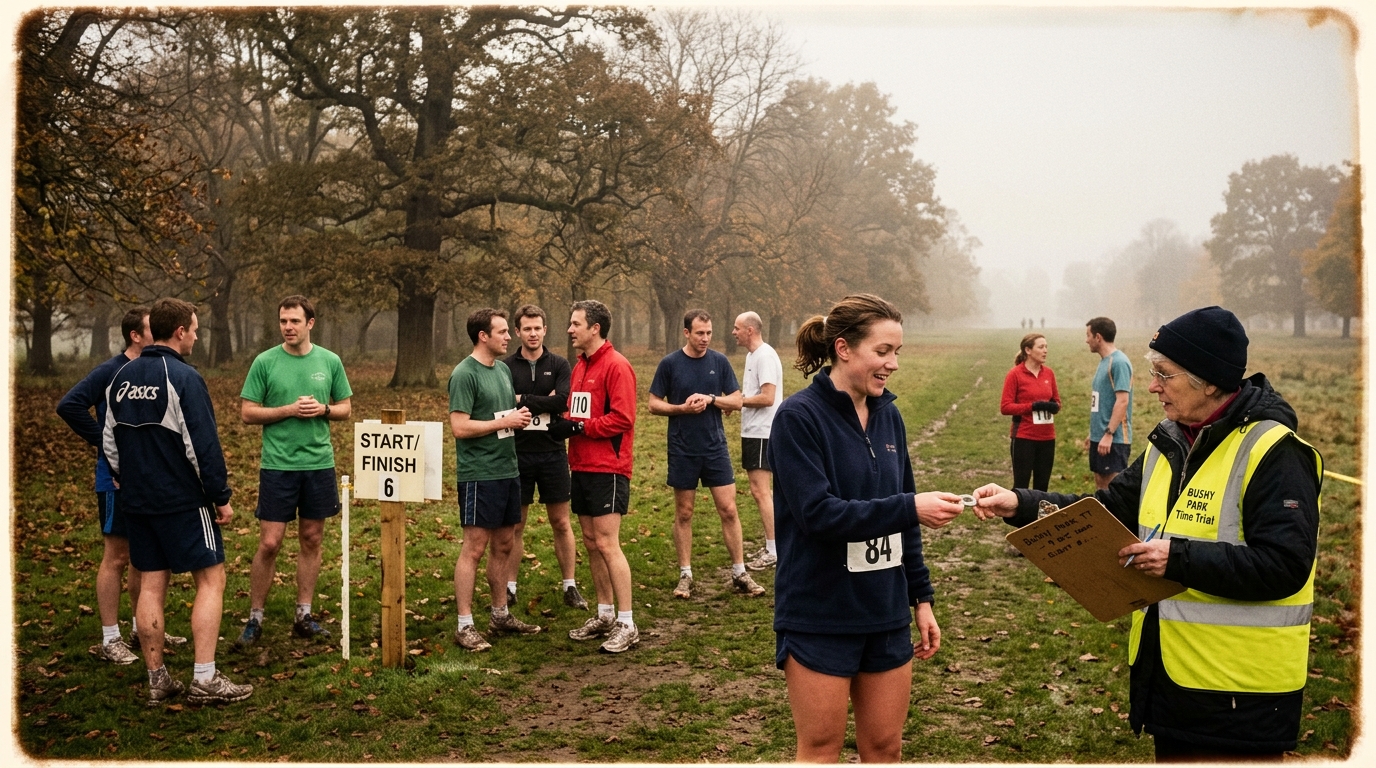
Thirteen runners. Five volunteers. A handwritten timing sheet. A field in Bushy Park, southwest London, on a damp October morning in 2004. The whole operation cost almost nothing and depended entirely on the goodwill of people who showed up because they wanted to run 5 kilometres in a park and have someone record their time.
That was the first parkrun. It was not called parkrun then - it was the Bushy Park Time Trial. But what happened next is one of the more unexpected stories in the history of recreational running.
Where it came from
The man behind the idea was Paul Sinton-Hewitt. In 2004 he was dealing with a running injury that had taken him off the road and he was also, by his own account, going through a difficult period personally. Running had been his anchor. Without it, he needed something to do on Saturday mornings that still involved the sport.
The solution was simple: organise a time trial in a local park, get some friends to show up and volunteer, and give whoever finished a token with their position on it. No entry fee. No registration in advance. Just show up, run 5 kilometres, and find out how fast you went.
The timing was done on a single stopwatch. The finish tokens - small metal washers punched with a hole - were handed out in order of finishing. Runners handed their personal barcode to a volunteer, and the combination of the position token and the barcode was how their time was recorded.
It sounds primitive because it was primitive. It also worked perfectly.
The years it was just one park
For more than two years, the Bushy Park Time Trial happened every Saturday morning and stayed at one location. It grew, slowly. Word spread through running clubs and online forums in a time before social media could amplify anything overnight. The regular field grew from 13 to 30 to 50 runners. Volunteers became regulars. A small community formed around Saturday mornings and the tea that followed.
What set it apart from a traditional race series was the absence of everything that usually surrounds running events. No entry fee. No prize money. No minimum fitness requirement. No time limit. Walkers were welcome. A 15-year-old could run next to a 65-year-old and both would appear on the same results page. The implicit message was that the only requirement was turning up.
Sinton-Hewitt was not trying to build a global organisation. He was trying to have somewhere to go on Saturday mornings where he could be part of something. The fact that this turned out to be what large numbers of other people also wanted was both obvious in retrospect and entirely unpredicted at the time.
The rename and the expansion
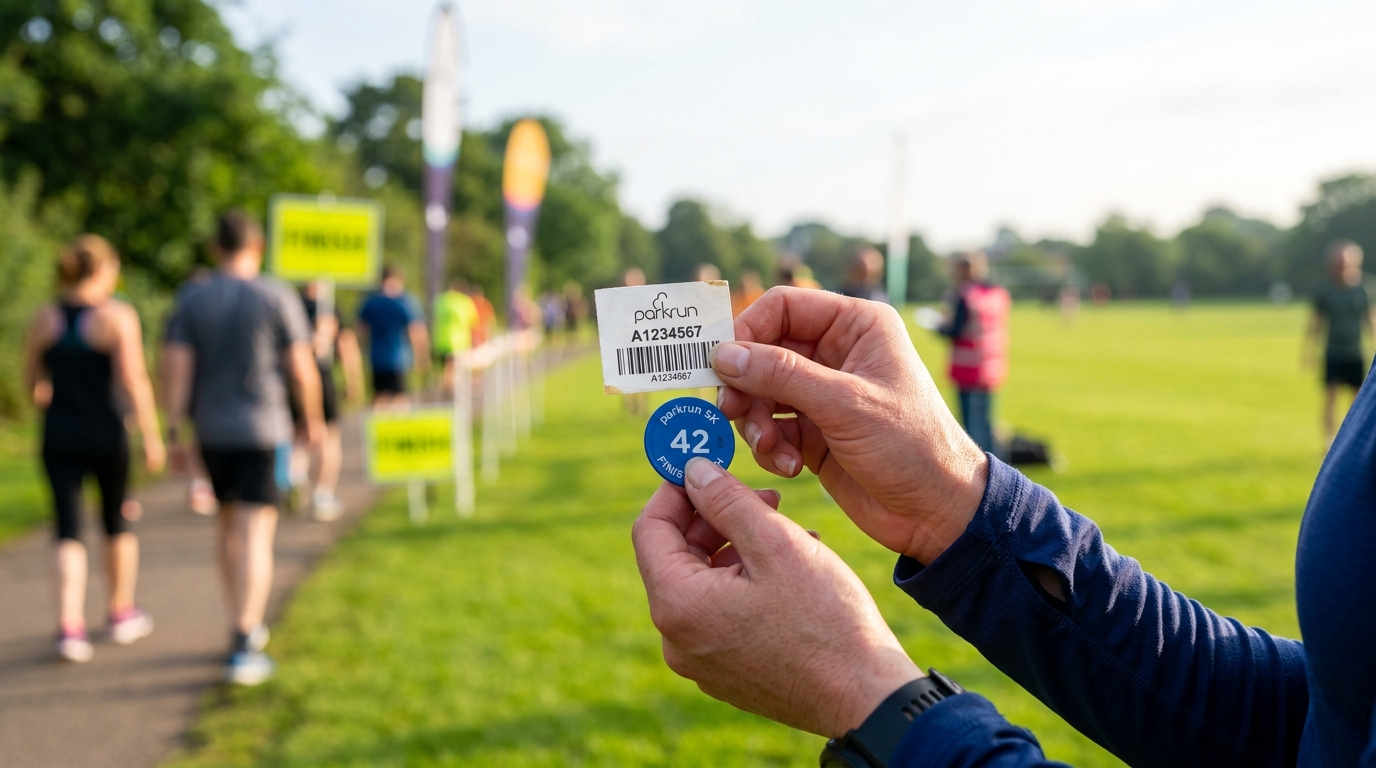
In 2008, the Bushy Park Time Trial became parkrun - two events starting in the UK, with a simple standardised format that could be replicated in any public park with a flat 5-kilometre loop or out-and-back route.
The format was always designed to be volunteer-driven and free to participants. That was not a funding model waiting to be changed once the organisation grew. It was the core principle. parkrun's budget comes from corporate partnerships, not participant fees, and the guarantee of free access has never changed.
New locations required a local organiser to apply, identify a suitable course, recruit a volunteer team, and run test events before going official. The process was slow enough to maintain quality and fast enough that committed local running communities could get a parkrun up and running within a few months.
The expansion outside the UK started with Zimbabwe in 2007 - a single event in Harare that Sinton-Hewitt helped set up. Australia followed in 2011 and became parkrun's largest national operation relatively quickly. Ireland, South Africa, Poland, Denmark, the United States, Canada, and eventually more than 23 countries joined the network over the following decade.
Why walkers changed everything
One of the most consequential things that happened to parkrun was the arrival of walkers.
In the early years, the Bushy Park Time Trial was a running event in the same way any time trial was a running event. The people who showed up were runners. The times were running times. The culture was running culture.
As parkrun grew and the message spread beyond running clubs to a more general audience, people who walked - or who mixed walking and running, or who had never considered themselves runners - started showing up. Some came because friends had recommended it. Some came because they wanted to be more active and found a 5K run/walk achievable in a way that signing up for a race was not.
The average finish time at Bushy Park, once the walking community arrived in numbers, began to slow. This was noticed. It was also discussed internally - was parkrun still a running event if a meaningful portion of participants were walking?
The answer the organisation settled on was that the original purpose was community and participation, not pace or performance. Walkers were welcome. Not as a concession, but as equal participants. The results page listed them alongside runners without distinction except total time.
This decision - which might have felt like a dilution of the product - turned out to be the thing that made parkrun genuinely accessible to people for whom traditional running culture felt exclusionary. It is now one of the most-cited things about parkrun when people describe why they love it.
Nobody comes last because the last person across the line is the tail runner - a volunteer who runs behind the field to make sure no one is left behind. The tail runner position is one of the most coveted volunteer roles in any parkrun event.
What 10 million registered looks like
The milestone numbers are impressive in isolation. 10 million registered participants worldwide. More than 2,000 events across 23 countries. Hundreds of thousands of completions every Saturday. An 11-year-old running with their retired grandparent. A cancer survivor completing their first post-treatment exercise. A 70-year-old finishing a parkrun faster than they ran it at 50 because they have been consistent for five years.
What the numbers do not capture is the texture of what happens at a parkrun. The post-run coffee that turns into an hour-long conversation. The volunteer who has missed fewer than 10 of the past 400 events because Saturday morning in the park is when they see the friends they do not see anywhere else. The runner who started with a 40-minute walk/run and is now chasing a sub-25-minute personal best and credits parkrun with having changed their relationship with their own fitness.
This is what the hardware-store washers were actually creating in 2004 - not a race series or a fitness programme, but a standing weekly invitation to a community that makes running feel accessible to anyone who shows up.
Have you done a parkrun yet?
If the answer is no, the barrier is lower than you probably think. Bring your phone, download the app, and register once for free - your barcode stays valid at any parkrun in any country. Show up Saturday morning. Walk it, run it, or do something in between.
Find your nearest parkrun location on Your Run Guide's parkrun directory and see what time the event starts in your local park.