The Duel in the Sun: What the 1982 Boston Marathon Teaches Us About Heat and Dehydration
Separated by two seconds at the 1982 Boston Marathon, Alberto Salazar and Dick Beardsley ran into medical emergency tents. Here is what their duel reveals about heat pacing.
· 7 min read · Technique
On Patriots' Day, April 19, 1982, temperatures along the 26.2 miles from Hopkinton to Boston soared past 24°C (75°F) under an unclouded, punishing spring sun.
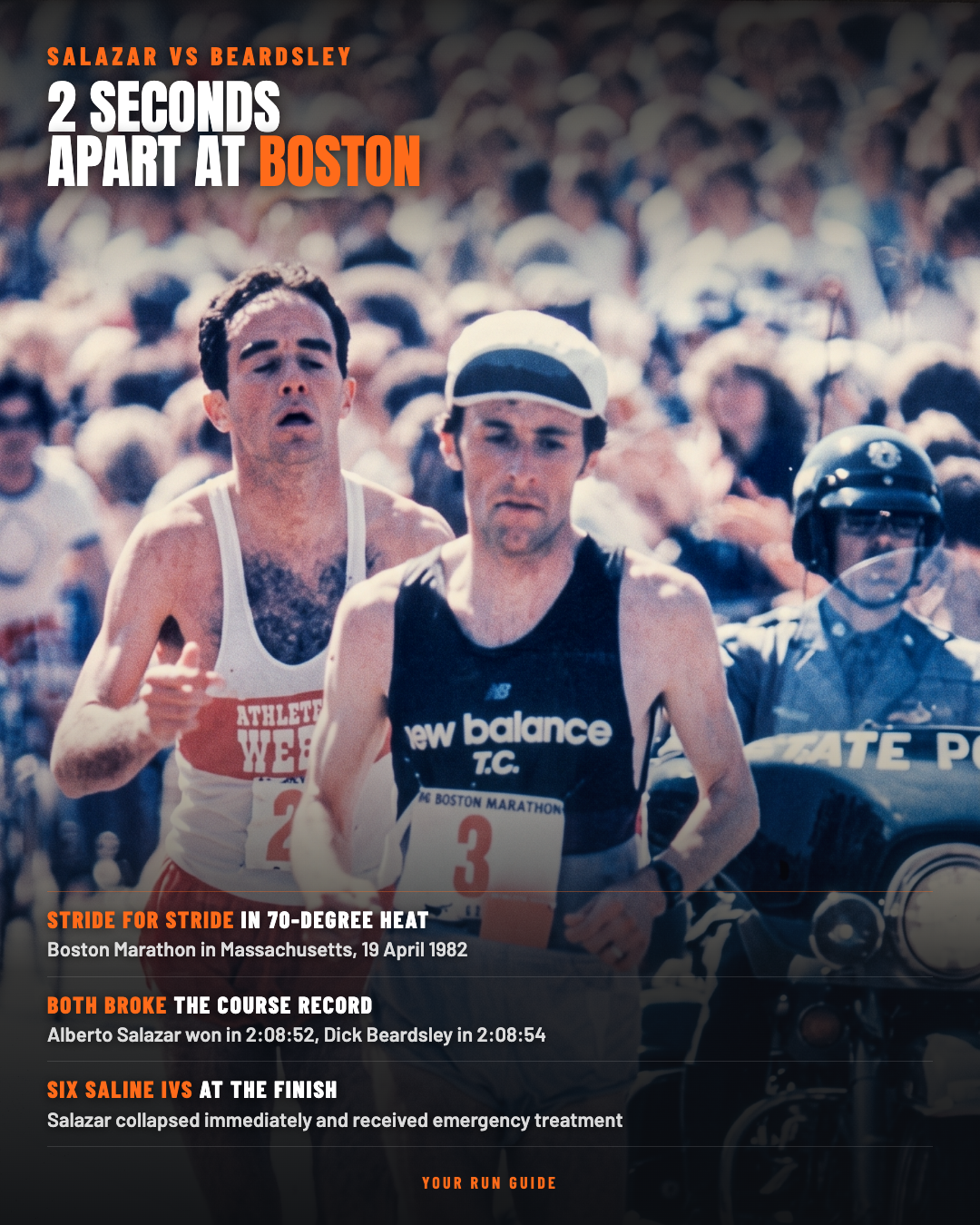
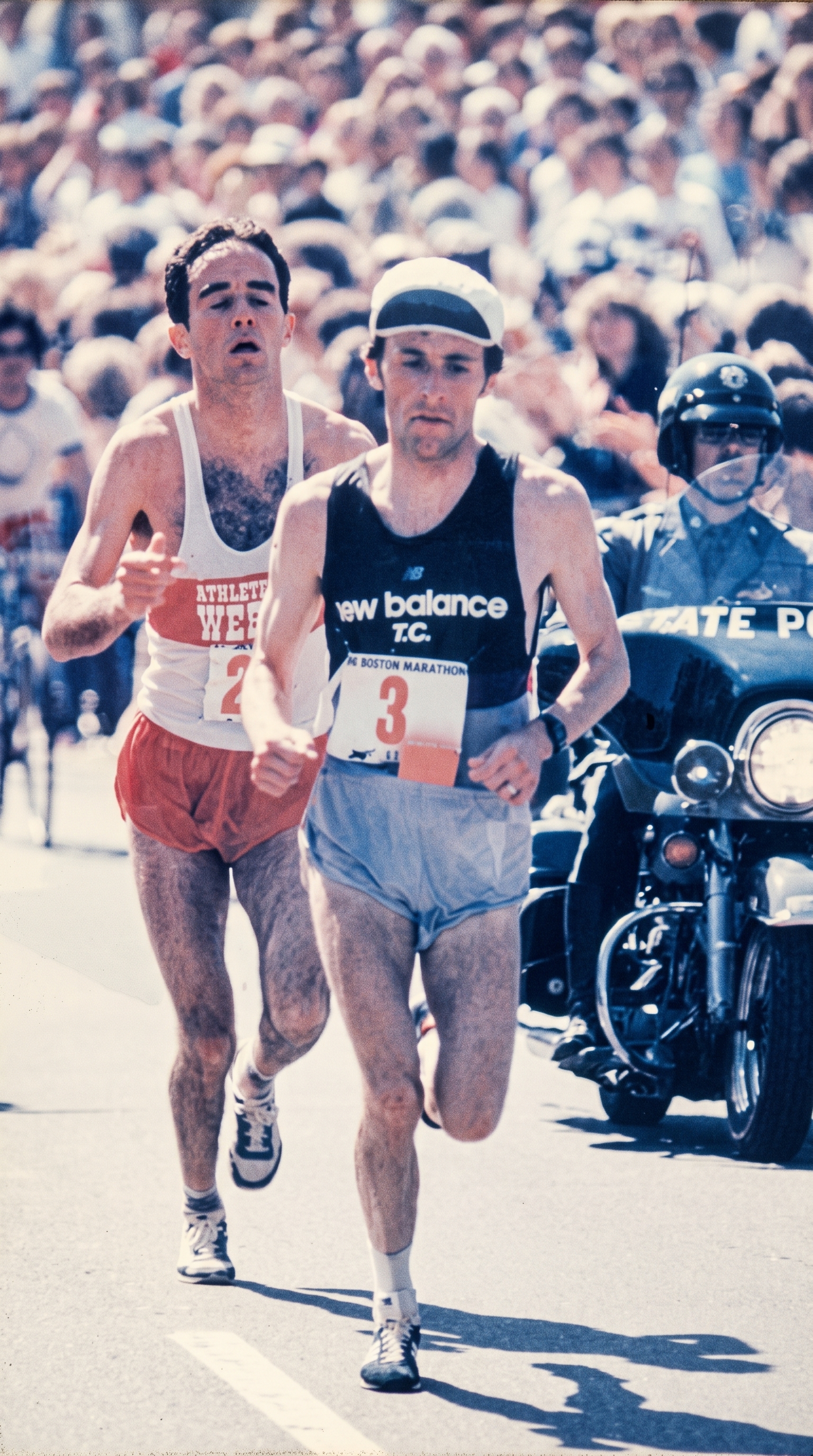
What followed became the most fiercely contested marathon duel in North American history: Alberto Salazar, the brash world-record holder from Oregon, locked into a step-for-step death march with Minnesota dairy farmer Dick Beardsley.
They ran 2:08:52 and 2:08:54. Both shattered the American course record. They were separated by two seconds after more than two hours of sprinting through the heat.
Yet what happened after the finish line is what makes the 1982 race legendary in sports medicine. Salazar collapsed onto the asphalt, shivering violently despite the warmth, with a body temperature nearing 41°C (106°F). He was rushed to the medical tent, where doctors spent hours administering six litres of intravenous saline before he could produce urine. Beardsley was carried away alongside him, suffering from severe neuromuscular cramping and acute dehydration.
Neither runner took a single sip of water during the entire race.
!Alberto Salazar and Dick Beardsley battling in the Duel in the Sun
The Fatal Flaw of 1980s Hydration Culture
To modern runners carrying handheld flasks or timing carb gels every 20 minutes, the idea of running a 2:08 marathon in 75-degree heat without drinking water sounds insane.
In 1982, however, distance running culture was steeped in macho stoicism. Runners were conditioned to believe that drinking water during a race caused stomach cramps and showed weakness. Aid stations were sporadic, offering open paper cups splashed with lukewarm water that runners often used merely to wet their faces or hair.
Salazar was particularly known for his refusal to yield to physical vulnerability. He believed that stopping or slowing to grab fluids gave his rivals a psychological advantage.
During the race, both men sweat out roughly 4 to 6 percent of their total body weight in fluids:
- Blood plasma volume plunged: Reducing the heart's stroke volume and forcing heart rates to near-maximal levels simply to maintain a given pace (cardiac drift).
- Core temperature spiked: Without adequate sweat volume to dissipate heat via evaporation, their internal temperature climbed dangerously close to heat stroke thresholds.
- Glycogen depletion accelerated: Hyperthermia forces the body to burn through limited muscle glycogen stores at a vastly faster rate than running in cool weather.
!Salazar and Beardsley in the 1982 Boston Marathon
4 Science-Backed Rules for Running in the Heat
The Duel in the Sun proved that sheer willpower cannot override the laws of thermodynamics. When race day temperatures rise unexpectedly, follow these four non-negotiable rules:
1. Adjust Your Goal Pace by Temperature Do not try to force your goal marathon pace if the temperature climbs above 15°C (60°F). For every 3°C (5°F) increase in ambient temperature above 15°C, expect your pace to slow by 1.5 to 3 percent. If your target is 4:45/km in cool weather, racing at 24°C requires throttling back to 4:55–5:00/km from the gun. Pushing your cool-weather pace in the heat guarantees a catastrophic bonk at mile 18.
2. Track Sweat Rate, Not Generic Guidelines Runners vary widely in fluid loss, sweating between 0.8 and 2.5 litres per hour. Weigh yourself naked before and after a 60-minute warm training run without drinking. Every kilogram (2.2 lbs) lost equals roughly one litre of sweat. Aim to replace roughly 60 to 75 percent of that fluid loss during long efforts, sipping 150 to 250 ml of electrolyte fluid every 15 to 20 minutes.
3. Sodium is Essential to Prevent Hyponatremia Drinking massive amounts of plain water without sodium dilutes blood electrolyte levels, leading to exercise-associated hyponatremia (EAH), a potentially life-threatening condition marked by brain swelling, confusion, and nausea. Consume 500 to 1,000 milligrams of sodium per litre of fluid during hot-weather long runs.
4. Use External Cooling at Aid Stations Salazar and Beardsley poured water over their heads, and that single instinct was correct. Pouring cold water over your neck, head, and wrists provides immediate conductive cooling to superficial blood vessels, reducing thermal strain on the brain and lowering perceived exertion.
Pacing When the Forecast Turns Against You
If your target goal race delivers unexpected heat, do not treat it as a personal failure. Adapt your strategy:
- Redefine the goal: Swap your A-goal finish time for an effort-based race (monitoring heart rate rather than GPS split pace).
- Start 15 seconds per mile conservative: Let the competitors who sprinted out of the gates come back to you during the final 10 kilometres.
- Walk through every fluid station: Spend ten seconds drinking two full cups of water and electrolyte mix at every table rather than spilling half a cup while running at full speed.
To adjust your training targets and calculate pace conversions for varied conditions, explore our running pace calculator, review our marathon fueling guide, and build your customized marathon training plan.
Find races: Browse road marathons in the United States on Your Run Guide to find spring and autumn races with cool, optimal weather windows.