The World Marathon Majors: Which one should be your bucket list race?
Boston, Tokyo, London, Berlin, Chicago, New York - and now Sydney. Seven marathons. Each one a completely different experience. Here is how to figure out which Major actually suits you.
· 9 min read · Race Spotlights
Seven marathons. Seven cities. And the list just got longer.
On November 4, 2024 - at the finish line of the New York City Marathon - the Abbott World Marathon Majors announced that the TCS Sydney Marathon had officially joined the series as the seventh Major. Sydney debuted as a full Major on August 31, 2025, after a multi-year assessment process that began in 2022.
But here is the thing nobody tells you when you first start thinking about the World Marathon Majors - they are not interchangeable. Boston is nothing like Berlin. Tokyo is nothing like New York. Sydney is nothing like either. The course profile, the entry method, the crowd energy, the logistics, and the cultural experience are dramatically different at each one. Choosing the wrong first Major for your ability and personality can turn a dream race into a miserable, expensive trip.
This guide breaks down all seven Majors so you can make an informed choice rather than just picking whichever one sounds most impressive at a dinner party.
First, the basics: what are the World Marathon Majors?
The Abbott World Marathon Majors series now consists of eight marathons:
- Tokyo - March
- Boston - April
- London - April
- Cape Town - May (joining in 2027)
- Sydney - August/September (joined 2025)
- Berlin - September
- Chicago - October
- New York City - November
The original Six Star Medal - awarded for completing the first six Majors (Tokyo, Boston, London, Berlin, Chicago, New York) - remains unchanged. Sydney's and Cape Town's additions are part of a wider expansion: the AWMM plans to introduce a Nine Star Medal in the future as more candidate races join the series. Completing Sydney and Cape Town now counts toward that future milestone.
Each Major collects points across a World Marathon Majors Series season, with prize money distributed to the top elite finishers. For the rest of us, the appeal is purely the experience, the course, and the status of the bib.
Tokyo Marathon
Difficulty: Medium | Entry: Ballot (very competitive) or charity | Crowd support: Extraordinary
Tokyo is consistently rated as one of the most organised and most spectator-friendly marathons in the world. The course runs through the heart of the city past Imperial Palace gardens, through Asakusa, and along the Sumida River before finishing near Tokyo Station.
!Runners race past Tokyo Station during the Tokyo Marathon, cherry blossoms lining the route
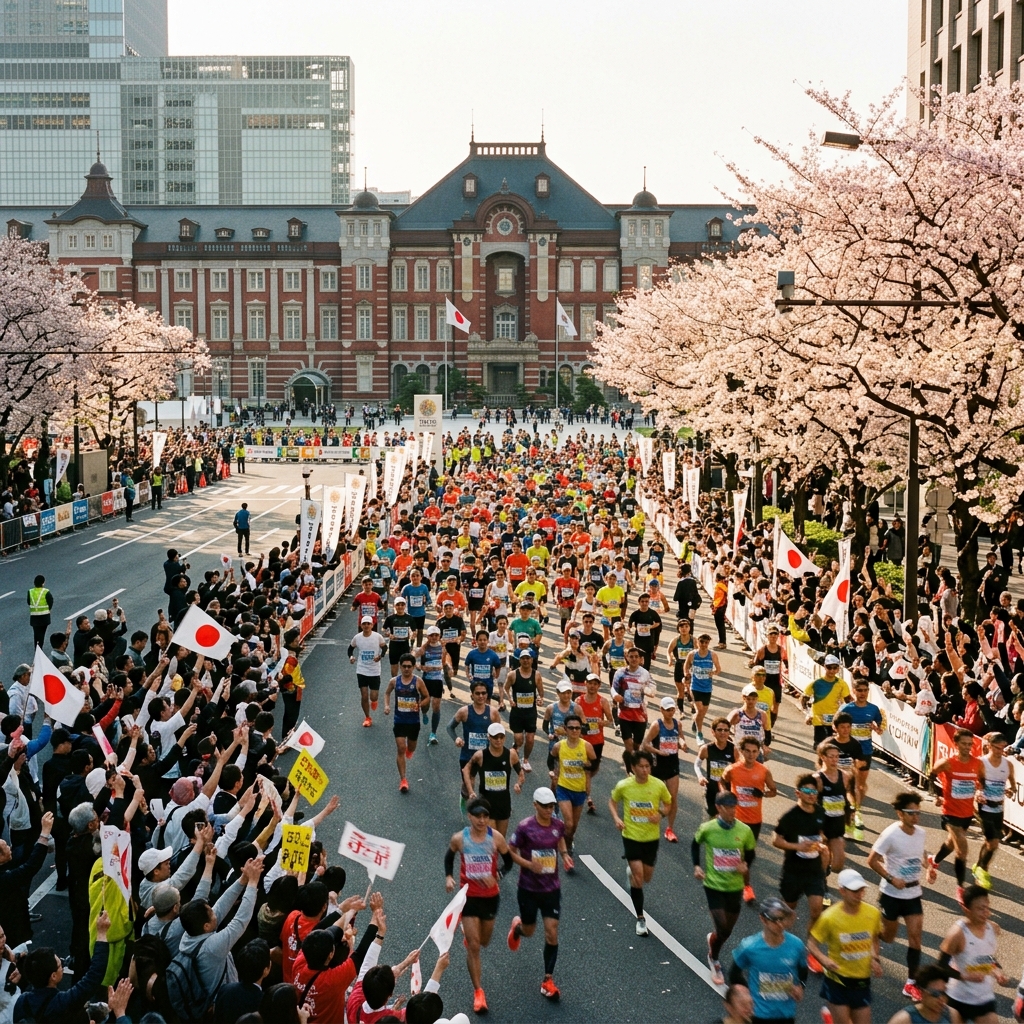
The course is flat and fast. The elite field regularly produces world-class times, and the organisational precision of Japanese race management means you will never be confused about where you're going.
What makes Tokyo special is the atmosphere. Japanese spectators treat the marathon like a national event. Volunteers are meticulous, aid stations are immaculate, and the crowd line the streets in silence and then erupt with cheers as you pass. There is something uniquely moving about the quiet respect.
Entry reality: The public ballot typically has an acceptance rate of around 5 to 10%. Most non-Japanese runners get in through charity entries or travel operators offering guaranteed spots. Budget carefully - Tokyo is one of the more expensive Majors once you factor in flights, accommodation, and race costs.
Who it suits: Runners chasing a fast time on a flat course, first-time Majors runners who want exceptional organisation, and anyone who wants to combine the race with a genuinely world-class travel destination.
Boston Marathon
Difficulty: Hard | Entry: Qualifying time or charity | Crowd support: Iconic
Boston is the only Major where the primary entry pathway requires meeting a qualifying standard. The Boston Qualifying (BQ) time depends on your age and gender - and because the race is massively oversubscribed, in practice you need to run several minutes faster than the qualifying standard to guarantee a spot.
!Elite runners charging down Boylston Street toward the Boston Marathon finish line
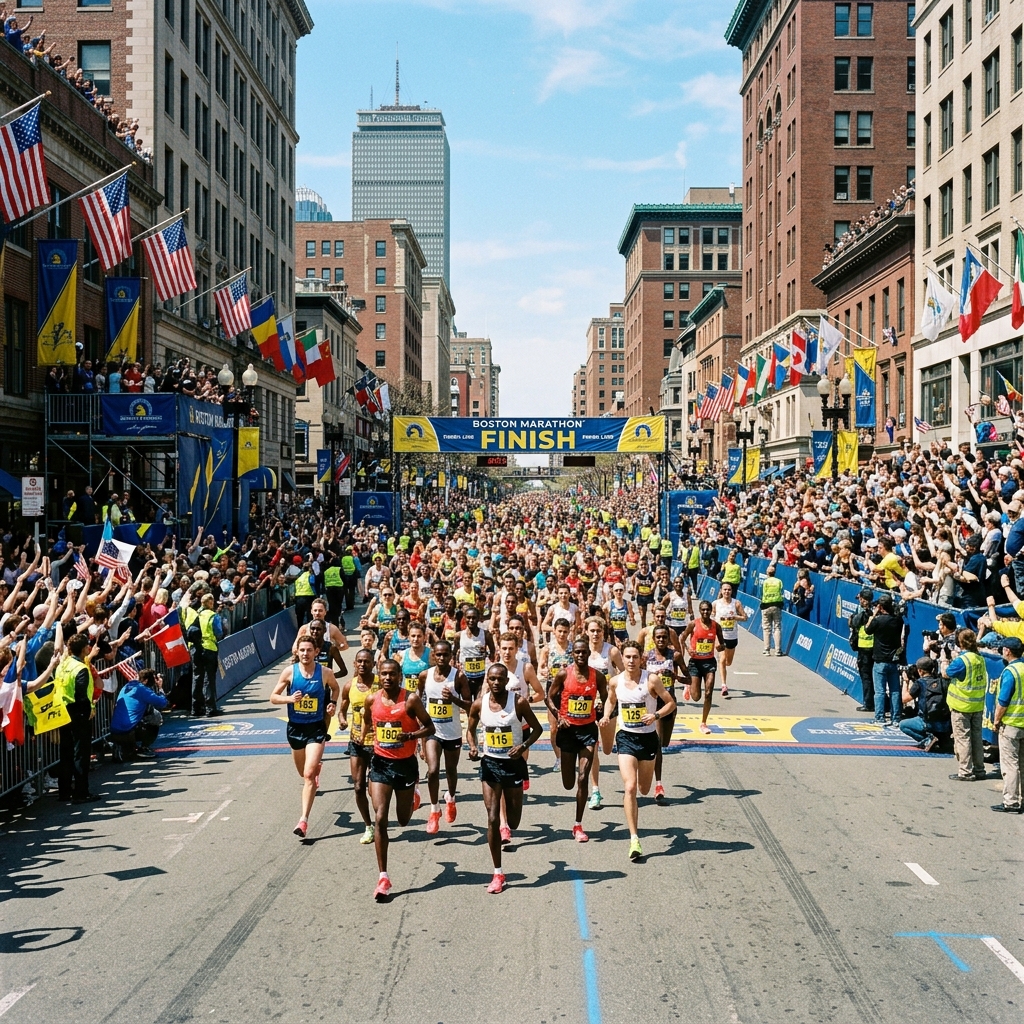
For 2026, men 18-34 needed a qualifying time of 3:00:00, but in recent years runners have needed to be 2 to 6 minutes under their age-group standard to actually get in based on registration pressure.
The course itself is famous for being hard. It runs point-to-point from Hopkinton to Boston with a net elevation drop, which sounds favourable but the rolling hills in the second half - particularly the series of climbs culminating in Heartbreak Hill at around the 32km mark - punish runners who go out too fast early.
The crowd on Boylston Street for the final stretch is one of the most famous finishes in running.
Entry reality: Boston is the Major that requires the most preparation and patience. Getting a BQ is a multi-year project for most runners. If you don't meet the standard, charity entries exist but are competitive and typically require significant fundraising commitments.
Who it suits: Competitive runners who want to earn their spot, runners with a goal time under 3:30, and anyone who sees the qualifier as a long-term target worth training for.
London Marathon
Difficulty: Easy-Medium | Entry: Public ballot (mid-April result), charity, Good For Age, or Championship | Crowd support: The best in the world
London is the Major with arguably the best crowd support on earth. !Elite runners crossing Tower Bridge with the London skyline behind them during the London Marathon The course runs from Blackheath in south-east London through Greenwich, along the Thames Embankment, past the Tower of London and Tower Bridge (the iconic halfway point), and finishes on The Mall in front of Buckingham Palace. It is one of the most memorable moments in marathoning - and the spectators line almost every single kilometre.
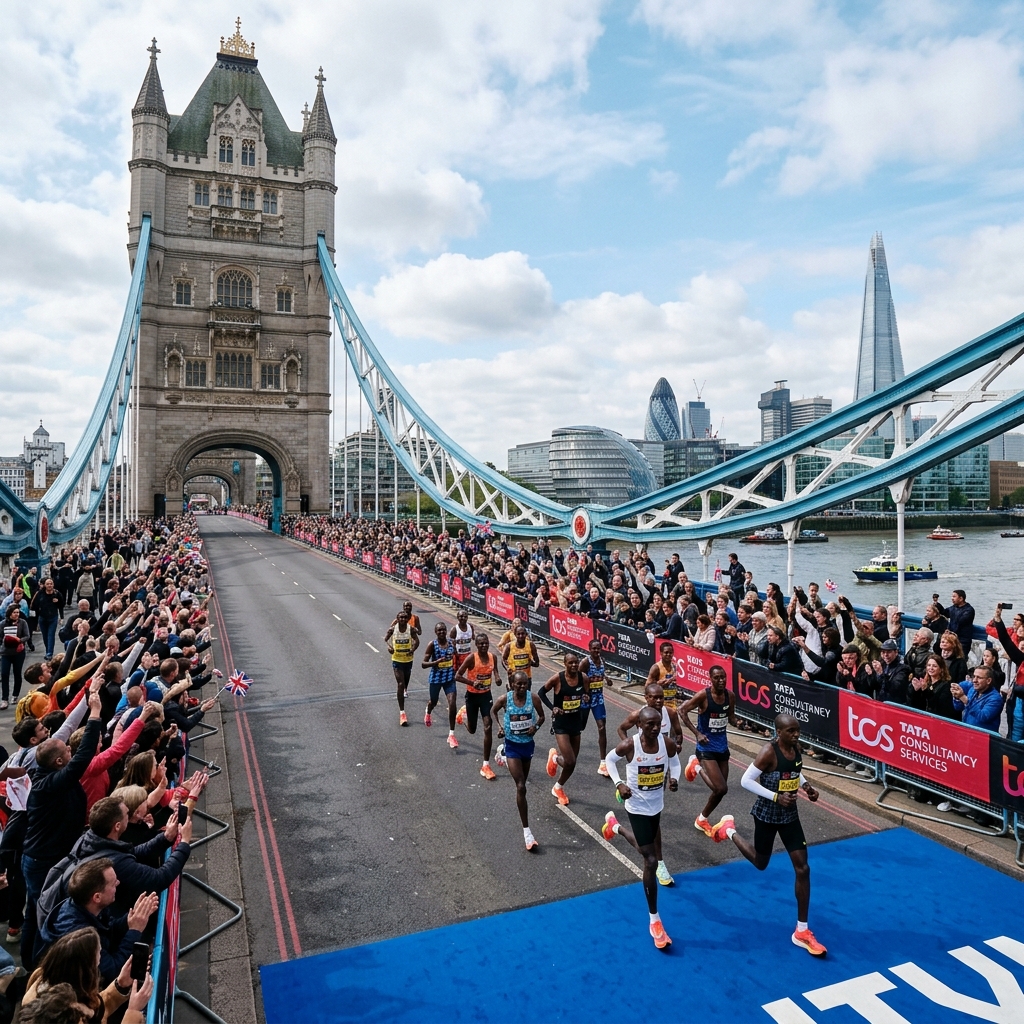
The course is net flat, with only modest undulation. It consistently produces fast times at the elite level and is genuinely achievable for runners targeting a personal best.
Entry via the public ballot is open to runners from any country. The ballot draws hundreds of thousands of applicants for around 50,000 spots, making the acceptance rate very low. However, the Good For Age (GFA) pathway provides a route in for runners who meet time standards (currently around 3:00 for men 18-39 and 3:45 for women 18-39 at the faster age groups, with increasingly accessible standards at older age groups). Championship entry is available for affiliated club runners with faster times.
Entry reality: The ballot accepts roughly 1 in 10 applications. GFA is the most transparent route in if you're a competitive runner. Guaranteed charity entries are widely available across hundreds of UK and international charities.
Who it suits: Almost everyone. The crowd support makes it a great first Major. The course is fast enough for a personal best attempt. The city is incredible for a running holiday. It's the safest bet for a spectacular first Major experience regardless of pace.
Berlin Marathon
Difficulty: Easy | Entry: Ballot or charity | Crowd support: Excellent
Berlin is the fastest Major and one of the fastest marathon courses in the world. !Elite runners approaching the Brandenburg Gate finish line at the Berlin Marathon The majority of marathon world records have been set here. The course starts at the Tiergarten, runs through 12 of Berlin's distinctive neighbourhoods, and finishes through the Brandenburg Gate, which is one of the most cinematic finish lines in world running.
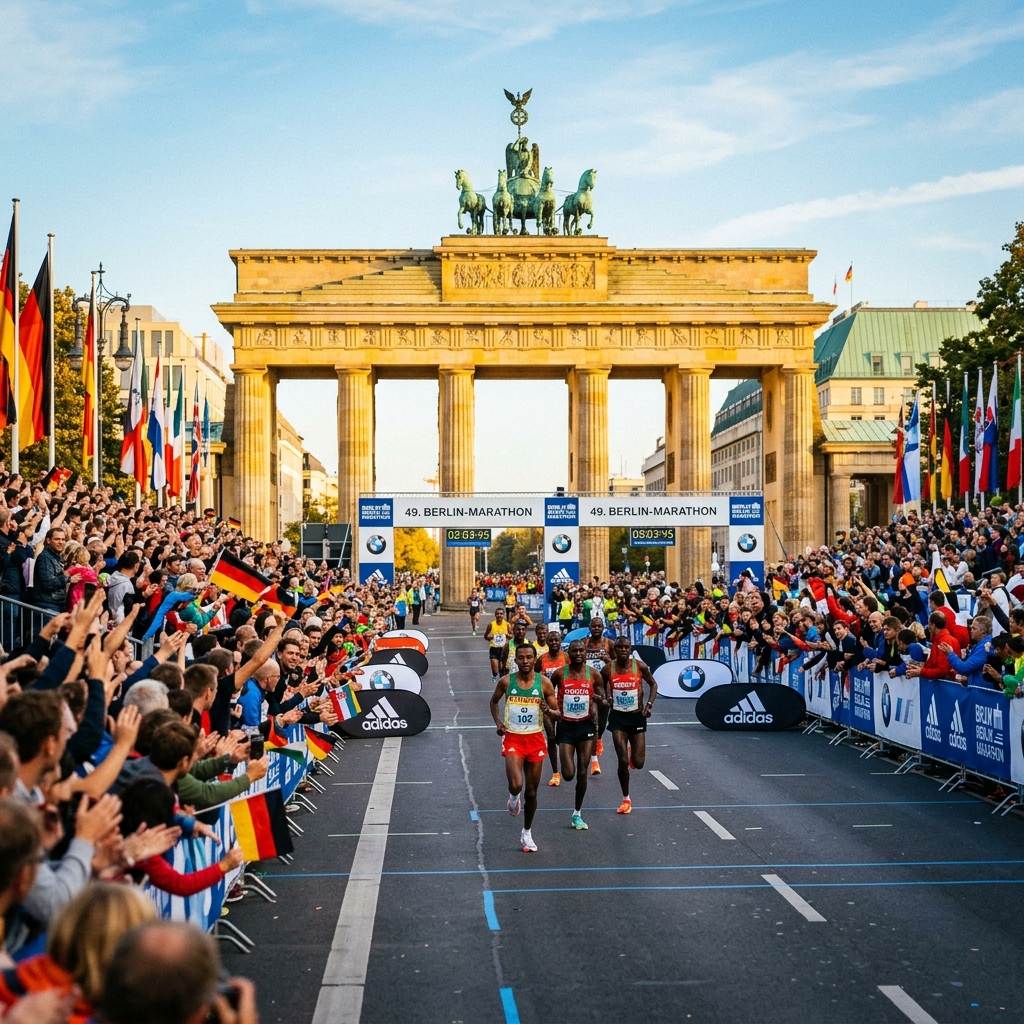
Berlin is the least ceremonially fraught of the six Majors. There is no qualifying standard. The ballot is competitive but more generous than Tokyo or London. The race has a large international field and is particularly accessible for European runners.
Entry reality: The ballot draws hundreds of thousands of applicants but has historically had higher acceptance rates than Tokyo, London, or New York. Charity entries and travel package spots are widely available.
Who it suits: Runners chasing a personal best, anyone who wants a fast, flat course without the added stress of hills, and runners who want a Major that is logistically straightforward from Europe. If your primary goal is a time, not just the experience, start with Berlin.
Chicago Marathon
Difficulty: Easy-Medium | Entry: Ballot or charity | Crowd support: Exceptional
Chicago combines a genuinely flat, fast course with neighbourhood-by-neighbourhood diversity that makes it feel like running through a world tour. !Thousands of runners stream through downtown Chicago with the iconic skyline overhead during the Chicago Marathon The out-and-back course through the Loop, along Lake Shore Drive, through Chinatown, Pilsen, Greektown, and back through Lincoln Park covers some of the most interesting urban terrain of any Major, which shows up with its own energy. The crowd noise and support is relentless.
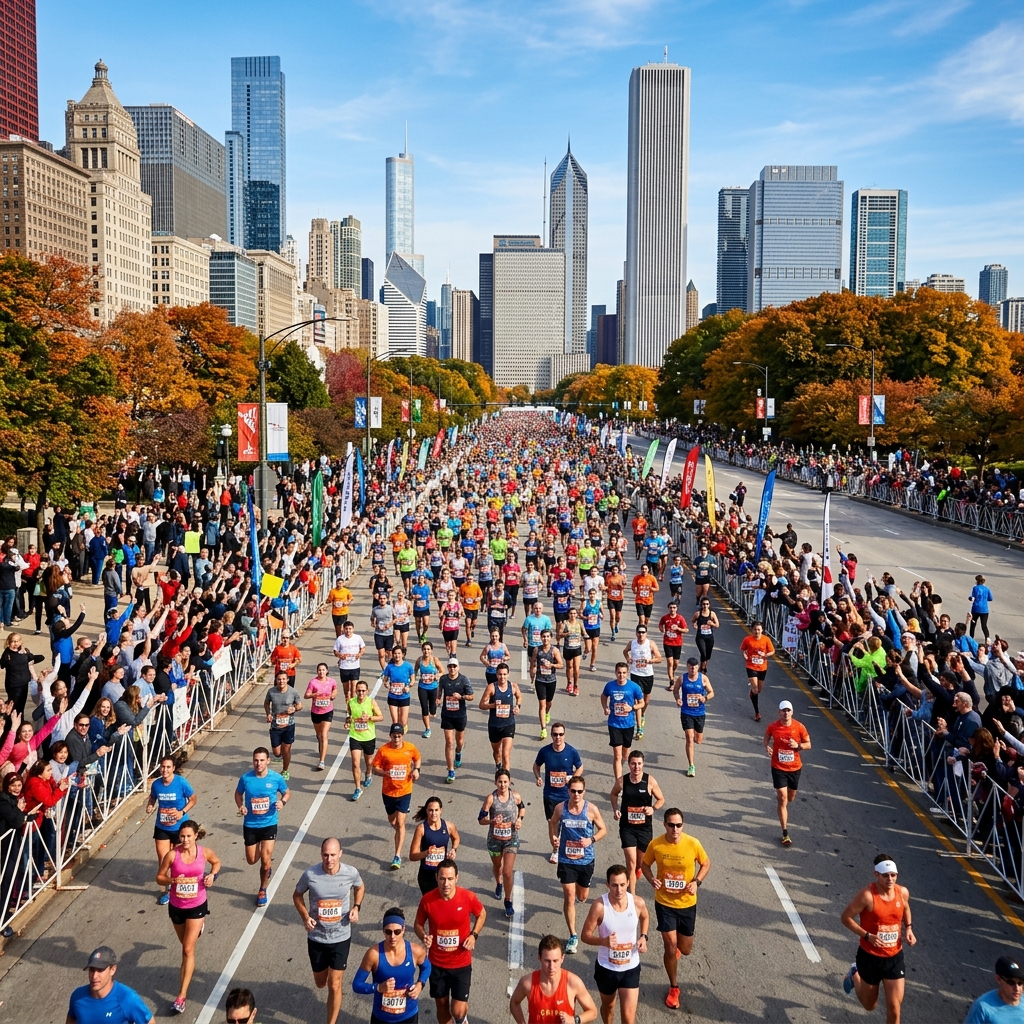
October in Chicago means variable weather - it can be anywhere from mild and perfect to cold and windy or, more rarely, unseasonably warm. That variability is something to factor into your planning if a time goal matters.
Entry reality: The US lottery gives preference to US runners but is open internationally. Chicago tends to be slightly more accessible via the ballot than New York for international applicants.
Who it suits: Runners who want a fast course with outstanding community atmosphere, anyone who wants to tour Chicago's neighbourhoods on foot, and runners looking for a Major where a personal best is genuinely achievable.
New York City Marathon
Difficulty: Hard | Entry: Lottery, 9+1 programme, charity, or time qualifier | Crowd support: Absolutely deafening
New York is the biggest marathon in the world and the loudest. !Tens of thousands of runners fill the Verrazzano-Narrows Bridge at the iconic start of the New York City Marathon Over 50,000 runners. Five boroughs. Two million spectators. It begins on Staten Island with one of the most extraordinary moments in running - the mass crossing of the Verrazzano-Narrows Bridge at the start, covering Staten Island, Brooklyn, Queens, The Bronx, and Manhattan - finishing in Central Park. The five-borough routing creates a point-to-point course that requires significant race-day logistics (ferries and buses to the start, long holding areas). The course also has more elevation than the flat-fast Majors - the five major bridge crossings add up to meaningful undulation, and the final few kilometres through Central Park involve a noticeable climb before the finish.
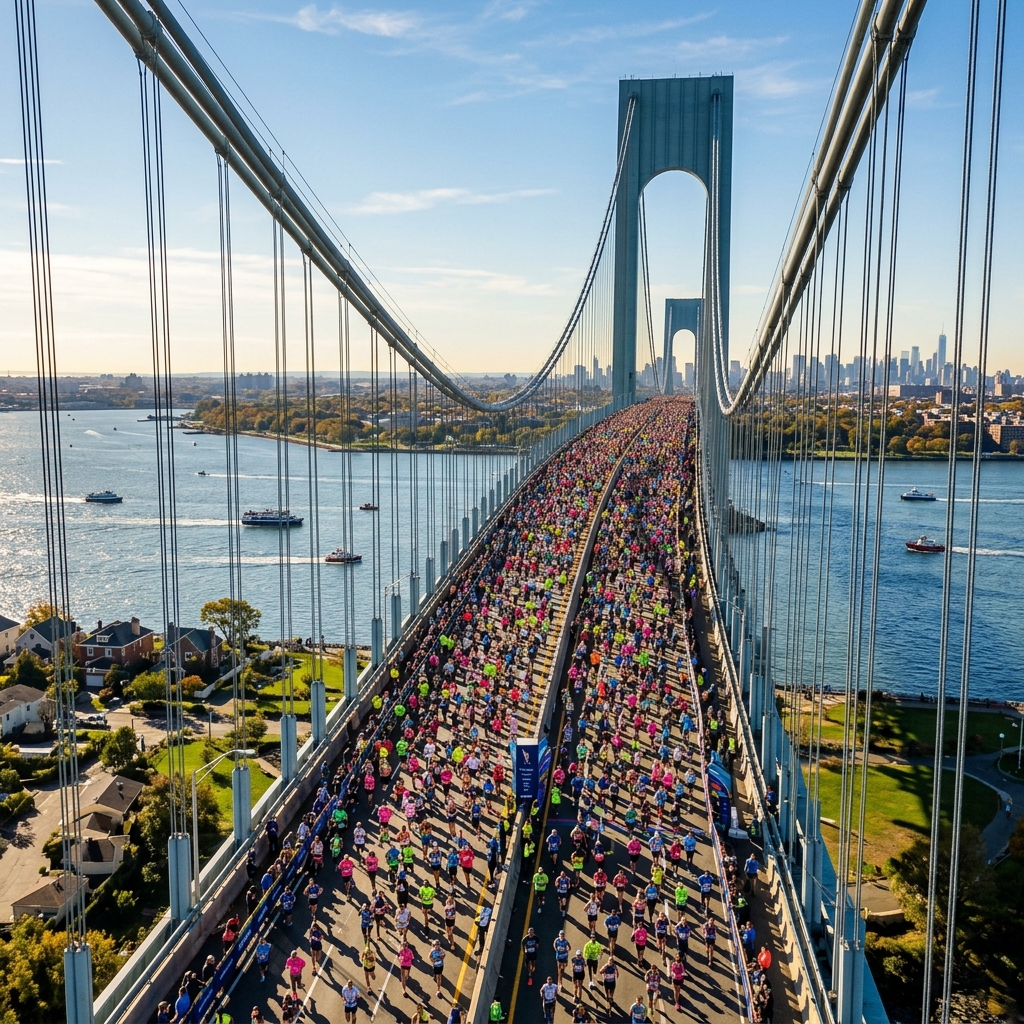
You will not set your personal best here unless conditions align perfectly and you have run it before. You will have the loudest, most surreal running experience of your life.
Entry reality: The New York Road Runners 9+1 programme allows New York residents to qualify by volunteering at one NYRR race and completing nine NYRR races in a calendar year. International runners typically enter via the lottery or charity spots. The lottery is highly competitive.
Who it suits: Runners who want the full spectacle of a mass-participation city marathon, runners who have the experience to manage complex logistics confidently, and anyone chasing the five-borough bucket list experience rather than a time target.
Sydney Marathon
Difficulty: Medium | Entry: Ballot, time qualifier, or charity | Crowd support: Outstanding
Sydney is the newest Major and the only one in the Southern Hemisphere. Announced on November 4, 2024 at the NYC Marathon finish line, the TCS Sydney Marathon joined the series with immediate effect, making its official debut as a Major on August 31, 2025.
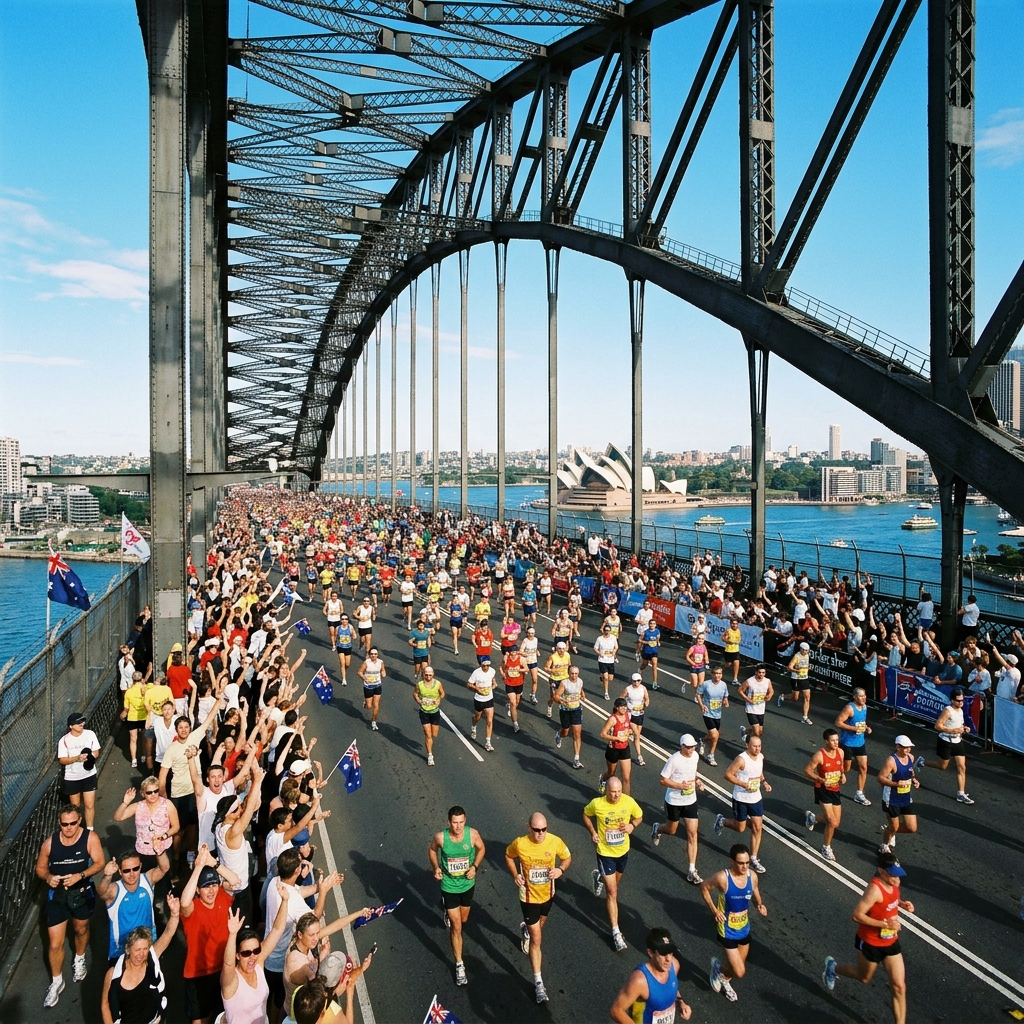
The course is one of the most visually dramatic of all the Majors. It starts at the State Library of New South Wales in the CBD and runs over the Sydney Harbour Bridge, along the northern shores, and back through the city before finishing at the Opera House forecourt. Crossing the Harbour Bridge with the Opera House and harbour spread below you is one of the great spectacles in world marathoning.
The course has meaningful elevation - the bridge crossing and the undulations through the North Shore suburbs make this harder than Berlin or Chicago. Conditions in late August and early September are typically mild and dry, which combined with the visual drama makes it an outstanding Major experience.
Entry reality: Entry is via ballot (lottery), time-qualified entry for runners meeting age/gender standards, or charity places. Because it is the newest Major and Sydney is a global travel destination, demand is already high. The race is owned and operated by the same organisation that runs the London Marathon (TCS, formerly Virgin Money), bringing world-class operational standards from day one.
Who it suits: Runners chasing their first Major who want a genuinely spectacular course, runners who want to combine a Major with Australian travel, and existing Six Star holders who want to start building toward the eventual Nine Star Medal.
Cape Town Marathon
Difficulty: Medium-Hard | Entry: Ballot or charity | Crowd support: High
Cape Town is the eighth Major and the first one on the African continent. Officially confirmed on June 11, 2026, the Sanlam Cape Town Marathon will make its Major debut on May 23, 2027.
The course starts and finishes near the Green Point Precinct, taking runners on a scenic tour of the Mother City. With Table Mountain as a constant backdrop and cool autumn weather, it is visually spectacular but contains rolling undulations and coastal winds that require a strategic approach.
Entry reality: Entry is via ballot (lottery) or charity. Those who finished the 2026 evaluation race had their provisional stars upgraded to full stars toward the future Nine Star Medal.
Who it suits: Runners who want to experience the vibrant running culture of South Africa, star collectors working toward the Nine Star Medal, and anyone who wants to combine their race with an African travel adventure.
Which Major should you do first?
Here is an honest framework based on your primary priority:
| Your Priority | Start With | |---|---| | A personal best or fast time | Berlin | | Best crowd and atmosphere | London | | Total spectacle and experience | New York | | Earning your spot through a qualifier | Boston | | Asian travel experience | Tokyo | | Fast course + neighbourhood atmosphere | Chicago | | Most dramatic scenery + Southern Hemisphere | Sydney | | Scenic coastal views + First Major in Africa | Cape Town |
For most runners doing their first Major, London or Berlin are the strongest choices. London offers unmatched crowd support and a flat course. Berlin gives you the fastest possible conditions for a time target.
Boston is the Major that means the most to qualify for, and therefore the one most worth chasing as a medium-to-long-term goal.
Sydney and Cape Town are the newest additions and excellent choices for runners who want to combine a Major with travel, or those who already hold a Six Star Medal and want to start working toward the future Nine Star.
Training for a Major: where to start
Whatever Major you choose, the training demands are the same - 16 to 20 weeks of structured marathon training, building long runs progressively while maintaining consistent weekday mileage.
If you are targeting a time goal, use the marathon pace calculator to work out your target pace per kilometre and your expected split times. Locking in a realistic goal pace early - not your dream time, your current-fitness time - is the most important decision you will make before training starts.
For a personalised marathon training plan that builds you from your current base to race day, the AI planner can structure your weeks around your target race date and goal time.
One Major at a time. Start by picking one, entering the ballot, and building a plan around it. Six stars is the original goal. Seven - and eventually more - is where the series is heading.
FAQ
Do you need to complete all eight Majors in a specific order? No. You can complete them in any order over any number of years.
What is the Six Star Medal? The Abbott World Marathon Majors Six Star Medal is awarded to runners who complete the original six Majors: Tokyo, Boston, London, Berlin, Chicago, and New York City. Sydney's and Cape Town's additions do not change the Six Star Medal. However, they count toward a future Nine Star Medal that the AWMM plans to introduce as more races join the series.
Is Sydney a full Major now? Yes. The TCS Sydney Marathon was officially announced as the seventh Abbott World Marathon Major on November 4, 2024, and debuted as a full Major on August 31, 2025. It went through a two-year assessment process starting in 2022 before being admitted.
Is Cape Town a full Major now? Yes. The Sanlam Cape Town Marathon was officially announced as the eighth Abbott World Marathon Major on June 11, 2026, and will debut as a full Major on May 23, 2027.
Which Major has the flattest course? Berlin, followed by Chicago. Both are significantly flatter than New York, Boston, or Sydney.
Which Major is the hardest to get into? Tokyo has historically had the most competitive ballot for international runners. Boston requires a qualifying time. New York and London also have very competitive ballots. Sydney and Cape Town, as the newest Majors, are building demand rapidly.
Can you walk a World Marathon Major? Yes. All eight Majors have generous time cutoffs that accommodate walkers and run-walkers. Walking a Major is a completely valid way to earn your star.