What to Eat Before a 5K: Simple Race Day Nutrition That Won't Let You Down
Overthinking your 5K nutrition is easy. Here's exactly what to eat the night before and the morning of a race - and what to avoid so your stomach doesn't derail your time.
· 7 min read · Nutrition
You don't need to carb-load for a 5K. But you absolutely can eat the wrong things and blow your race anyway.
A 5K lasts between 16 minutes for an elite runner and about 45 minutes for a beginner. That's a short, high-intensity effort. Your body already has glycogen stores that will comfortably fuel 60-90 minutes of hard running. You are not going to "hit the wall" in a 5K.
What you can do is eat something too heavy, too close to the race, that sits in your stomach like a brick and costs you 30 seconds per kilometre. Or eat something too high in fibre that sends you hunting for a porta-toilet at the 2km mark.
The goal of 5K race nutrition is not to maximise fuel. It's to not sabotage yourself.
The night before your 5K
This is where most runners underestimate the impact. Your evening meal will still be partially in your digestive system race morning if it's heavy, fatty, or high in insoluble fibre.
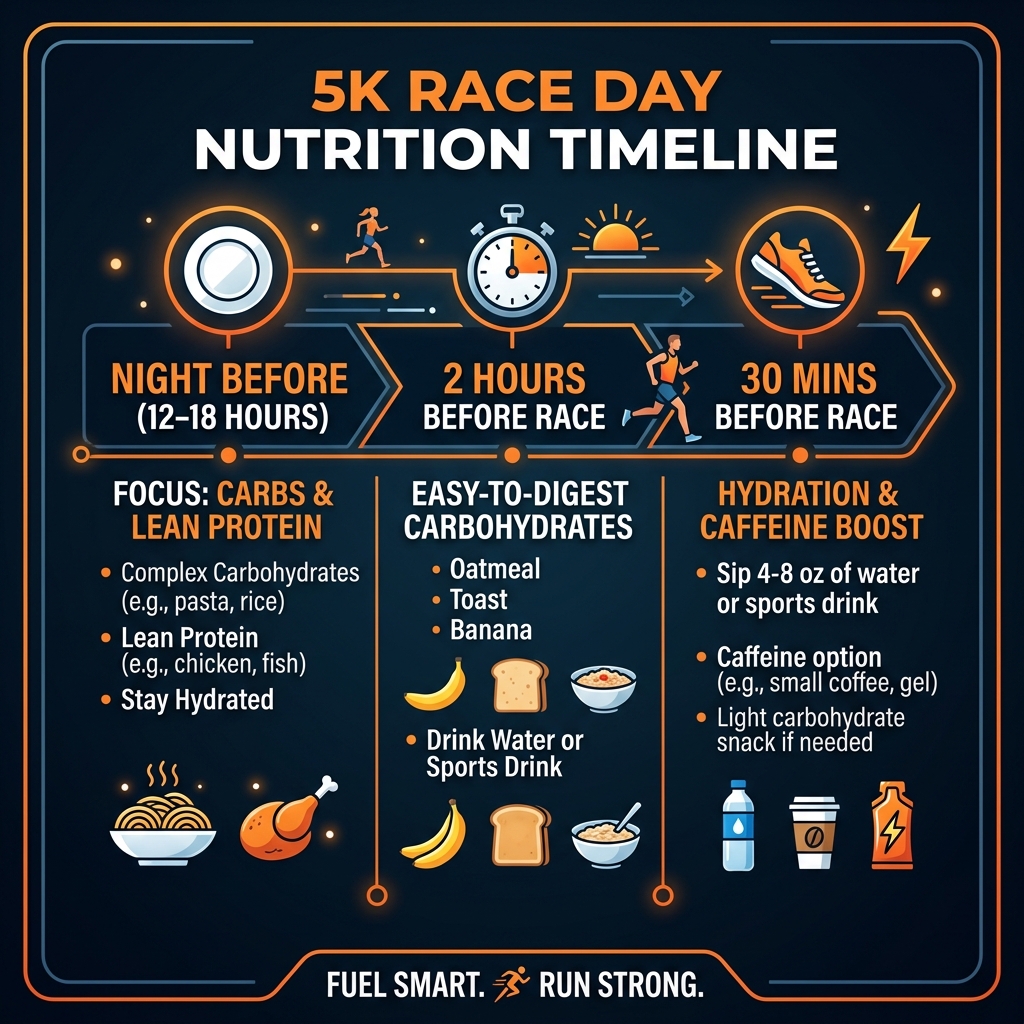
!5K Race Day Nutrition Timeline Infographic
What works: A moderate meal built around easily digestible carbohydrates and lean protein. Think pasta with a simple tomato sauce and some chicken, rice with salmon, or a potato-based dish. Nothing exotic. Nothing new.
The "nothing new" rule is probably the most important in race nutrition at any distance. Race day is not the time to try the restaurant you've never been to, the recipe you've always wanted to cook, or any food outside your established routine.
What to avoid the night before: - Heavy, fatty meals (steak and fries, creamy pasta sauces, takeaway) - Very high-fibre foods - beans, lentils, cruciferous vegetables in large quantities - Excessive alcohol (disrupts sleep and dehydration the next morning) - Anything you don't regularly eat
Keep your evening meal to a normal size. You're not fuelling for a marathon - overeating the night before can itself leave you feeling sluggish on race morning.
Race morning: what to eat and when
If your race starts in the morning (before 10am)
Most 5Ks and parkruns start between 8am and 9am. That's a narrow window for a useful pre-race meal.
The practical recommendation: eat something small 60-90 minutes before your race start time. This gives most foods enough time to clear your stomach without leaving you depleted.
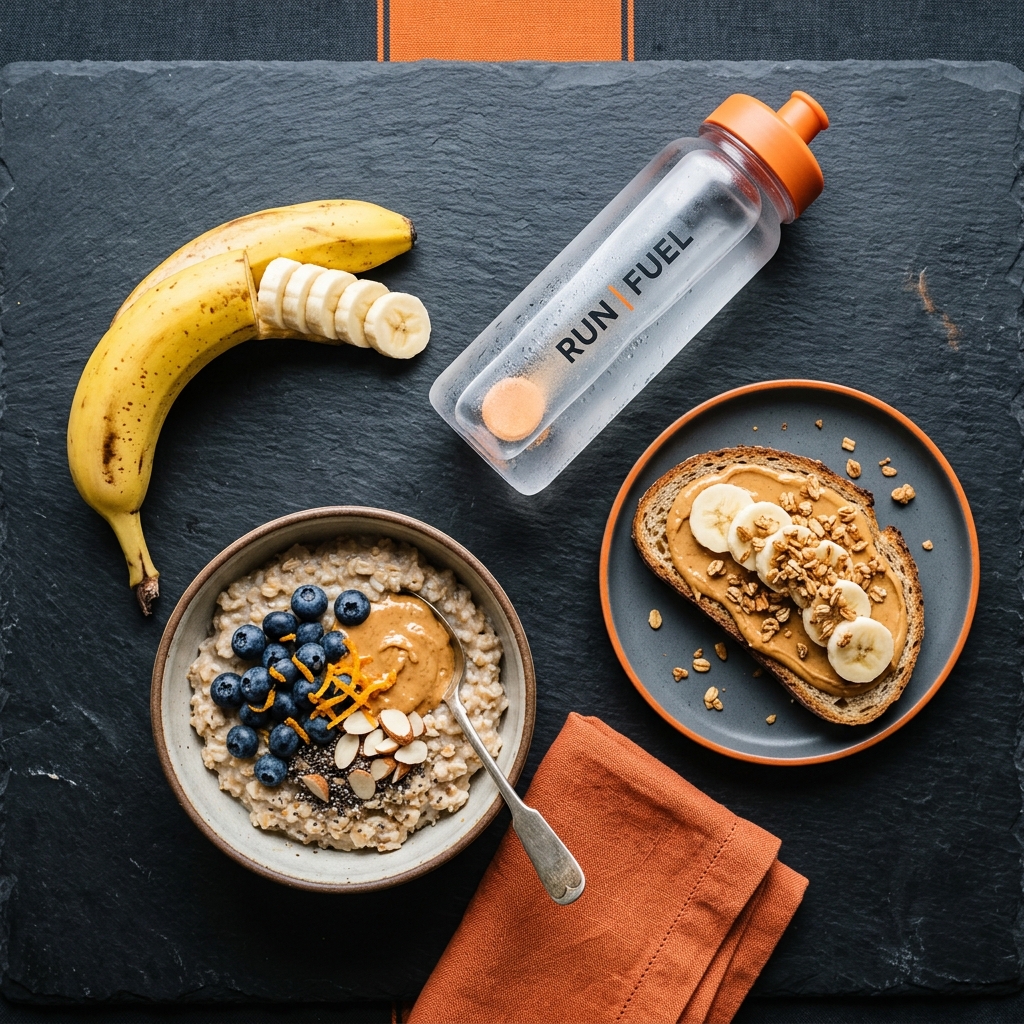
Good options at this timing: - A banana (simple carbs, potassium, easy to digest, portable) - Toast with a thin layer of peanut butter or jam - A small bowl of porridge/oatmeal (plain or with a little honey) - Half a bagel
Avoid: eggs and bacon, a full English/American breakfast, high-fat foods of any kind, lots of dairy, or large portions.
If you have a sensitive stomach
Some runners genuinely cannot eat within 2 hours of running hard without GI distress. If that's you, stop fighting it. Your body's overnight glycogen stores are almost certainly sufficient for a 5K if you ate a reasonable evening meal the night before.
A black coffee (if you're a regular coffee drinker) and a banana eaten 30 minutes before the race is enough. Or nothing at all, if that's what you're used to.
The key phrase is "if you're used to it." Trying a fasted 5K for the first time on race day is asking for trouble. Practice your race-morning routine on training runs first.
Coffee
Caffeine is one of the best-evidenced performance supplements in sport. A dose of 3-6mg per kg of body weight 45-60 minutes before exercise improves endurance performance in most people. For a 70kg runner, that's roughly 200-400mg of caffeine - about 2 espresso shots or one large filter coffee.
If you're a regular coffee drinker, your morning coffee is not likely to cause GI issues during a 5K. If you don't drink coffee regularly, don't introduce it on race day - the GI side effects in caffeine-naive individuals can be unpredictable.
Hydration before a 5K
You don't need a hydration strategy for a 5K in mild weather. You need to not be dehydrated.
A practical approach: - Drink normally through the day before the race - Have a glass of water (300-500ml) with your morning meal - Sip water at the start line if it's warm - You almost certainly won't need to drink during the race itself at 5K distance
In hot weather (above 20°C) or for slower runners whose 5K will take 35-45+ minutes, a small sip of water or electrolyte drink at the halfway point can help. But for most people at most 5Ks, pre-race hydration covers it.
What to eat before a parkrun specifically
Parkrun takes place at 9am on Saturday mornings. That timing works well for a light breakfast at 7:30-8:00am.
The classic parkrun breakfast: - Toast with peanut butter or Marmite - A banana - Tea or coffee if you're a regular drinker
Simple. Familiar. Nothing that will sit badly. This is what the experienced parkrun community has largely converged on, and for good reason.
If you want to find your nearest parkrun or explore new events, browse 5K races and parkruns near you on Your Run Guide.
Foods to avoid on race day
Even if you've had these without issue on training runs, avoid them on race day:
- High-fat foods: Slow gastric emptying, risk of feeling heavy and sluggish
- High-fibre foods: Legumes, bran, raw vegetables - can accelerate gut motility mid-race
- Dairy (for some runners): Especially milk - can cause bloating and GI urgency in lactose-sensitive individuals
- Spicy food: Risk of reflux or GI distress mid-race
- New foods: The gut is a creature of habit. Stick to what you know
Timing cheat sheet
| Time before race | What to eat | |-----------------|-------------| | Night before | Normal-sized familiar meal, moderate carbs, lean protein, low fat | | 90-120 minutes | Small, easily digestible carbs (banana, toast, oatmeal) | | 30-60 minutes | Just a banana or nothing; coffee if you're a regular drinker | | 15 minutes | Nothing solid; sip water only | | During race | Not necessary for most 5K runners |
After your 5K
You've just run hard for 20-45 minutes. Your glycogen isn't depleted, but your muscles are stressed and your body is in a mild catabolic state. Recovery nutrition doesn't need to be complicated:
- Within 30-60 minutes: a protein-containing snack or meal (eggs, Greek yoghurt, chicken sandwich)
- Continue hydrating - replace fluids by drinking to thirst
- Don't skip meals for the rest of the day thinking you "don't deserve them" because the 5K was short
The post-race fry-up or café breakfast that's become a parkrun tradition is actually well-timed for recovery. Enjoy it.
FAQ
Should I carb-load the day before a 5K?
No. Carbohydrate loading is a specific protocol designed for events lasting over 90 minutes, where glycogen depletion is a genuine performance threat. A 5K is not long enough to deplete your stores. Eating a normal meal the night before is sufficient.
Can I run a 5K on an empty stomach?
Yes, many experienced runners do. If you regularly train in the morning without eating first and it doesn't affect your effort or stomach, you can race that way too. The caveat: don't try this for the first time on race day.
What's the best breakfast before a fast 5K race?
For most runners: oatmeal with honey and a banana, eaten 90 minutes before race start. It's easily digestible, provides simple and complex carbs, and is unlikely to cause GI problems.
Ready to find your next race? Browse 5K races and parkruns near you on Your Run Guide - filter by location, date, and distance to find events that fit your schedule.