The Horse Went Lame: How Gordy Ainsleigh Invented the 100-Mile Trail Race
In 1974, Gordy Ainsleigh lined up on foot against 198 horses on the Tevis Cup trail. Twenty-three hours later, modern mountain ultrarunning was born.
· 7 min read · Running Culture
Today, 100-mile trail races are a global phenomenon. From the alpine cols of Chamonix to the rugged canyons of the Sierra Nevada, thousands of runners enter highly contested lotteries every year for the chance to push through darkness, blisters, and mountain passes.
Yet half a century ago, the idea that a human could run 100 miles through wilderness trails in under 24 hours was considered medical suicide.
Modern mountain ultrarunning exists because of a single stubborn horse.
In the early 1970s, the Western States Trail in northern California belonged exclusively to equestrians. Every August, riders tackled the grueling Western States Trail Ride (the Tevis Cup), navigating 100 rugged miles from Lake Tahoe to Auburn across steep canyons, rivers, and granite passes.
Gordy Ainsleigh, a 27-year-old woodcutter, track athlete, and endurance rider, loved the trail. But in 1973, his horse went lame at mile 29. Disqualified and disappointed, Ainsleigh made an outlandish vow: next year, he would do the ride without a horse.
!Gordy Ainsleigh running 100 miles alongside horses
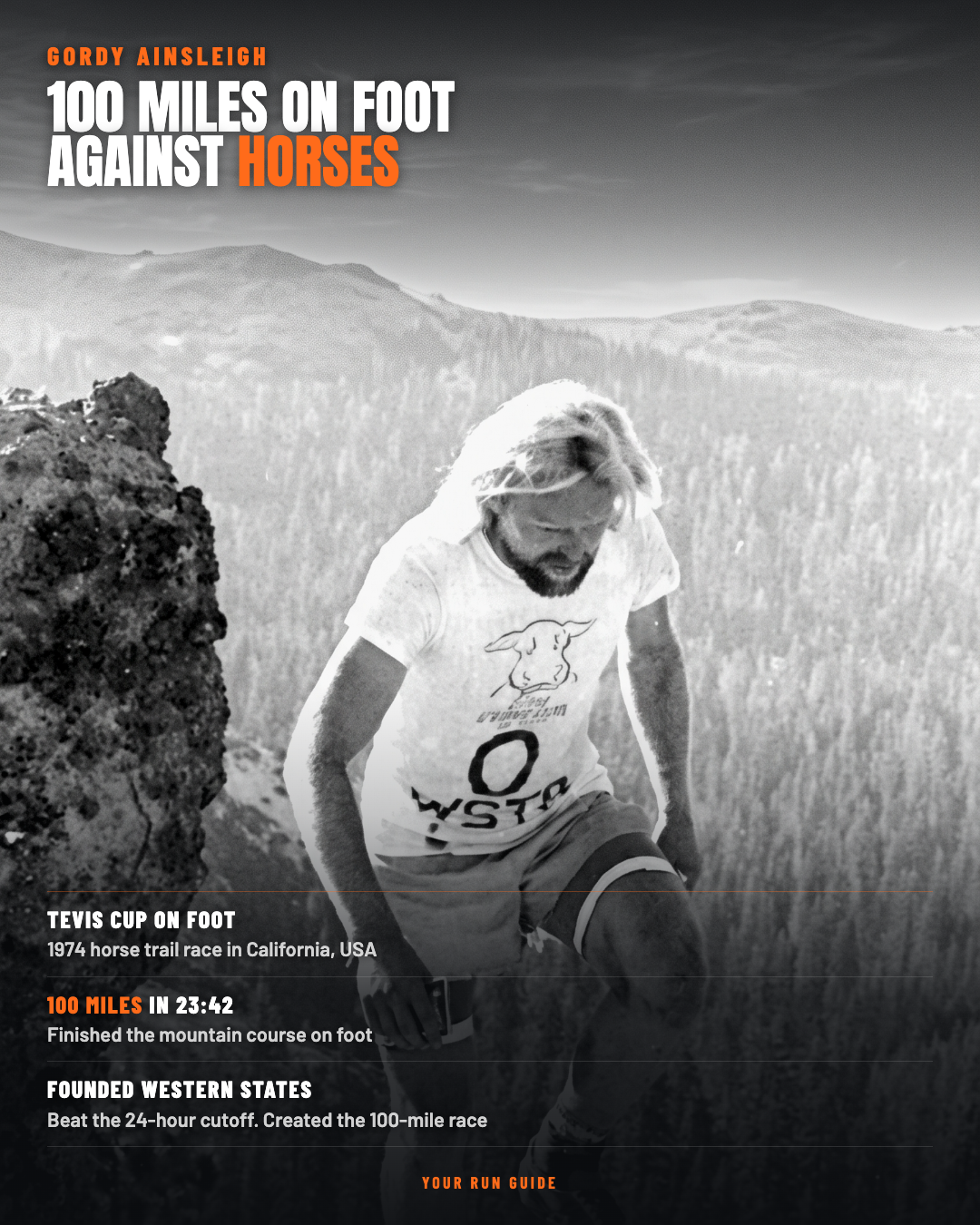
August 3, 1974: One Man, 198 Horses
When Ainsleigh arrived at the start line in Squaw Valley (now Palisades Tahoe) on August 3, 1974, the temperature was already climbing toward a sweltering 41°C (106°F) in the canyons.
Surrounding him were 198 horses, their riders eyeing the lone runner in short-shorts and running flats with a mixture of amusement and concern. Most expected him to drop out by Devil's Thumb or collapse from heat exhaustion in El Dorado Canyon.
Ainsleigh's plan was simple and desperate:
- Keep moving through the heat of the day.
- Sponge off in mountain creeks whenever water appeared.
- Eat canned peaches, salt tablets, and bread along the route.
- Hit the 24-hour buckle cutoff established for the horses.
!The Tevis Cup equestrian trail through California canyons
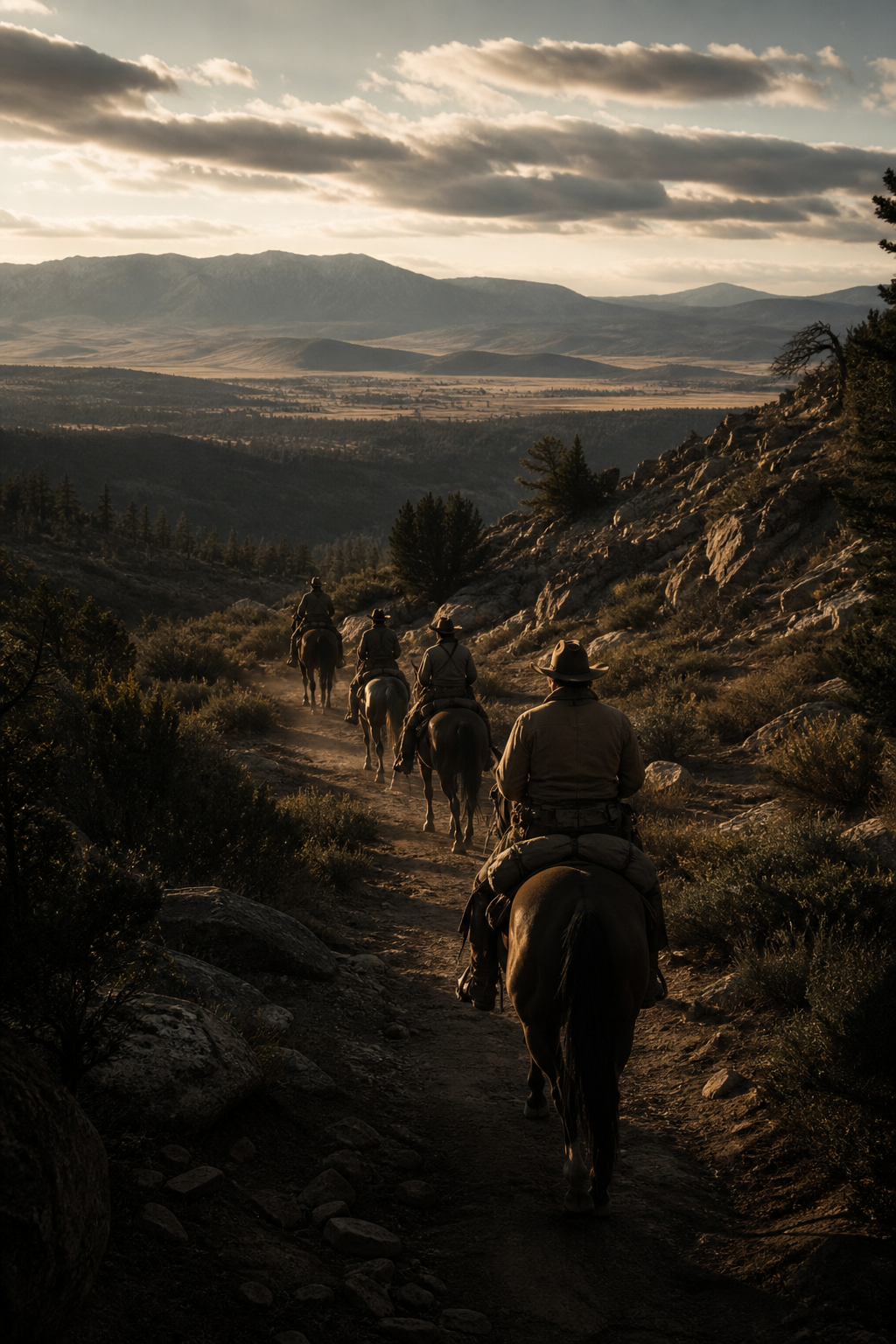
The first fifty miles through the granite high country were grueling, but the true nightmare began when the trail plummeted into the canyons. Temperatures inside Deadwood Canyon were stifling. His shoes filled with grit and silt, turning his socks to sandpaper.
Hallucinations and the 24-Hour Buckle
By nightfall, Ainsleigh was navigating by flashlight along rocky singletrack. Horses would occasionally pass him, their riders offering encouragement and water.
At mile 85, near Highway 49, severe dehydration and glycogen depletion caused vivid hallucinations. He saw phantom spectators in the trees and struggled to hold down fluids. Yet he kept putting one foot in front of the other.
!Gordy Ainsleigh on the trail in 1974
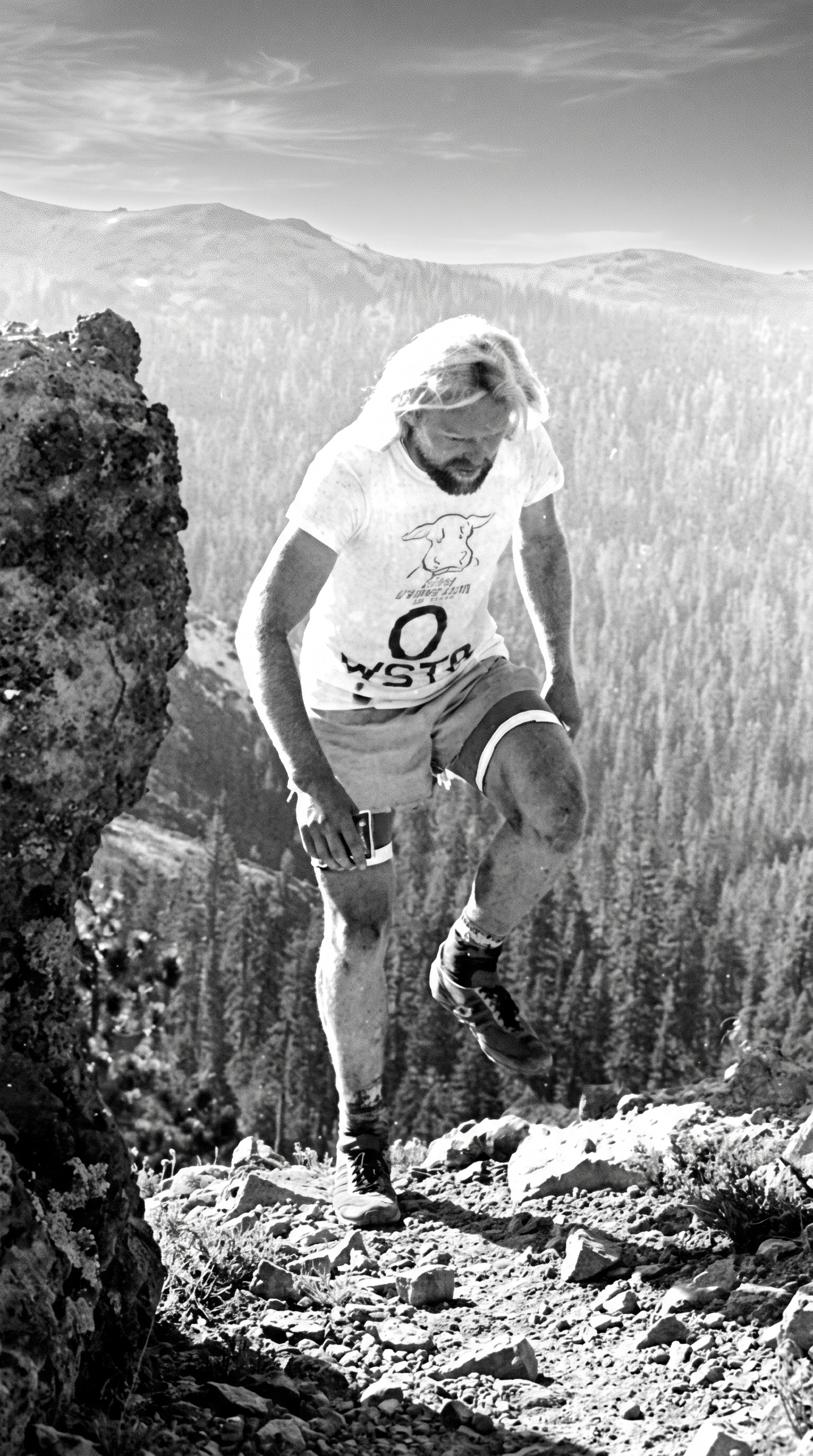
With just over an hour left before the 24-hour cutoff, he reached the outskirts of Auburn. He jogged onto the Placer High School track, covered in red dust, dried sweat, and blood.
The official clock stopped at 23 hours, 42 minutes, and 7 seconds.
He had beaten the horse cutoff with 18 minutes to spare. He was awarded the coveted Tevis Cup silver belt buckle, and sports medicine had to rewrite its assumptions about human physical capability.
!Gordy Ainsleigh running into Auburn
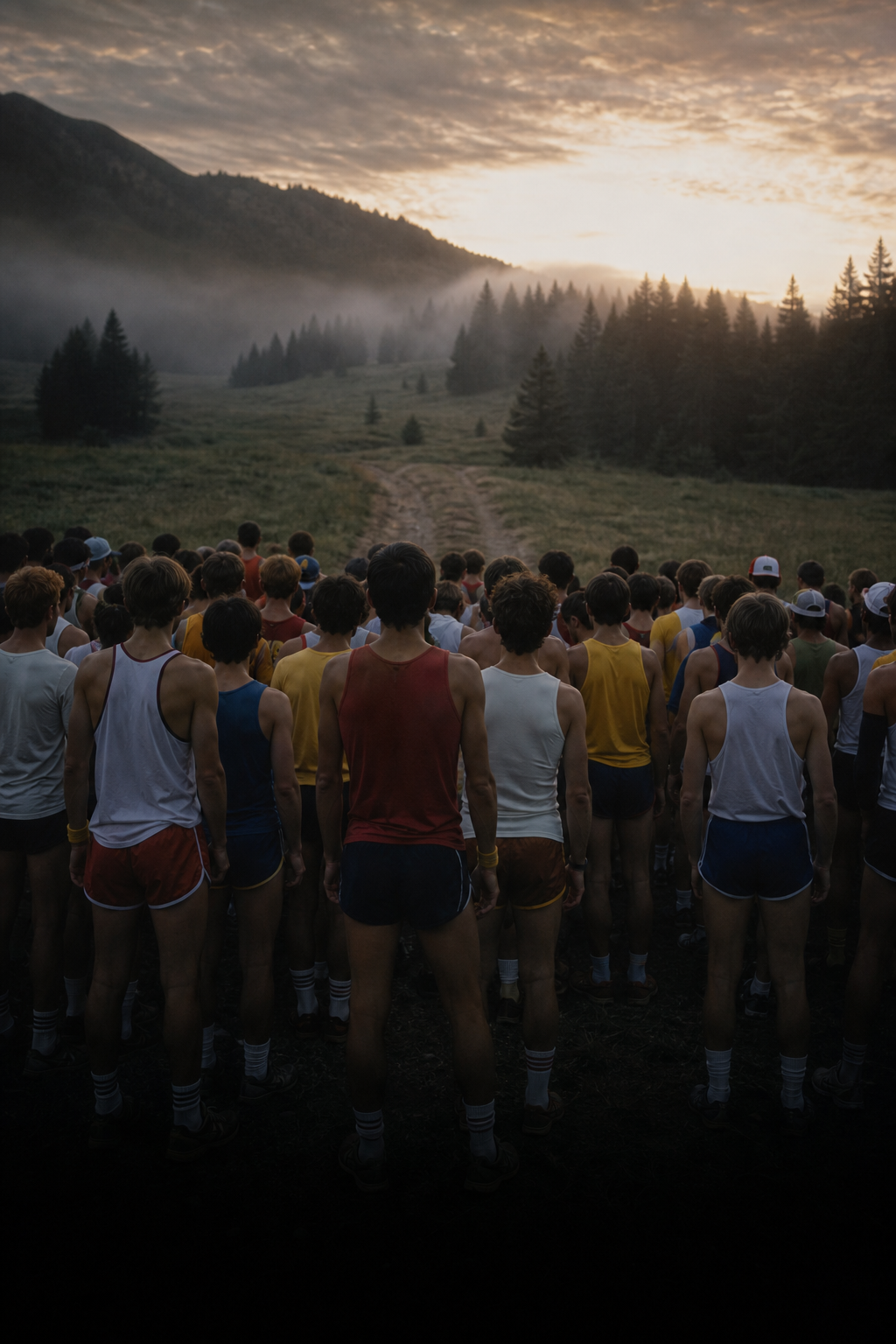
From One Maverick to a Global Sport
Ainsleigh's solo run sparked an immediate ripple effect:
- 1975: One runner attempted to repeat Ainsleigh's feat, dropping out at mile 98.
- 1976: Ken "Cowman" Shirk finished on foot in 24:30.
- 1977: Fourteen runners lined up alongside horses, with three official finishers, including Andy Gonzales in 22:57.
- 1978: The foot race officially separated from the horse ride, establishing the Western States 100-Mile Endurance Run as the world's premier ultramarathon.
Today, Western States is the gold standard of 100-mile trail racing, attracting the greatest mountain athletes in the world.
What Gordy Ainsleigh's Run Teaches Us About Endurance
Ainsleigh's historic run was not built on high-tech carbon shoes, precision hydration mixes, or GPS elevation maps. It was built on fundamental human physiology:
1. Humans Are Nature's Greatest Thermoregulators While horses are fast, they have massive muscle mass that generates tremendous heat, making them susceptible to heat stroke in extreme canyon temperatures. Humans possess millions of eccrine sweat glands across bare skin, allowing us to cool efficiently through evaporative sweat. Over long distances in extreme heat, an adapted human can out-endure almost any animal.
2. Forward Motion Above All Else Ainsleigh did not run all 100 miles. He power-hiked the vertical canyon climbs, jogged the flats, and carefully descended the technical switchbacks. Ultramarathon pacing is not about running fast; it is about minimizing time spent standing still.
3. Trusting Your Aerobic Engine The human body carries roughly 2,000 calories of stored carbohydrate (glycogen) but between 50,000 and 100,000 calories of stored fat. Ainsleigh tapped into fat oxidation by keeping his heart rate controlled during the early climbs, ensuring he did not blow up his metabolic engine before reaching the canyons.
If you are curious about transitioning from standard marathons to trail running, explore our ultramarathon training guide or learn how to pace long climbs with our running workout types guide.
Find races: Browse trail and ultramarathon events in the United States on Your Run Guide to discover historical trails, mountain challenges, and scenic ultras.