The 'Grey Zone' Trap: Why Your Easy Runs Are Still Too Fast
Most runners think they are running easy, but they're actually grinding in Zone 3 and halting their training progress.
· 5 min read · Training
Go to any local park on a Sunday morning and watch the runners go by. Nine out of ten of them are making the exact same training mistake.
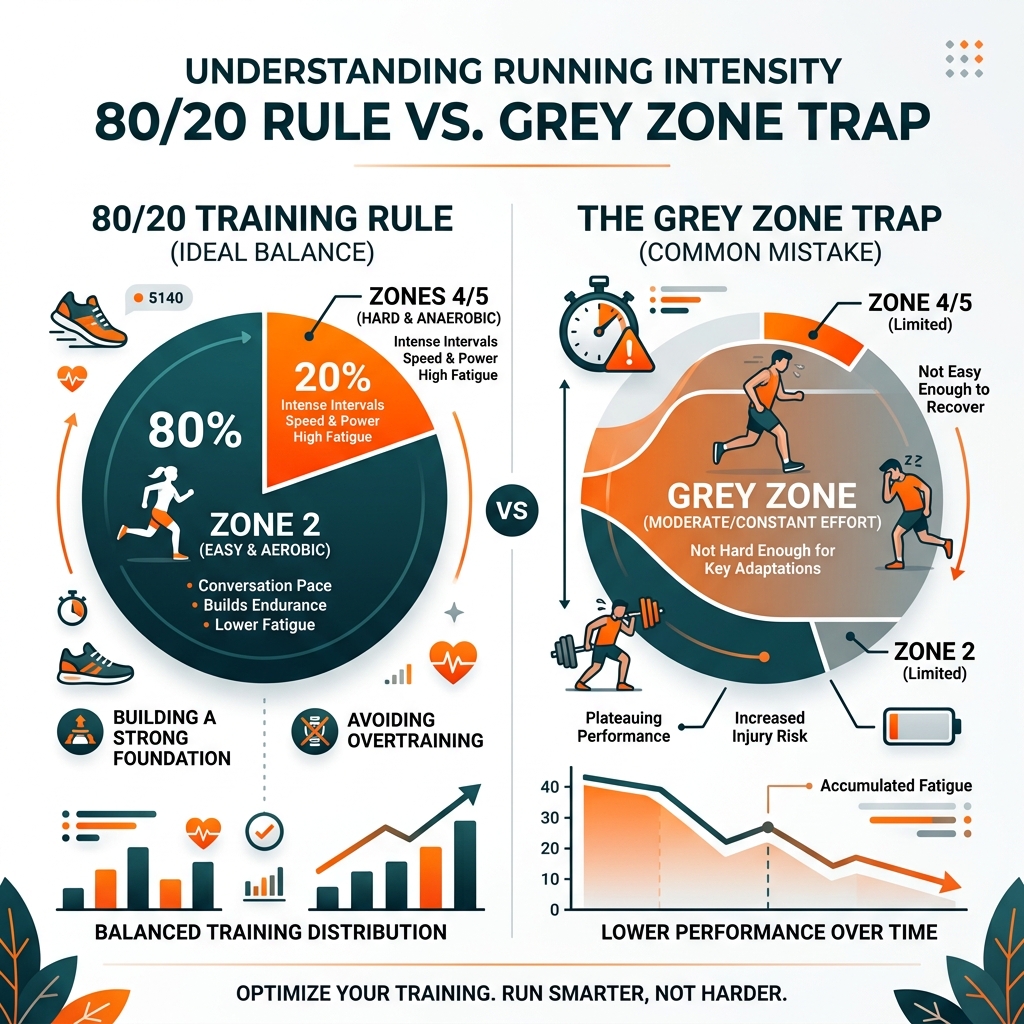
They aren't running fast enough to trigger the explosive VO2 max benefits of a sprint session. But they aren't running slow enough to build the massive aerobic base of a true recovery run. They are stuck directly in the middle - the Grey Zone.
We constantly hear about the 80/20 rule: 80% of your running should be easy, and 20% should be hard. So why do we all instinctively drift toward an effort level that feels "kinda hard but sustainable"?
Why Zone 3 is Ruining Your Training Blocks
Many runners define "easy" as a pace where they aren't gasping for air. This is a massive miscalculation.
When you run in Zone 3 (roughly 70-80% of your maximum heart rate), you feel like you are working hard enough to earn fitness. You get sweaty, your heart rate climbs, and you finish feeling like you've done a proper workout.
But developmentally, you are getting the worst of both worlds.
In Zone 3, your body relies heavily on carbohydrates for fuel, meaning you aren't training your fat-burning aerobic engine (which happens in Zone 2). Simultaneously, you are generating excess fatigue and muscular damage without heavily recruiting the fast-twitch muscle fibers required for top-end speed gains (which happens in Zone 4 and 5).
You finish the run too tired to nail your actual speedwork the following Tuesday, and you slowly grind yourself into a state of chronic fatigue.
!80/20 Rule vs The Grey Zone Trap
The Ego Check: How to Find Your Real Easy Pace
Finding your true easy pace requires totally abandoning your watch ego. Here is how to test it objectively:
The Full Sentence Test:
!The Full Sentence Test for Easy Running
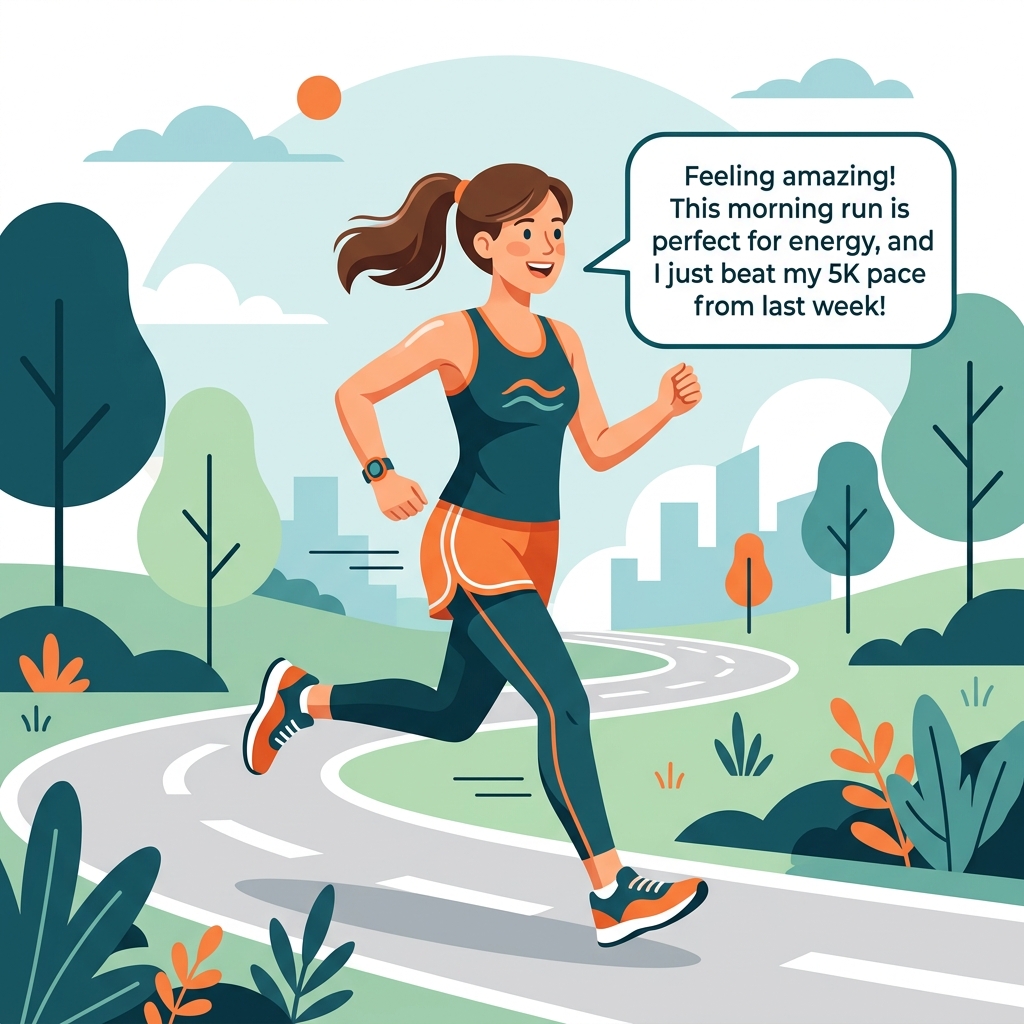
You should be able to speak a full, structured sentence out loud without gasping for breath halfway through. Not a grunt, not a two-word response - a full sentence. If you can't say, "I am running on this path and feeling perfectly comfortable today," you are running too fast.
The Heart Rate Metric:
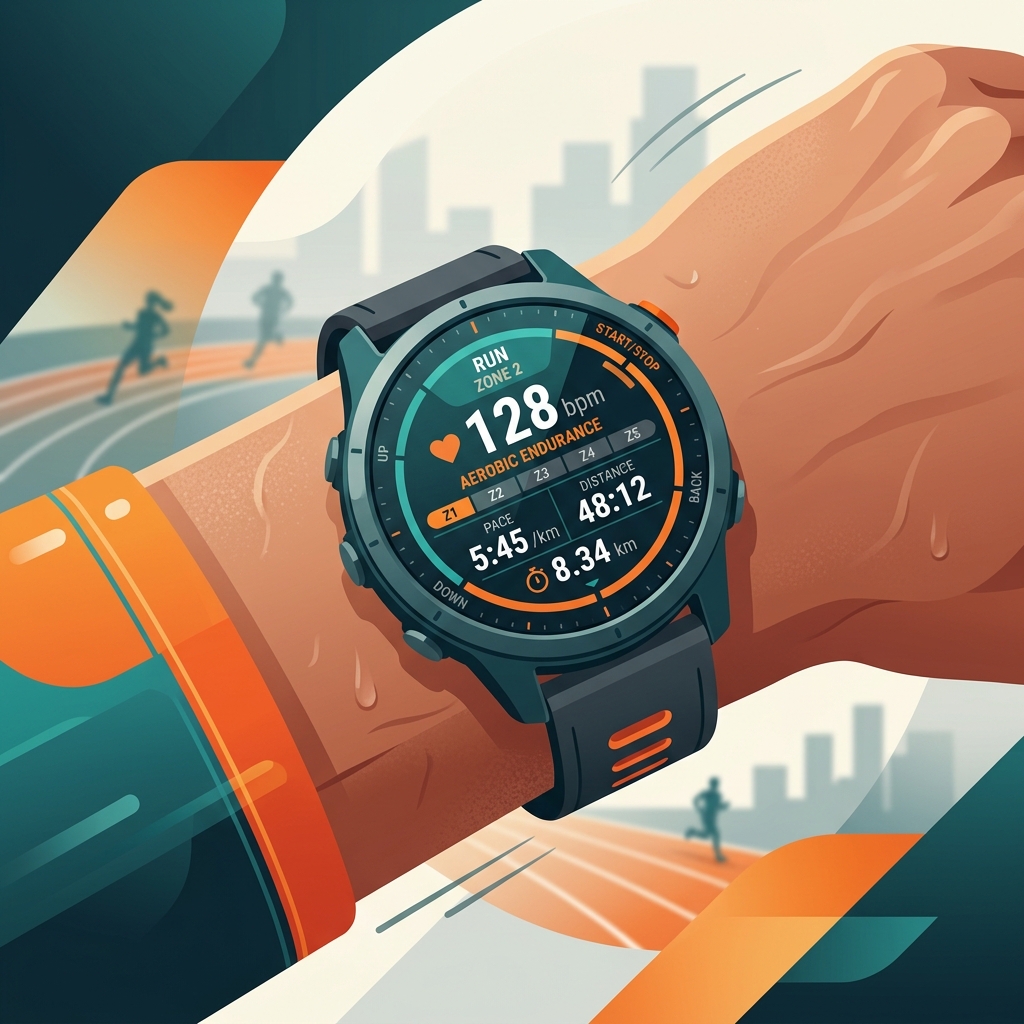
If you train with a chest strap, you want to stay below the top of Zone 2. A rough (but functional) benchmark is the MAF formula: 180 minus your age. If you are 30 years old, your heart rate shouldn't drift above 150 bpm on these runs.
Trusting the Process
Slowing down feels terrible at first. Your stride might feel clunky, and getting passed by slower runners will poke at your ego.
Force yourself to embrace the shuffle. When you commit to keeping your easy days embarrassingly slow, your legs will finally feel fresh enough to destroy your hard days. You will break your plateau. You just have to slow down first.