Mariko Yugeta: How a 67-Year-Old Woman Broke 3 Hours in the Marathon
Mariko Yugeta became the first woman over 65 to break the three-hour marathon barrier, running 2:58:59. Here is her training volume, strength routine, and longevity formula.
· 7 min read · Training
When Japanese high school physical education teacher Mariko Yugeta first broke three hours in the marathon at age 61 (clocking 2:59:15 at the 2019 Shimonoseki Kaikyo Marathon), running purists thought it was a once-in-a-generation outlier.
Then she kept getting faster.
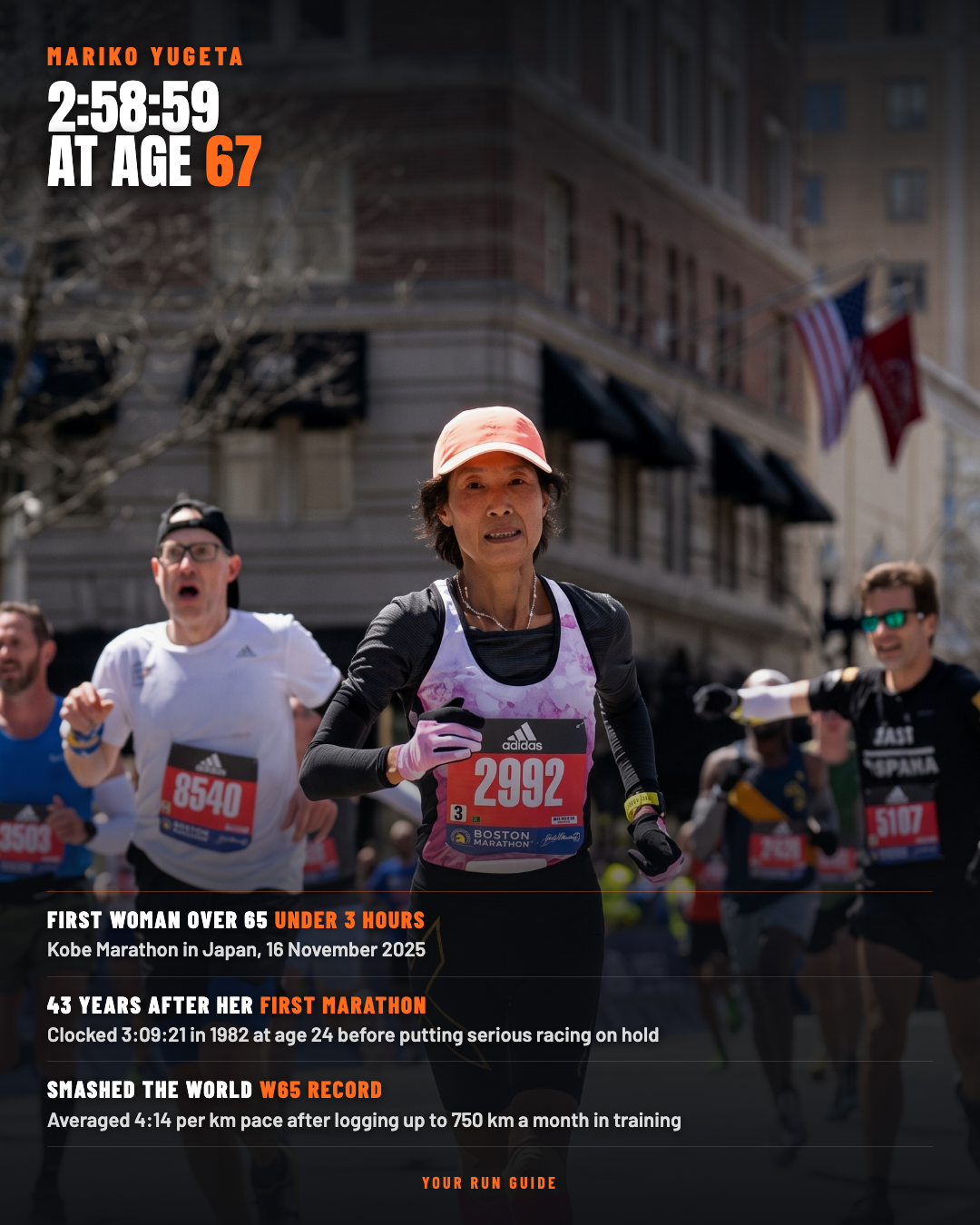
At 62, she ran 2:52:13 at the Osaka International Women's Marathon. And at age 67, she shattered the world W65 record by running 2:58:59 at the Kobe Marathon, becoming the first woman over 65 in history to break the sub-three barrier. Her time represents an age-graded performance of over 105 percent, meaning she ran faster relative to biological age standards than the open women's world record.
What makes Yugeta's story so captivating for the running community is that she did not accomplish this through retired leisure. She raised four children, worked full-time as a high school teacher, and only began chasing serious marathon PRs in her late fifties.
Her training methodology offers a fascinating blueprint for masters runners who refuse to accept slowing down as inevitable.
!Mariko Yugeta running sub-3 hours at age 67
The Contrasting Philosophy: High Volume, High Intensity
Unlike Ed Whitlock, who favored slow, gentle shuffling, Yugeta trains with the aggressive intensity of a collegiate track athlete. Her monthly training logs frequently exceed 600 to 700 kilometres (370 to 430 miles):
- Weekly mileage: Between 140 and 170 kilometres (85 to 105 miles).
- Track sessions: 1000m repeats at 3:45/km pace (sub-6:00/mile), often training alongside the high school boys she coaches.
- Hill climbs: Relentless uphill repeats on steep mountain roads in Saitama prefecture to build posterior chain power without track pounding.
- Pacing pace runs: 30-kilometre weekend progression runs starting at 4:30/km and finishing near 4:05/km.
When asked why she runs so hard, Yugeta is frank: "If you stop challenging your speed, your cadence drops. Once your cadence drops, your stride shortens, and your running becomes heavy."
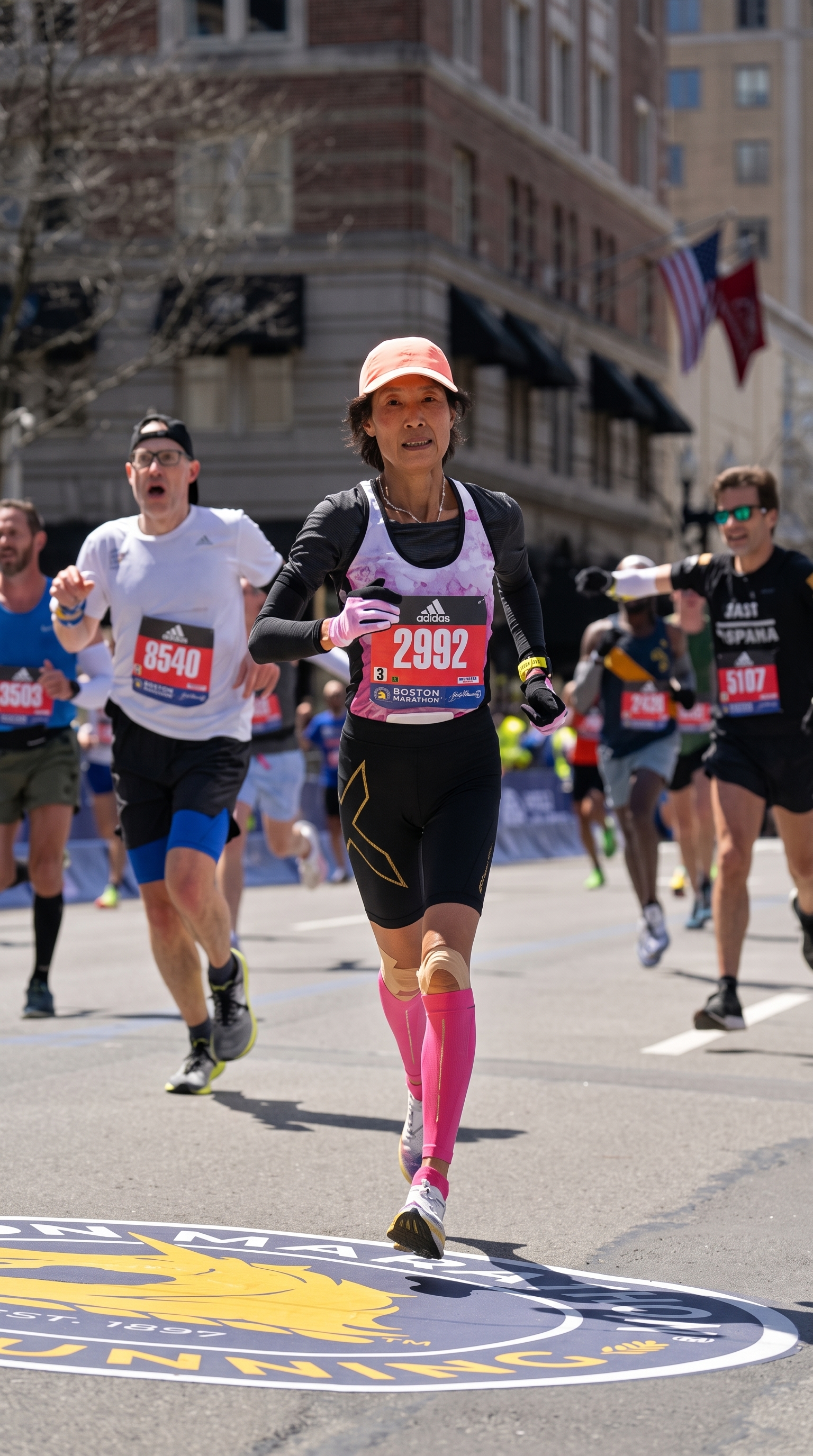
!Mariko Yugeta, the W65 marathon world record holder
3 Core Pillars of Yugeta's Anti-Aging Blueprint
How does a woman in her late sixties handle 100 miles a week without stress fractures or chronic tendonitis? Yugeta relies on three essential non-running practices:
1. Dynamic Core Stability and Foam Rolling Before Every Run Yugeta spends 30 minutes on a yoga mat before taking a single running step. She performs bird-dogs, glute bridges, plank reaches, and deep thoracic spine mobility work. Waking up dormant gluteus medius muscles ensures that when her foot strikes the ground, her pelvis does not drop, protecting her knees from rotational shear.
2. High-Protein Dietary Structure and Hot Spring Baths Post-menopausal runners experience accelerated loss of lean muscle mass (sarcopenia) due to declining estrogen levels. Yugeta consumes protein at every meal (fish, eggs, natto, tofu, and chicken), ensuring her muscles have the amino acid building blocks for cellular repair. After long runs, she frequents Japanese onsens (hot springs), using contrast hydrotherapy to accelerate blood circulation.
3. High Cadence Over Stride Length Yugeta runs with a remarkably fast, light turnover, averaging between 195 and 205 steps per minute. By keeping ground contact time extremely low, each foot strike acts like a spring rather than a brake. This preserves her knee cartilage and protects her hips from the heavy impact forces of slower strides.
How Female Runners Can Adapt This in Their 40s, 50s, and 60s
You do not need to log 100-mile weeks to apply Yugeta's principles to your own training:
Never Abandon Resistance Training Cardio alone will not maintain running speed after 50. Two 20-minute sessions per week of heavy resistance training (goblet squats, Romanian deadlifts, calf raises, and step-ups) stimulates growth hormone production, preserves fast-twitch motor units, and maintains bone mineral density.
Swap Junk Miles for Steep Incline Walking or Hills If high mileage aggravates your knees or lower back, introduce steep treadmill power-hiking (12 to 15% incline at 5 km/h) or outdoor hill repeats. You achieve the same cardiovascular threshold stimulus as track intervals without the destructive joint pounding of hard flat surfaces.
Fuel for Bone Health Prioritize vitamin D, calcium, and magnesium alongside dietary protein. Healthy connective tissue and dense cortical bone allow your skeletal frame to absorb training stress for decades.
If you are looking to revitalize your training in your masters years, check out our running plan for over 50, test your benchmarks with our age-graded calculator, and read our guide to strength training for runners.
Find races: Browse fast and flat road marathons on Your Run Guide to find your next goal race and chase your age-group personal best.