5 Marathon Mistakes That Ruin Race Day (And How to Avoid Every One)
Most marathon blow-ups are not bad luck. They are the same five avoidable mistakes, made by runners who were otherwise ready. Here is what actually goes wrong on race morning and how to make sure it does not happen to you.
· 8 min read · Training
You have done the training. The long runs are in the bank. Your legs are rested and your kit is laid out the night before. And then race morning arrives and something goes wrong anyway.
Most marathon blow-ups are not about fitness. They are about decisions - small ones that compound over 26.2 miles until they become disasters. The same five mistakes show up again and again at every finish line, from first-timers to runners who have run dozens of marathons.
Here is what they are, why they happen, and exactly how to avoid them.
!Runner on marathon course with crowd cheering and warning signs about common race-day mistakes
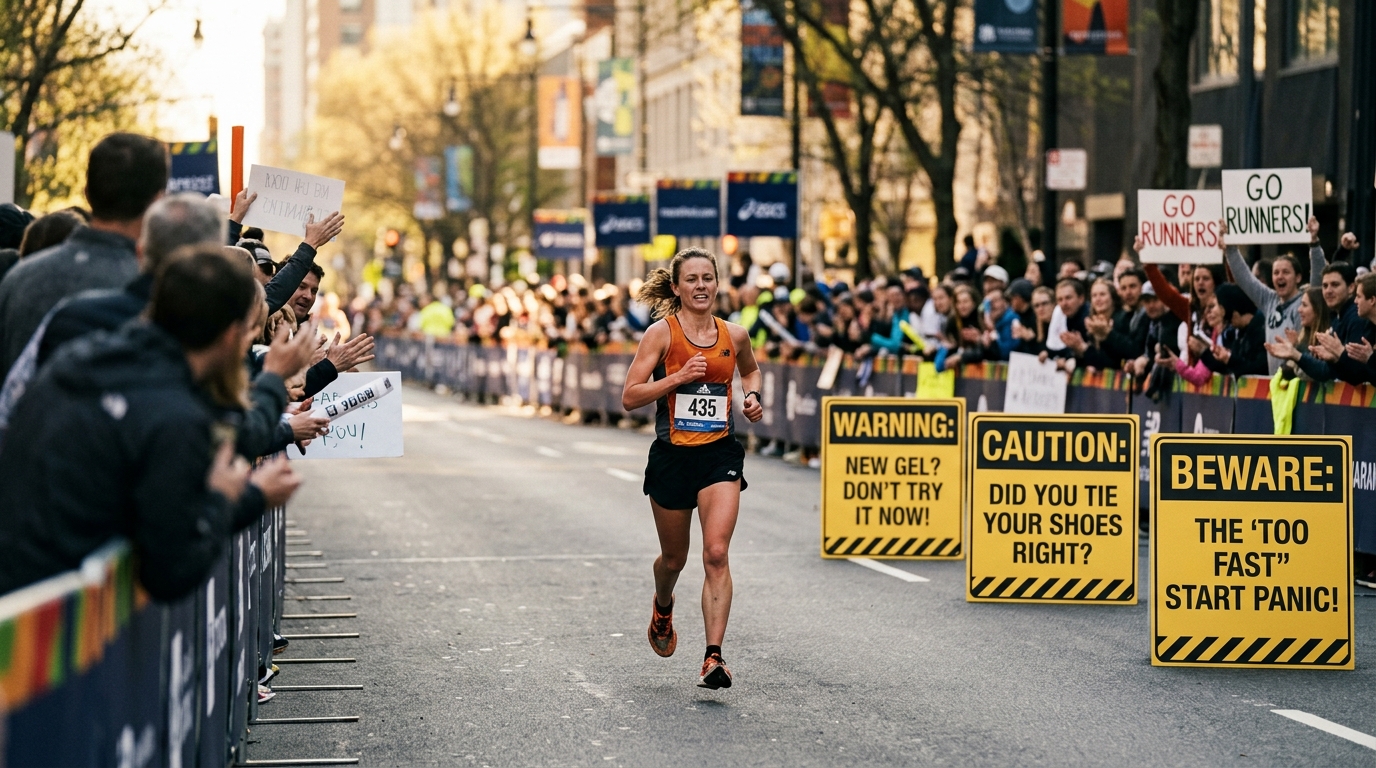
Going out too fast because the start feels easy
This is by far the most common mistake, and the hardest to fix in the moment because everything about the start of a marathon is designed to trick you into running too fast.
The atmosphere is electric. You have been tapering for two to three weeks, so your legs feel fresh and bouncy in a way they have not during training. Adrenaline is flooding your system. Thousands of other runners are around you moving at a clip that feels comfortable. Every instinct you have says to go.
The problem is that "easy" in the first five kilometres of a marathon is relative to conditions that are about to change dramatically. Your glycogen is full, your muscles are fresh, and you have not yet accumulated any of the acid and micro-damage that the next 35 kilometres will produce. Running 20 to 30 seconds per kilometre faster than your target pace in the opening miles feels trivial. It is not. You are drawing down your energy reserves at an accelerated rate and there is no way to pay that debt back later.
The classic rule is: if your first kilometre felt comfortable, you were probably already going too fast.
A practical fix is to seed yourself one to two corrals behind where your pace genuinely puts you. Being surrounded by slower runners physically stops you from going out at crowd speed. Set your GPS watch to show pace per kilometre rather than total time, and ignore it for the first kilometre while your watch locks signal. Run by feel - deliberately uncomfortable how slow it is - and check the watch only after you have settled.
Some runners lock the first 5K at a pace 15 to 20 seconds slower than goal pace, then ease into race pace from kilometre 6 onward. That slight bank of conserved energy late in the race is worth far more than any time "gained" at the start.
Wearing new shoes, trying a new gel, or eating something different on race morning
!Flat lay of a runner's race day kit including shoes, bib, gels, and watch laid out the night before
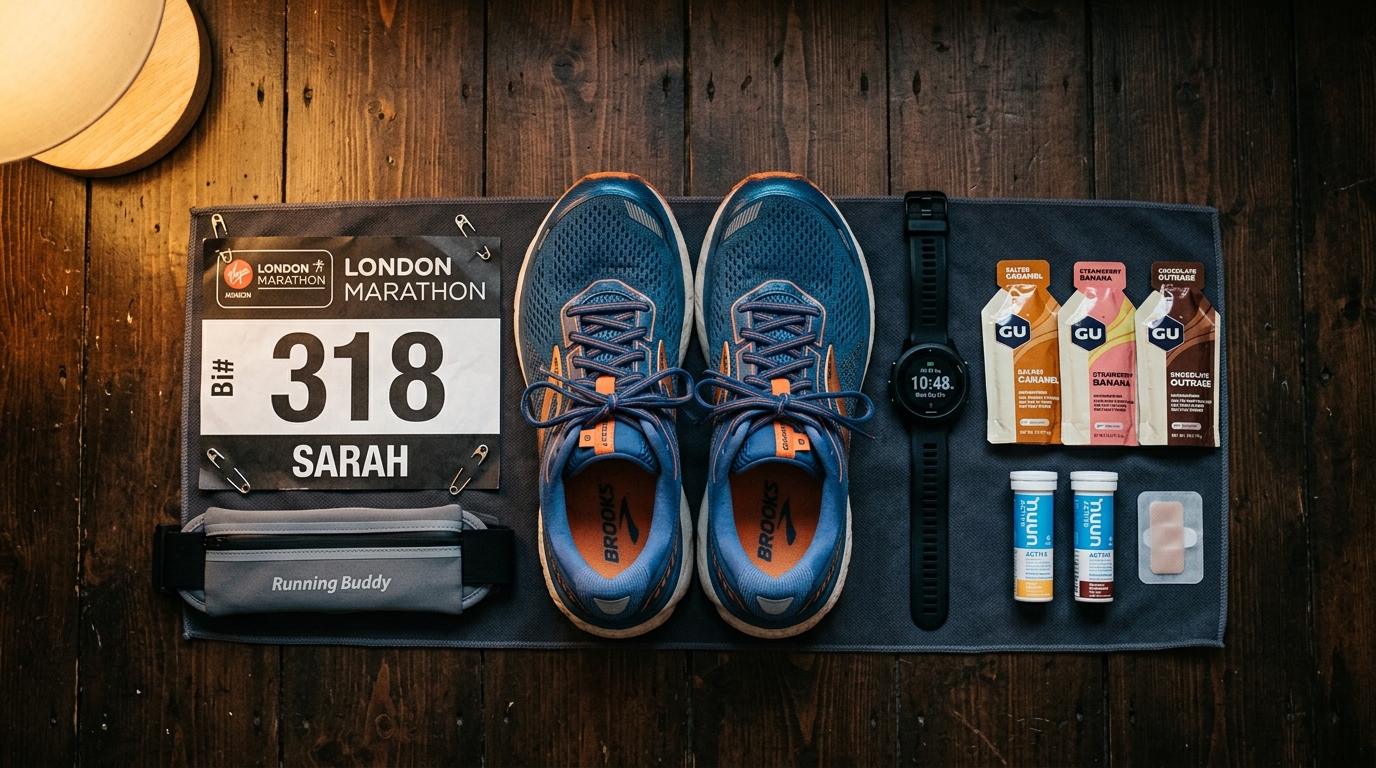
The rule has one word: nothing new on race day.
This applies to shoes, socks, shorts, sports bra, gel brand, gel flavour, energy drink, pre-race breakfast, or the coffee you bought from a vendor outside the venue. If you have not used it in training, race day is not the trial.
Blisters from new or untested shoes are the obvious risk - a 3mm seam that felt fine walking around becomes an open wound at kilometre 25. But the gut issues from unfamiliar nutrition are arguably worse. Every runner's stomach responds differently to gels, drinks, and pre-race food, and the combination of race-day nerves, early-morning eating, and novel flavours or formulations can trigger nausea, cramps, or a GI emergency that forces a DNF.
This also applies to the coffee situation. If you always drink one cup before a run, drink one cup before the race. If you never run on coffee, do not start. Caffeine is a legitimate performance aid but it is also a gut stimulant, and race morning is not the time to find out how your body responds.
Lay out your kit the night before. Eat exactly what you ate before your three longest training runs. If the race provides energy drinks on course and you have trained exclusively on a different brand, carry your own.
Spending the day before on your feet
The expo problem is real. Most big-city marathons have expos the day before where you collect your bib. The expo is enormous, interesting, and full of things to look at and try. You walk in planning to spend 20 minutes and come out two hours later having covered 8,000 steps on floors that are unforgiving concrete.
Then there is the tourist problem. If you have travelled to a destination race, you are in a city you want to see. Every instinct says to walk to the landmarks, check out the finish line area, explore.
Both of these feel harmless. Your legs are rested from the taper so the walking feels like nothing. But standing and walking on hard surfaces for hours the day before a marathon creates fatigue that shows up in kilometres 30 to 35 when your legs should be carrying you home.
The day before your marathon, your job is to stay off your feet. Collect your bib, sit down, eat your planned meals, and get horizontal. A flat afternoon nap is better than any amount of sightseeing. If the city can wait, it will be there after the finish.
Cap your total steps at around 5,000 on the day before. If you need a goal pace for the day before, use that as your target.
Ignoring a small problem until it becomes a big injury
A runner pulls off a shoe to dislodge a small stone at kilometre 6. Thirty seconds of standing is nothing. The alternative - running 36 kilometres with a stone grinding under the ball of your foot - produces a blister so deep it changes your gait, which then strains your calf, which then leads you to drop at kilometre 28.
The same logic applies to kit. If your shorts are chafing slightly at kilometre 5, they will have chewed through skin by kilometre 20. If your laces are slightly loose and your foot is sliding, your toenails are not going to survive the downhills. If something feels wrong, the cost of fixing it early is 30 to 60 seconds. The cost of ignoring it can be weeks of recovery.
Carry a small piece of body glide or anti-chafe tape in your race kit. Know which aid stations on the course have petroleum jelly. If something is rubbing, deal with it. If something is in your shoe, stop and remove it. You will not lose the time you spent stopping - you will lose far more if you do not.
Racing a fantasy time instead of the plan you trained
Every runner goes into a marathon with a goal. That goal was probably set based on a training run or a tune-up race. What happens is that race day conditions are different from those ideal training conditions: it is warmer, hillier, more humid, more crowded, windier, or you are coming off a rough taper week. And the runner who was supposed to aim for a sub-4:00 decides at kilometre 10 that they feel great, abandons the plan, and spends km 32 to 42 walking.
The right response to feeling great at kilometre 10 of a marathon is not to speed up. It is to maintain pace and be grateful that the plan is working.
Your goal pace was calculated based on real data - your training times, your aerobic capacity, your race predictor results. Race day adrenaline is not new data. It is a feeling that will cost you if you act on it.
If you feel genuinely strong at kilometre 30 and your pace has been honest all the way through, that is when you can consider nudging up slightly. Not at kilometre 5, not because the crowd is exciting, and not because you passed the halfway mat 90 seconds faster than planned.
Stick to the plan. The plan is smarter than your race-morning emotions.
What the well-executed marathon day actually looks like
None of this advice is complicated. Wake up at the time you practised during training. Eat what you always eat before long runs. Wear kit you have tested for at least two long runs. Seed yourself in your honest corral. Run the first 5K feeling almost bored. Fix problems the moment you notice them. Trust the pace you trained for.
The runners who cross the finish line feeling strong and hitting their goal time are almost always the ones who did nothing interesting on race day. The ones who had a great story to tell at kilometre 15 and nothing left at kilometre 35 are the ones who made at least one of the mistakes above.
Ready to find your next race and put the plan to work? Browse marathons and running events near you on Your Run Guide to pick the right one, then build a plan around it before race day arrives.