How Women Won Their Place in the Boston Marathon
The story of Bobbi Gibb, Kathrine Switzer, and the fight to prove women could run 26.2 miles.
· 7 min read · Uncategorized
Today, women make up nearly half of all marathon finishers in the United States. It is hard to imagine a time when they were explicitly banned from the start line. But for decades, the world of distance running was entirely closed off to women, by rule, by social pressure, and by a medical establishment that had simply decided the question without bothering to test it.
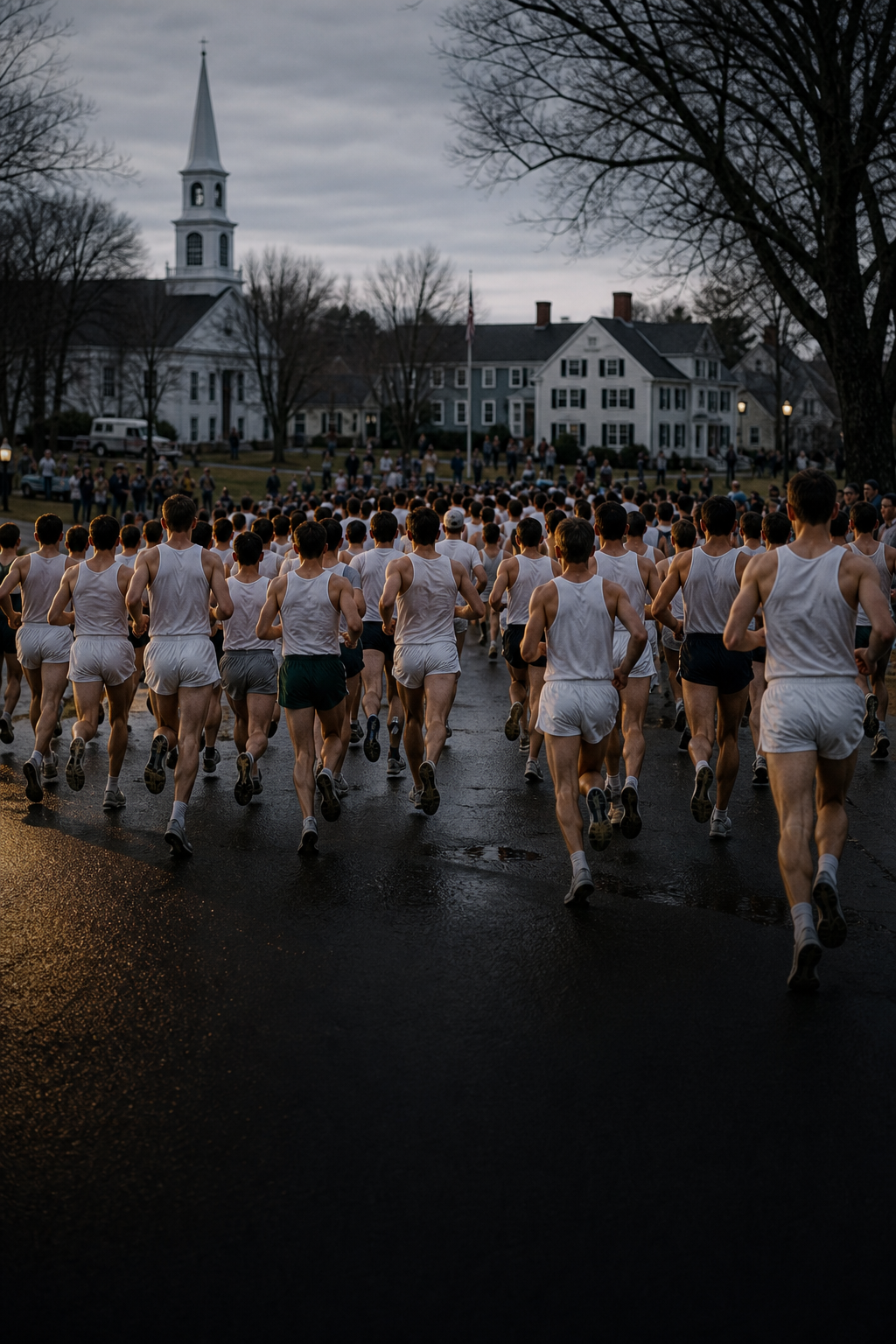
The official position, held by the Amateur Athletic Union (AAU) and most race directors through the 1960s, was that women were too fragile to run long distances. Their hearts could not handle it. Their uteruses might fall out. The claims sound absurd now, but they had real teeth: women who showed up to run major road races faced disqualification, mockery, and in at least one famous case, a race director trying to physically pull them off the course.
It took two women in consecutive years to prove the medical establishment wrong and change the sport forever.
!The start of the 1960s Boston Marathon, an all-male field
Bobbi Gibb and the bushes of Hopkinton
In February 1966, a 23-year-old sculptor and painter named Bobbi Gibb applied to run the Boston Marathon. She had been training seriously for more than a year, sometimes running up to 40 miles in a single day of hiking and running. She had traveled across the country by bus, watching the landscape scroll past, and had decided that running Boston was what she needed to do.
The response from the Boston Athletic Association (BAA) was blunt. Women were not physiologically capable of running marathon distances, the letter said. Her application was rejected.
Gibb did not accept this. She had been running distances that made the rejection letter seem almost funny. On Patriots Day morning, she hid in the forsythia bushes near the starting area in Hopkinton, wearing a hooded sweatshirt over her one-piece swimsuit, her brother's Bermuda shorts, and a pair of nurses' shoes she had worn on long training runs because women's running shoes did not exist at the time.
When the gun went off and the men passed by, she slipped into the middle of the pack. Within a mile, the men around her realized she was a woman. Their reaction was the opposite of what the BAA had implied: they welcomed her, chatted with her, and quietly promised to run interference if any officials tried to remove her from the course.
!Bobbi Gibb running the Boston Marathon in 1966
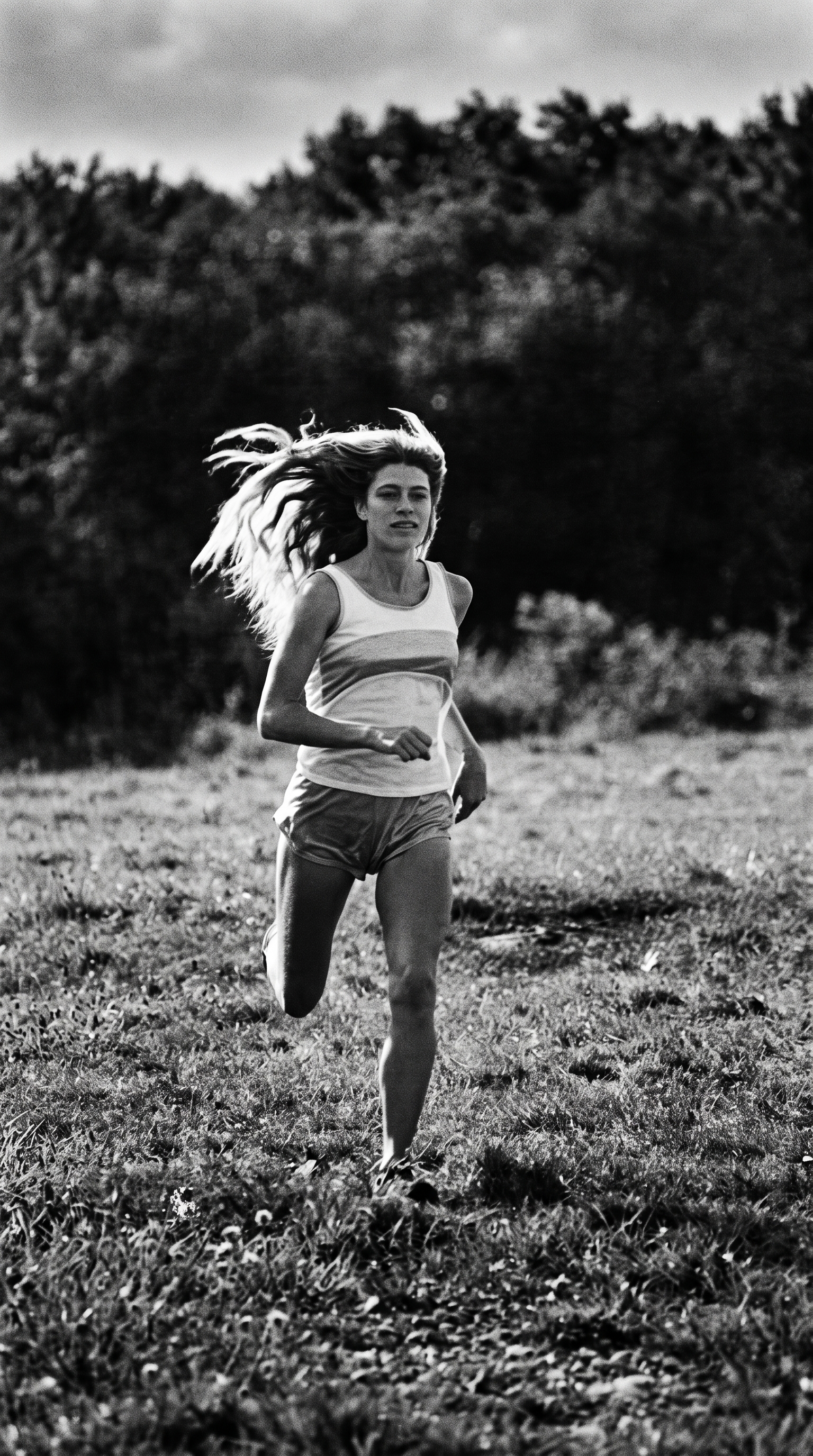
She finished in approximately 3 hours and 21 minutes, ahead of well over half the men in the field. The governor of Massachusetts, who was present at the finish line, shook her hand. The crowd cheered. The Boston Globe ran a front-page story. The BAA responded by saying she had not officially run Boston, because women could not officially run Boston.
She was back the next year. And so was someone else.
The shove that changed the world
Kathrine Switzer was a 20-year-old journalism student and competitive runner at Syracuse University in 1967. Her coach, Arnie Briggs, was a veteran Boston runner who initially doubted a woman could finish the race. Switzer told him she could. They trained through the winter, including one 31-mile run in cold rain, which Briggs acknowledged was more than enough to prove she was ready.
Switzer registered under the name K.V. Switzer, which did not flag her gender in the registration process. She received official bib number 261 and started the race with Briggs and her boyfriend, a 235-pound hammer thrower named Tom Miller.
A few miles into the race, the press truck pulled alongside and journalists spotted Switzer. Word reached Jock Semple, the co-director of the race, who was riding on the truck. Semple was incensed. He jumped from the vehicle mid-race, ran toward Switzer, grabbed her by the shoulder and the back of her shirt, and screamed at her to give him her numbers and get out of his race.
A Boston Globe photographer captured the moment in a sequence of images that would become some of the most reproduced photographs in sports history. Switzer is mid-stride, eyes forward, her bib number clearly visible, while a red-faced official grabs at her.
!Kathrine Switzer being attacked by race official Jock Semple
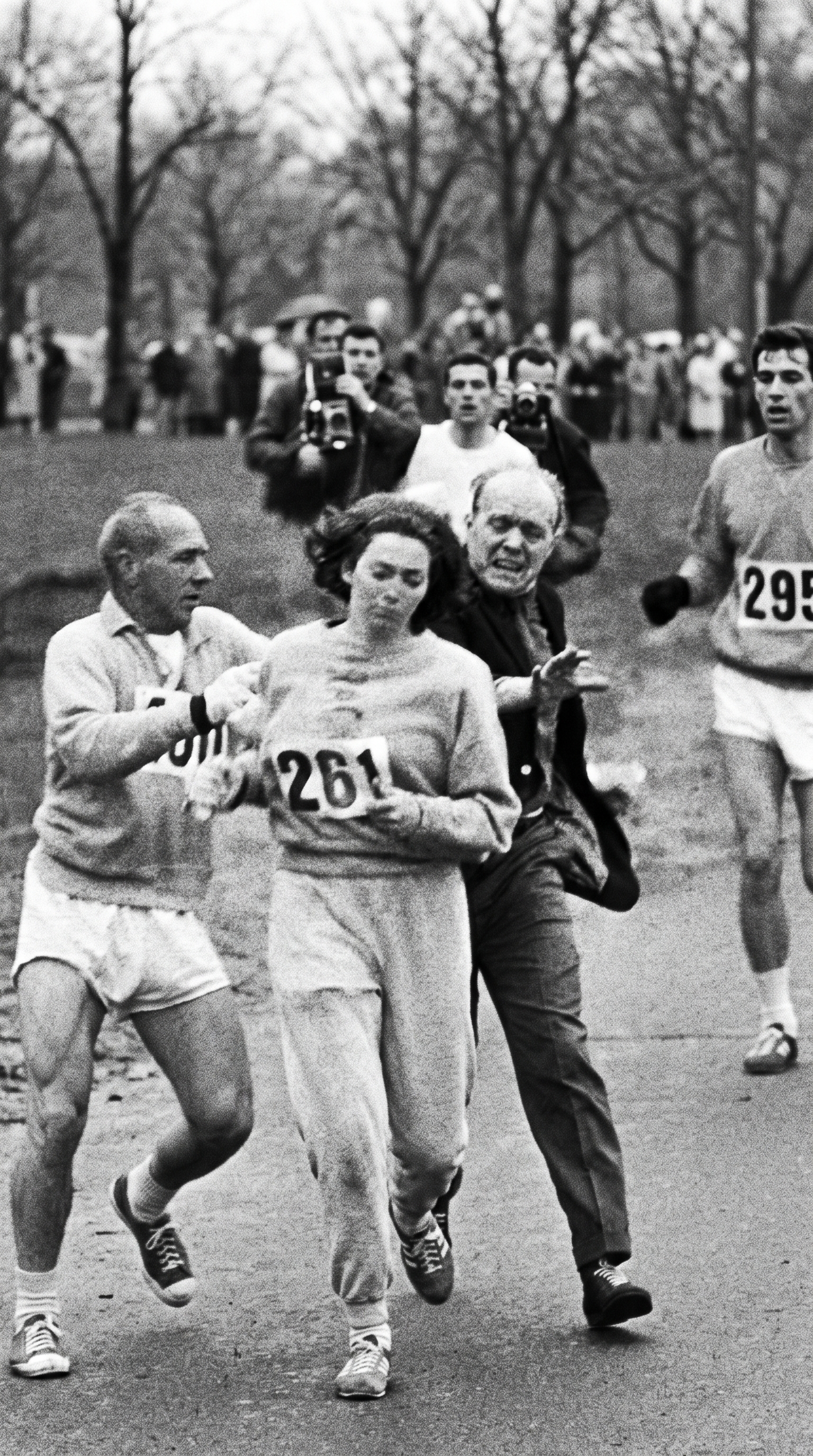
Tom Miller body-blocked Semple into a ditch. Switzer kept running. She finished in approximately 4 hours and 20 minutes.
The photographs went around the world. Whatever the BAA's official position was, it had just become impossible to argue that women did not belong in distance running.
The years between: pressure and pushback
Despite the groundbreaking runs of Gibb in 1966 and Switzer in 1967, the AAU's official position only hardened. In 1967, the AAU added a new rule explicitly banning women from competing in sanctioned races alongside men. Officials who permitted mixed-gender races risked losing their AAU certification.
The argument had shifted from physiology to competition rules, which was its own kind of progress: you cannot ban someone from something they are physically incapable of doing.
Women continued to run Boston unofficially through 1968, 1969, 1970, and 1971. Each year, the BAA maintained they were not official finishers. Each year, the women ran anyway.
Pressure was building from multiple directions. The women's liberation movement was reshaping expectations about physical ability and public space. In 1970, the New York City Marathon included women in the field for the first time, though they started ten minutes before the men, which still implied a kind of separation. Track and field was expanding the number of women's events at elite levels.
Finally, in the fall of 1971, the AAU reversed its rule and allowed women to compete in sanctioned road races. It had taken five years of visible, stubborn, unarguable evidence to force the change.
The official women's race, 1972
In 1972, the Boston Marathon held its first official women's race. Eight women started. All eight finished. Nina Kuscsik won in 3:10:26, becoming the first official women's champion in the race's 76-year history.
!Nina Kuscsik, winner of the first official women's Boston Marathon in 1972
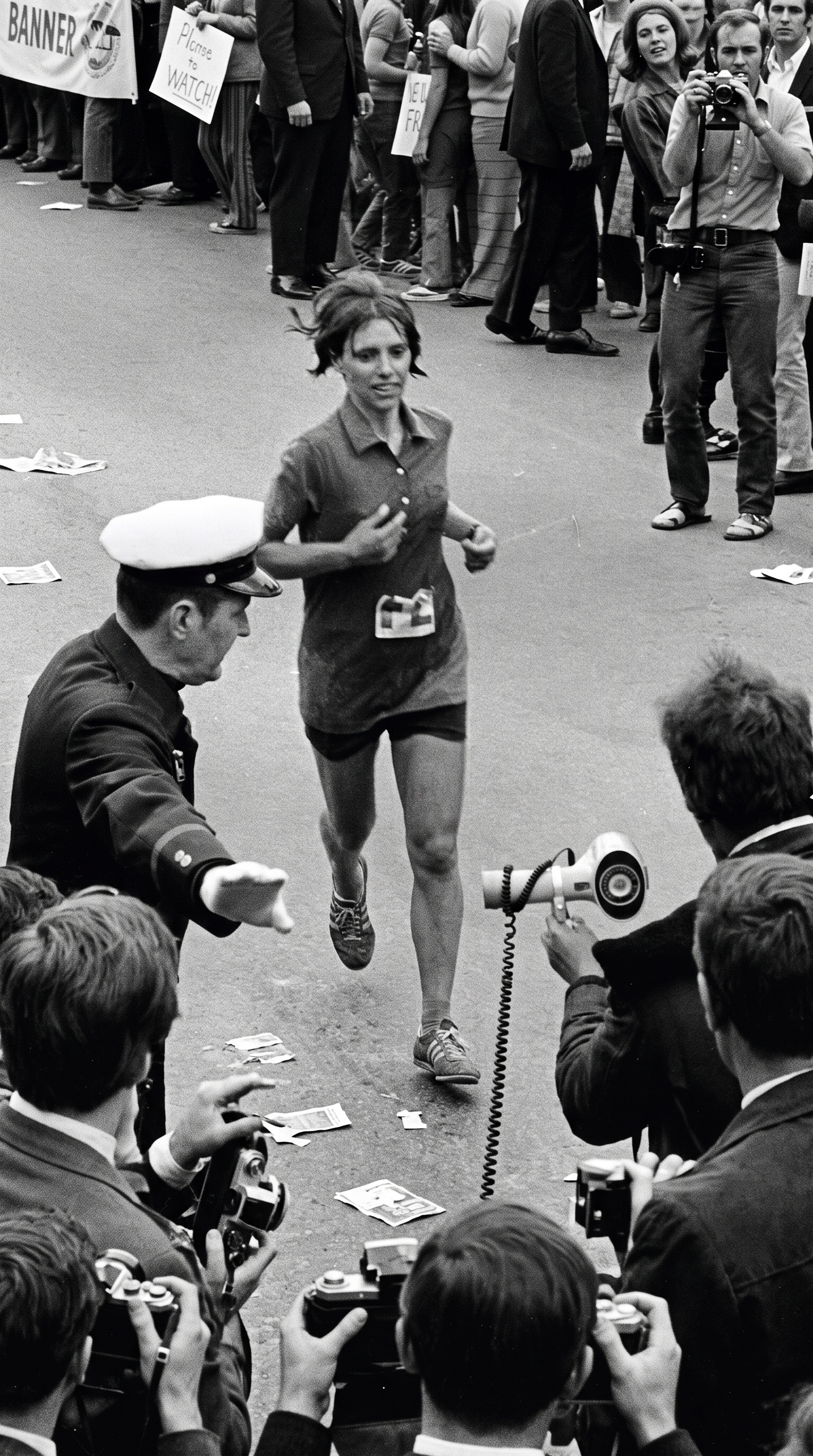
Bobbi Gibb was not among the eight: she had entered the race officially in prior years under protest arrangements and chose not to run in 1972. But the victory belonged to her as much as to Kuscsik. Without Gibb's run in 1966, without the photographs of Switzer in 1967, without the stubborn unofficial finishers in the years between, there may have been no official women's race in 1972.
The sport has changed beyond recognition since then. Women's marathon records have fallen dramatically. Paula Radcliffe's 2003 world record of 2:15:25 stood for 16 years. Tigst Assefa ran 2:11:53 in Berlin in 2023. Women who run marathons today do so in a sport that measures their times, seeds them at major races, and pays them equal prize money at most majors.
None of that was inevitable. It happened because a few specific people showed up in Hopkinton when the rules said they should not.
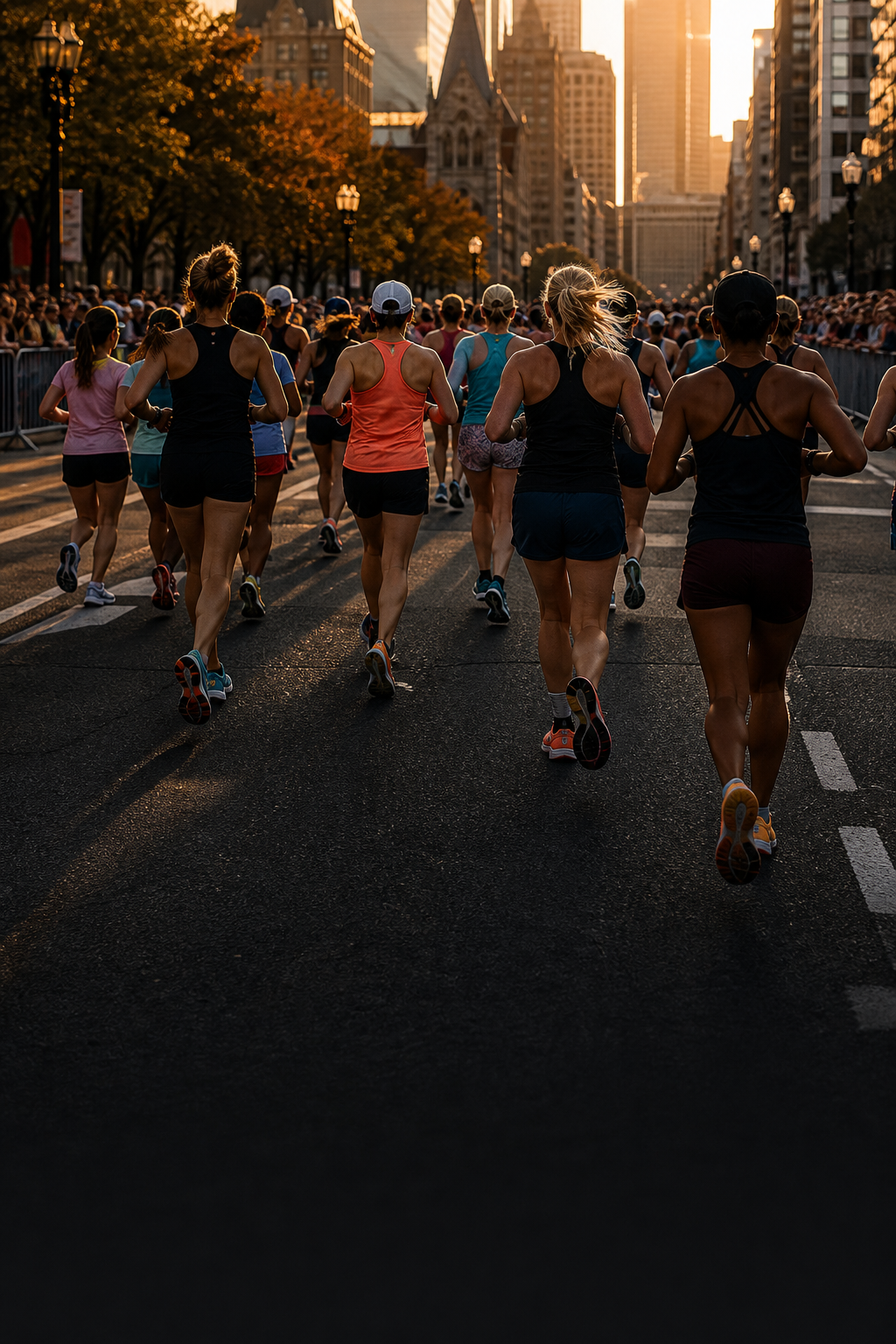
!Women running in the modern Boston Marathon at golden hour
Continuing the legacy
When you stand at any start line, you are standing somewhere that was, not long ago, closed. That is worth a moment of recognition, regardless of your gender.
If the history here has inspired you to find your own race, check out our run planner to build a training schedule, or use our pace calculator to set a realistic goal for your first marathon.
Find races: Browse marathons and road races in the United States on Your Run Guide, including Boston Marathon weekend events and major US road races across every distance.