Fauja Singh: Starting Running at 89 and Completing a Marathon at 100
How Fauja Singh took up distance running at age 89 to survive grief, completing the Toronto Waterfront Marathon at 100 years old in 8:11:06.
· 6 min read · Beginner
Most runners worry about whether they started too late. They wonder if picking up the sport in their late thirties, forties, or fifties means their knees are already too worn, their cardiovascular capacity too diminished, or their bodies too set in their ways.
Whenever that doubt surfaces, consider Fauja Singh.
Singh did not start jogging in his thirties. He did not run in his fifties. He did not even lace up a pair of running shoes until he was eighty-nine years old. And on October 16, 2011, at the Scotiabank Toronto Waterfront Marathon, Fauja Singh crossed the finish line in 8 hours, 11 minutes, and 6 seconds.
He was one hundred years old.
The story of the "Turbaned Tornado" is not merely a heartwarming tale of human longevity. It is living proof that the human body retains an astonishing capacity for aerobic adaptation at virtually any age.
!Fauja Singh running a marathon at 100 years old

Outrunning Grief: A Late-Life Beginning
Born in Punjab, India, in 1911, Singh was so frail as a child that he could not walk until the age of five. He worked as an agricultural farmer for most of his life, staying active through daily physical labor but never participating in competitive athletics.
In the 1990s, tragedy struck his family. Within a short span, his wife passed away, followed by the sudden death of his eldest daughter and his son Kuldip in a construction accident.
Devastated and sinking into deep depression, Singh moved to London to live with his son. To cope with grief and loneliness, he began attending local Sikh community gatherings and started jogging around parks in Ilford, East London.
In 2000, at age 89, he walked into a local running coach's gym wearing a three-piece suit, saying he wanted to run a marathon. The coach, Harmander Singh, was initially skeptical, but when he saw the octogenarian's determination, he agreed to coach him.
!Fauja Singh in London finding solace in running
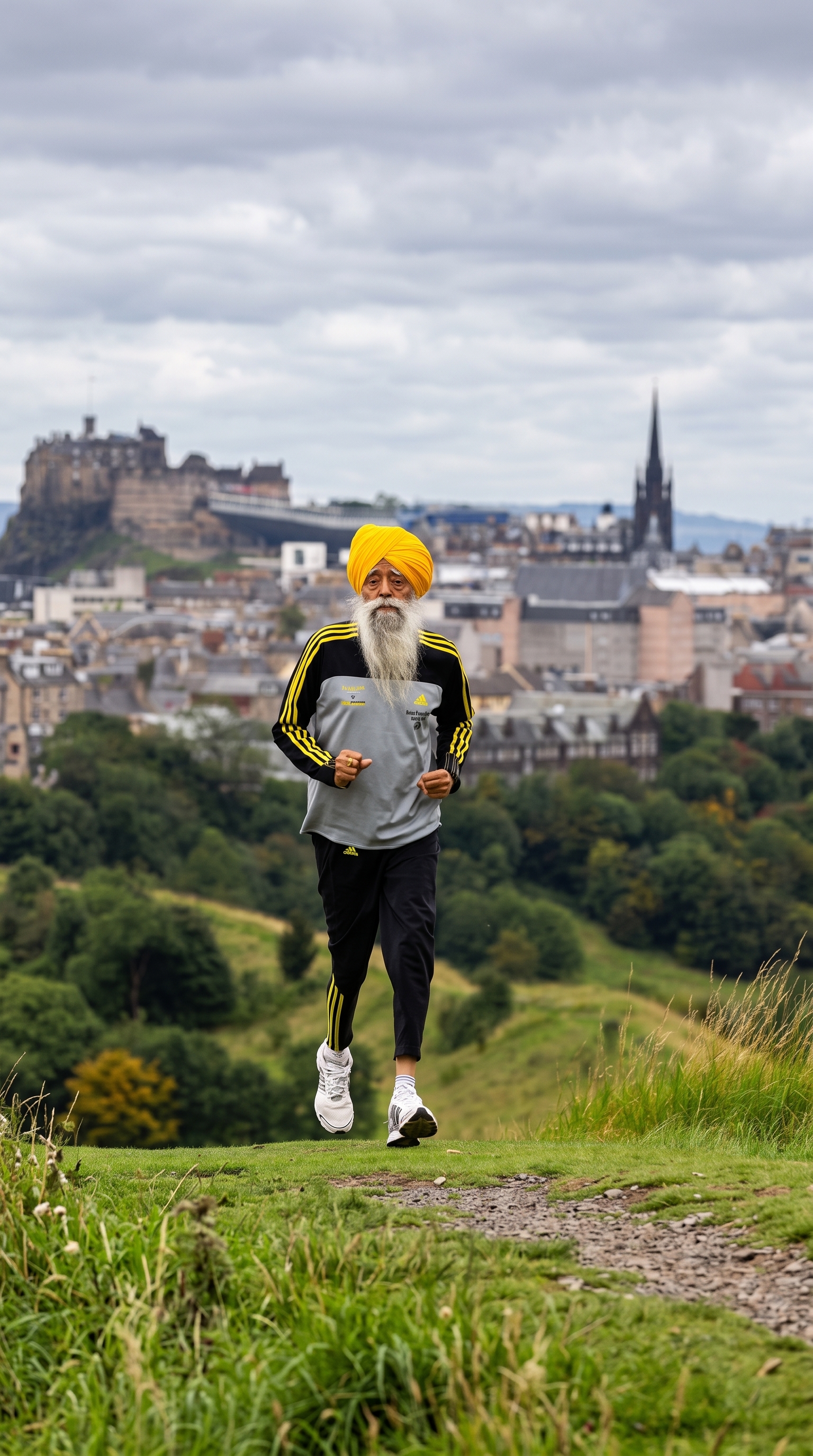
The London Debut to Toronto History
Singh ran his first official 26.2-mile marathon at the 2000 London Marathon, completing it in 6 hours and 54 minutes. He was 89 years old.
Over the next decade, he became an international sensation:
- 2003 Toronto Waterfront Marathon: Ran a personal best of 5 hours, 40 minutes, and 1 second at age 92.
- 2004: Featured in Adidas's global "Impossible is Nothing" campaign alongside David Beckham and Muhammad Ali.
- 2011 Toronto Waterfront Marathon: Completed the entire 42.2 km course at age 100 in 8:11:06, becoming the oldest marathon finisher in history.
- 2012: Carried the Olympic torch through London ahead of the 2012 Summer Games.
!Fauja Singh training through his nineties
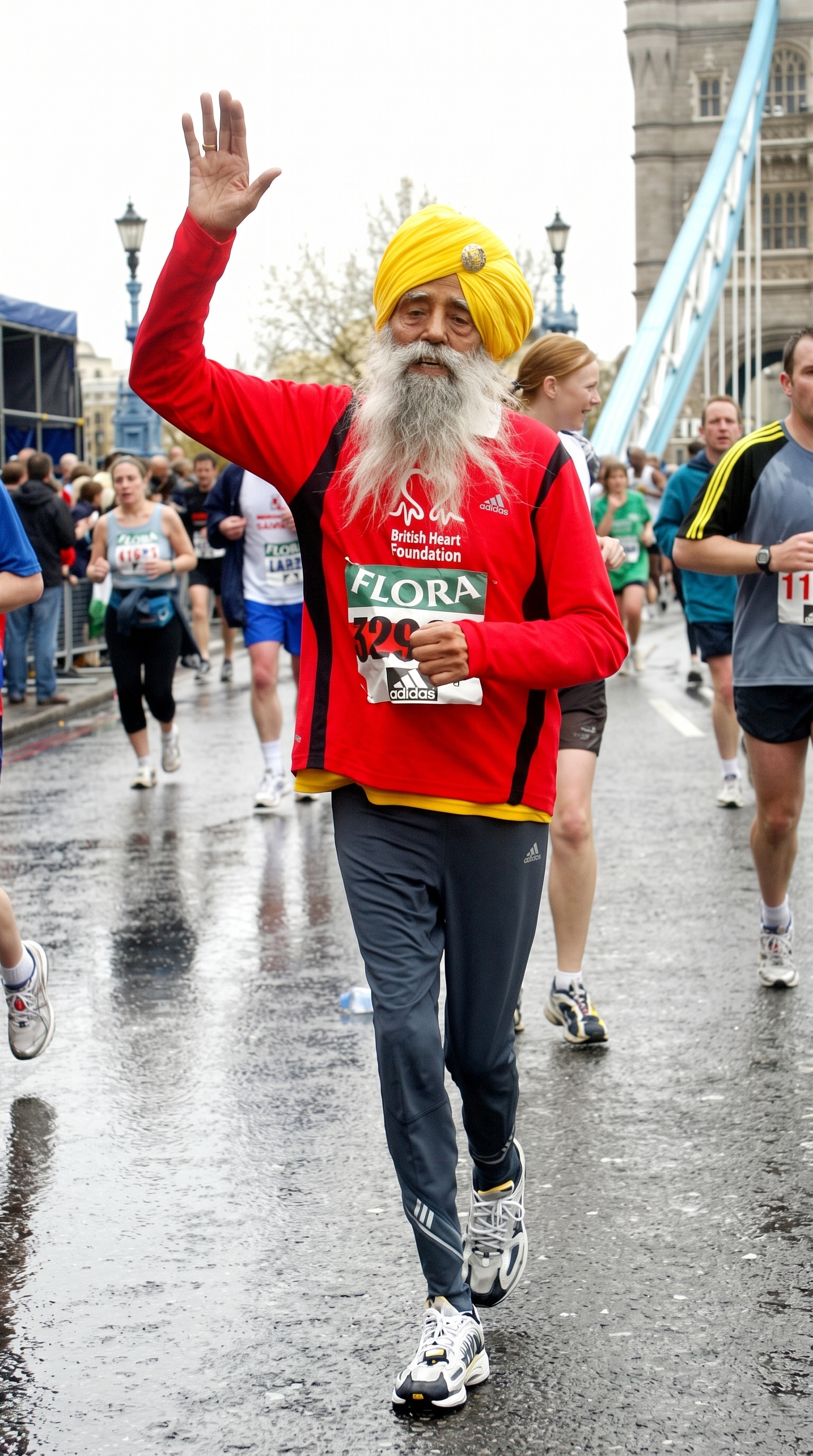
The Simple Longevity Blueprint
When sports scientists examined Singh's bone density and cardiovascular health in his late nineties, they found the bone structure of a healthy 40-year-old and exceptional cardiovascular elasticity.
His daily routine contained no fancy gadgets, super shoes, or supplements:
1. Simple, Whole-Food Nutrition Singh adhered to a strict vegetarian Punjabi diet: simple flatbreads (roti), lentils (dal), green vegetables, ginger, flax seeds, and plenty of water and tea. He avoided fried foods, processed sugars, and alcohol, famously remarking: "I eat to live, I do not live to eat."
2. The Walk-Run Progression Singh never forced continuous sprinting. His training was built on brisk, daily walking interspersed with gentle jogging intervals. He covered 10 to 15 kilometres every single day through London parks, treating movement as a lifestyle rather than an isolated chore.
3. Stress Elimination and Purpose "The secret to a long life is not worrying about things you cannot control," Singh often told reporters. Running gave him a clear daily purpose, social interaction with runners of all ages, and an outlet for emotional grief.
!Fauja Singh crossing the finish line in Toronto at age 100
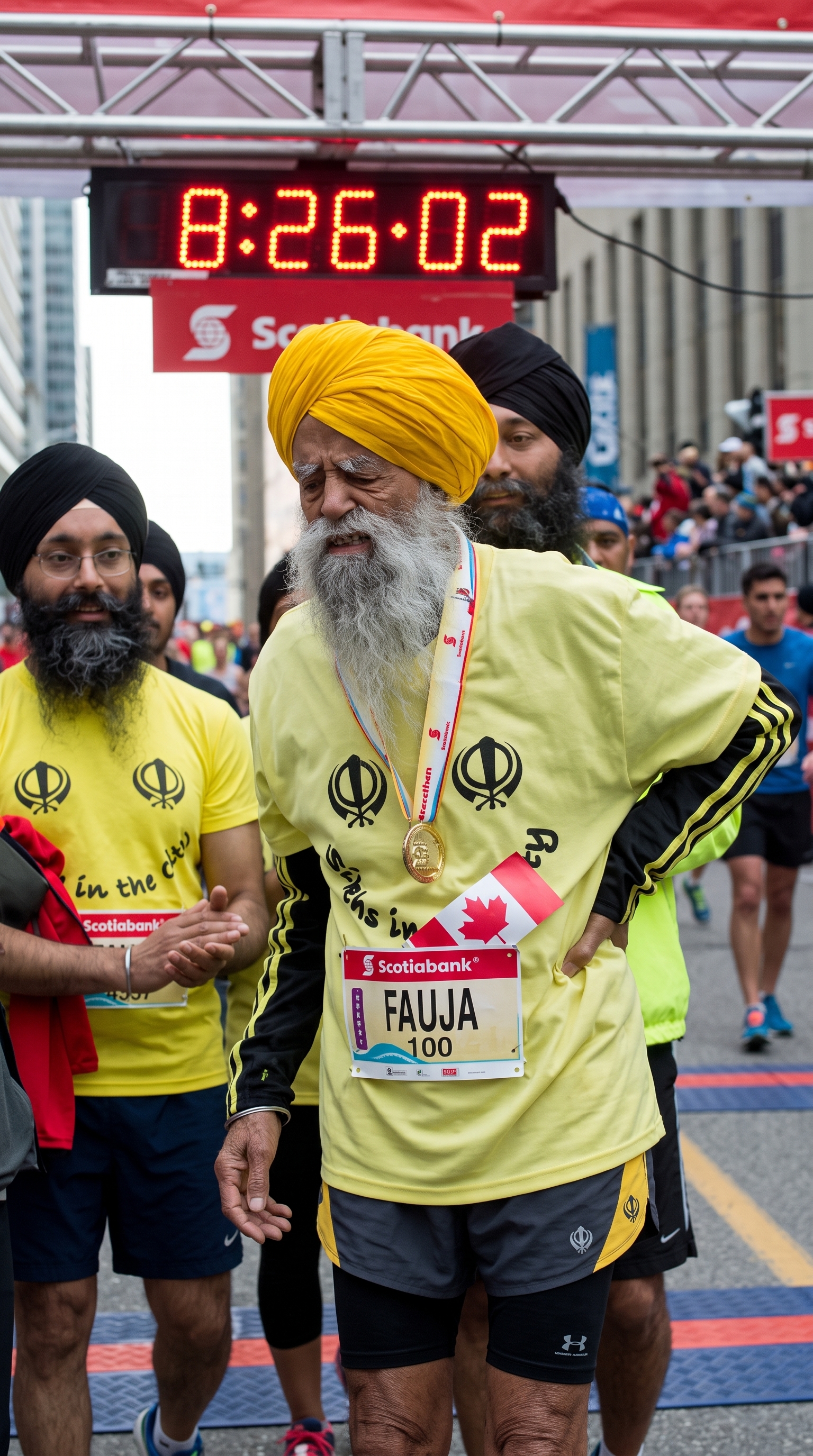
How to Start Running Later in Life
If you are starting your running journey in your 40s, 50s, 60s, or beyond, follow these golden rules to progress safely:
Start with Brisk Walking Before Running Never jump straight from the couch to continuous jogging. Spend your first four weeks building a walking base (30 to 45 minutes of brisk walking 4 days a week). This allows cartilage, bones, and tendons to adapt to weight-bearing impact before adding the higher forces of running.
Use the Run-Walk Method When you begin running, alternate between 60 seconds of gentle jogging and 90 seconds of walking. Jeff Galloway's run-walk method reduces peak musculoskeletal stress by up to 50 percent while still providing an identical cardiovascular training stimulus.
Give Recovery Double the Priority Youthful bodies can bounce back from hard efforts on four hours of sleep and junk food. Older bodies require 8 hours of quality sleep, deliberate hydration, and adequate dietary protein to rebuild tissue. Schedule rest days between every single running day.
If you are ready to take your first steps, check out our guide on how to start running for beginners, explore the walk-run method, or begin our gentle Couch to 5K training plan.
Find races: Browse beginner-friendly 5K and fun run events near you on Your Run Guide to find a welcoming community start line for your first event.