Courtney Dauwalter's Triple Crown: What Winning Three 100-Milers in 70 Days Teaches Us About Recovery
In 2023, Courtney Dauwalter won Western States, Hardrock, and UTMB in a single summer. Here is the physiological and mental blueprint behind her historic achievement.
· 7 min read · Training
In the world of mountain ultrarunning, completing just one marquee 100-mile race a year is considered a monumental physical tax. Athletes spend six months building mileage, two months tapering and racing, and several months repairing micro-torn tendons, hormonal depletion, and central nervous system fatigue.
In the summer of 2023, Courtney Dauwalter threw standard sports medicine out the window.
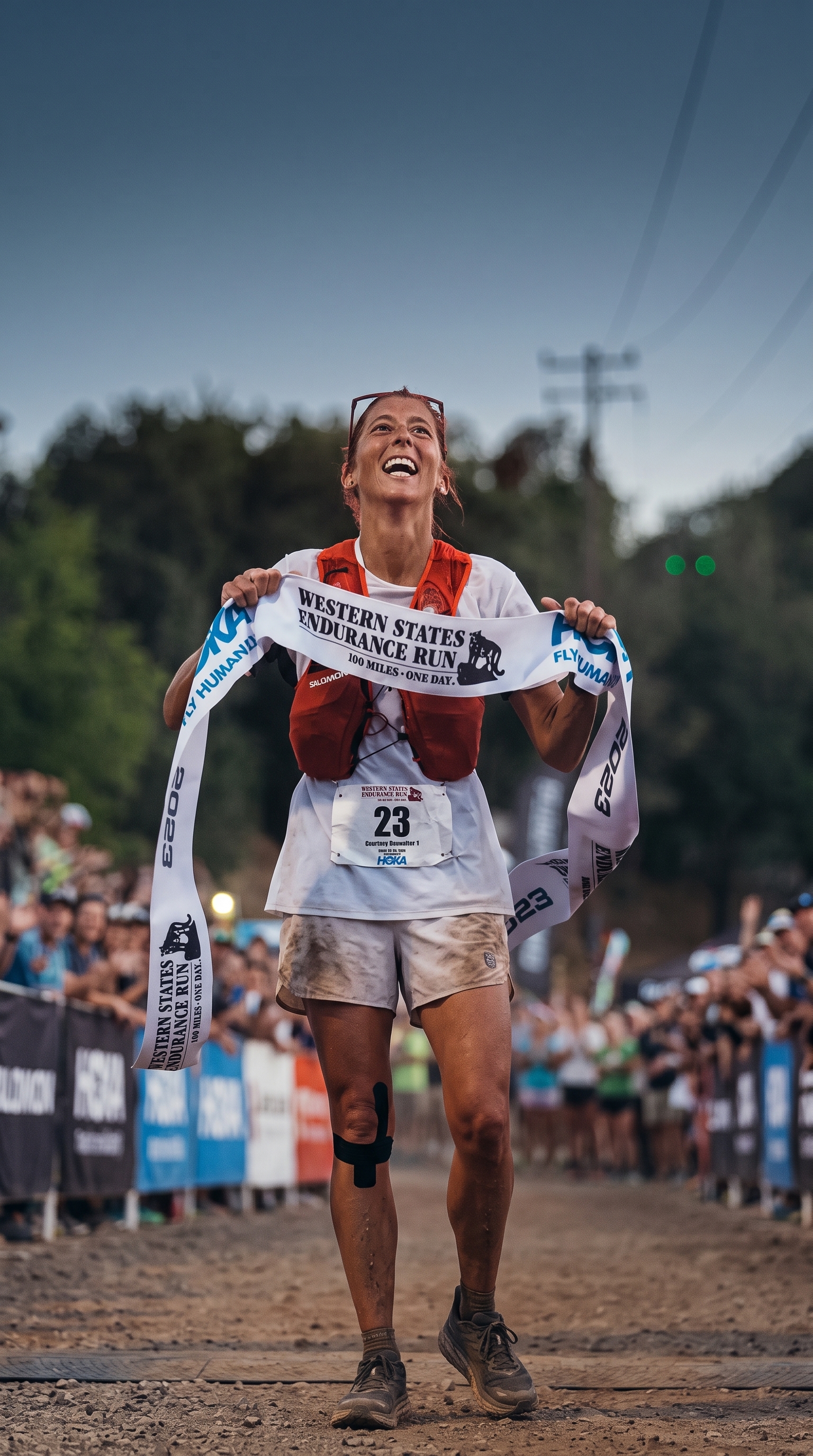
Over seventy days between late June and early September, Dauwalter entered the three most competitive 100-mile mountain ultras on the planet: Western States 100 in California, Hardrock 100 in Colorado, and UTMB (Ultra-Trail du Mont-Blanc) across France, Italy, and Switzerland. She did not just finish them. She won all three, setting course records at Western States and Hardrock along the way.
No runner, male or female, had ever won all three in a single calendar year. How did her body survive 300 miles of mountain racing and over 80,000 feet of climbing in ten weeks?
!Courtney Dauwalter's historic 100-mile triple crown
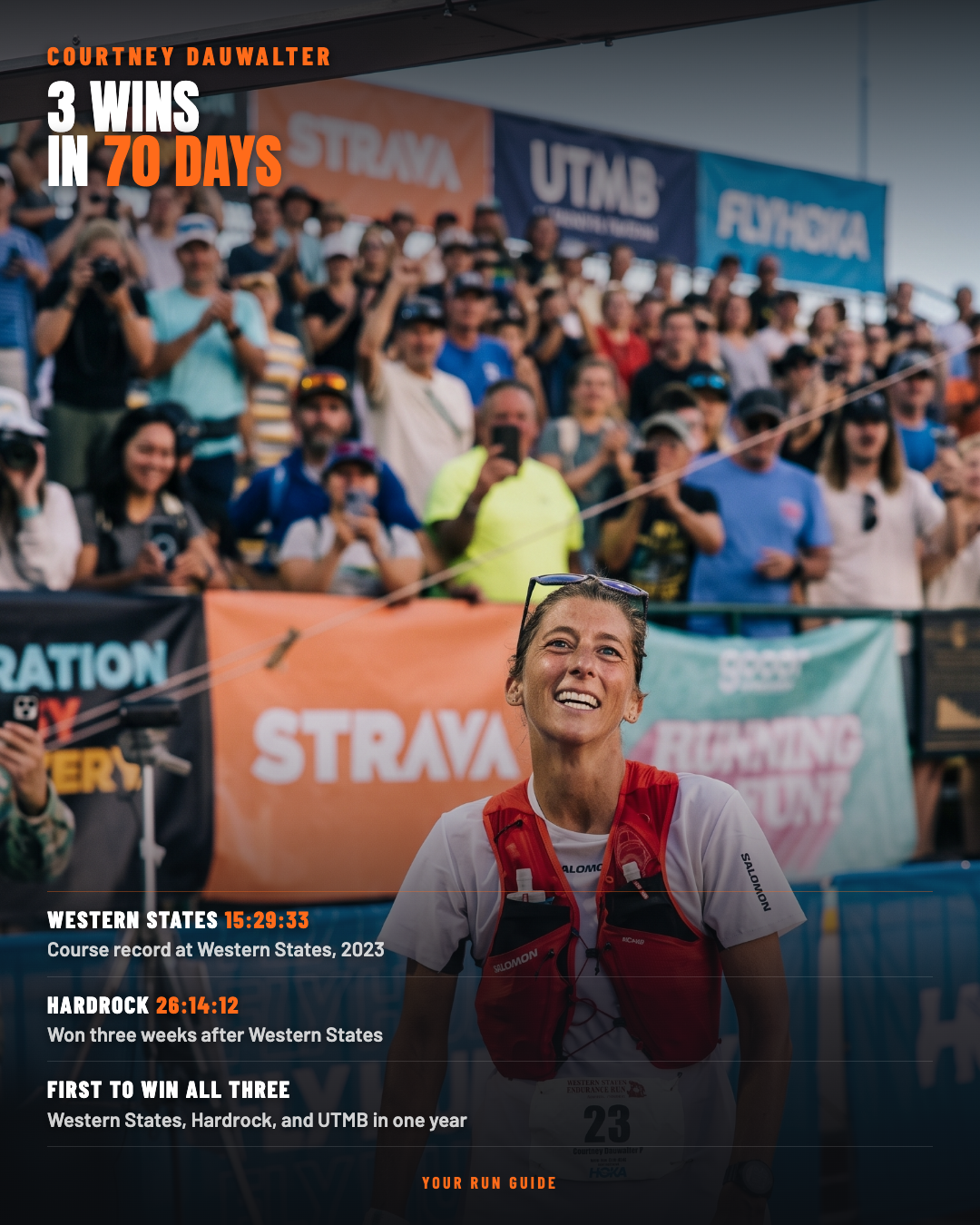
The 70-Day Gauntlet
To grasp the magnitude of Dauwalter's achievement, consider the wildly contrasting demands of each race:
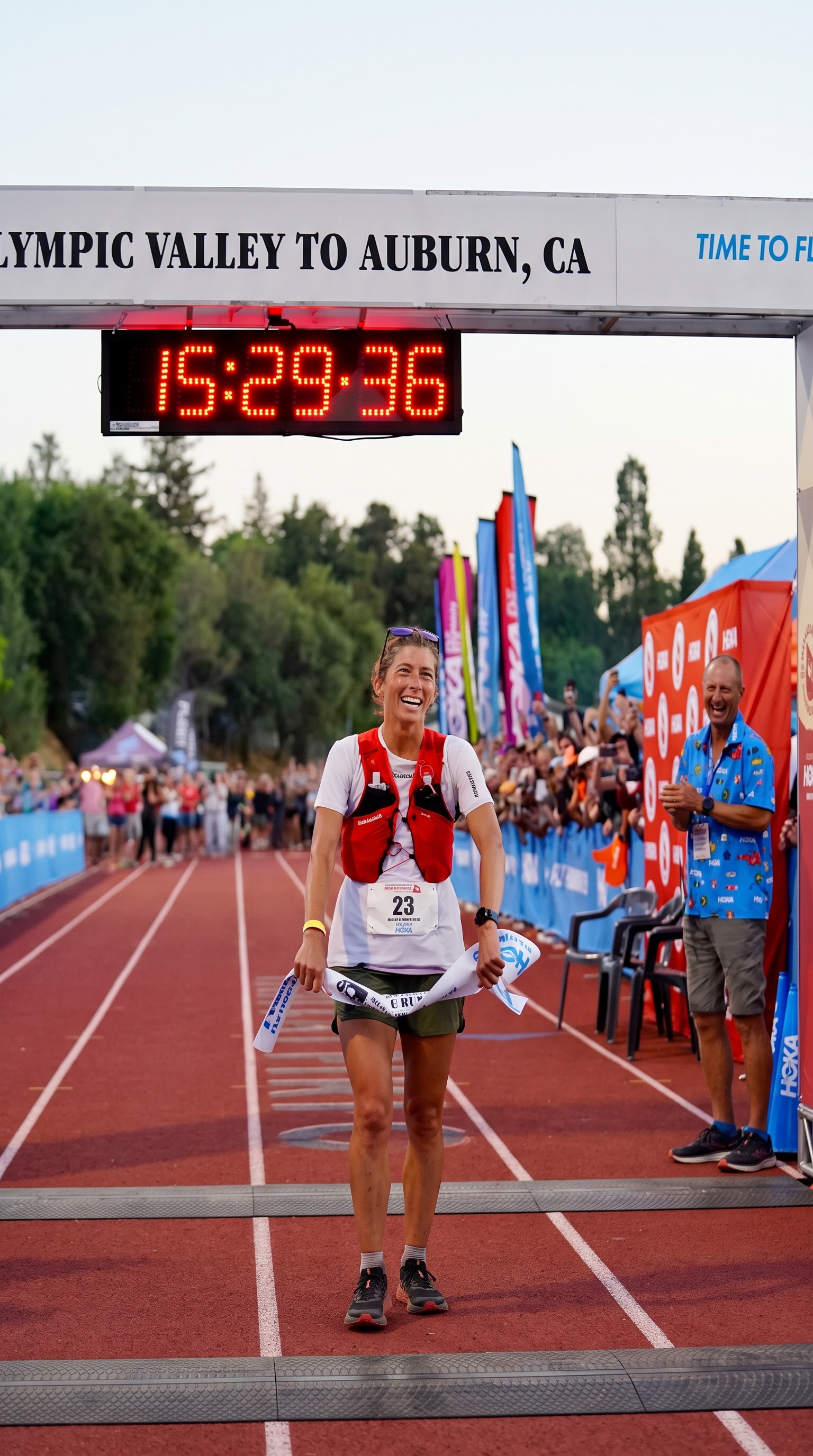
1. Western States 100 (June 24, 2023) - Time: 15:29:33 (New Course Record, taking 78 minutes off Ellie Greenwood's 2012 mark). - Profile: Fast, runnable net-downhill course through intense California canyon heat exceeding 38°C (100°F). - Muscular stress: Severe eccentric damage to quadriceps from 23,000 feet of descent.
!Courtney Dauwalter winning Western States 100 in record time
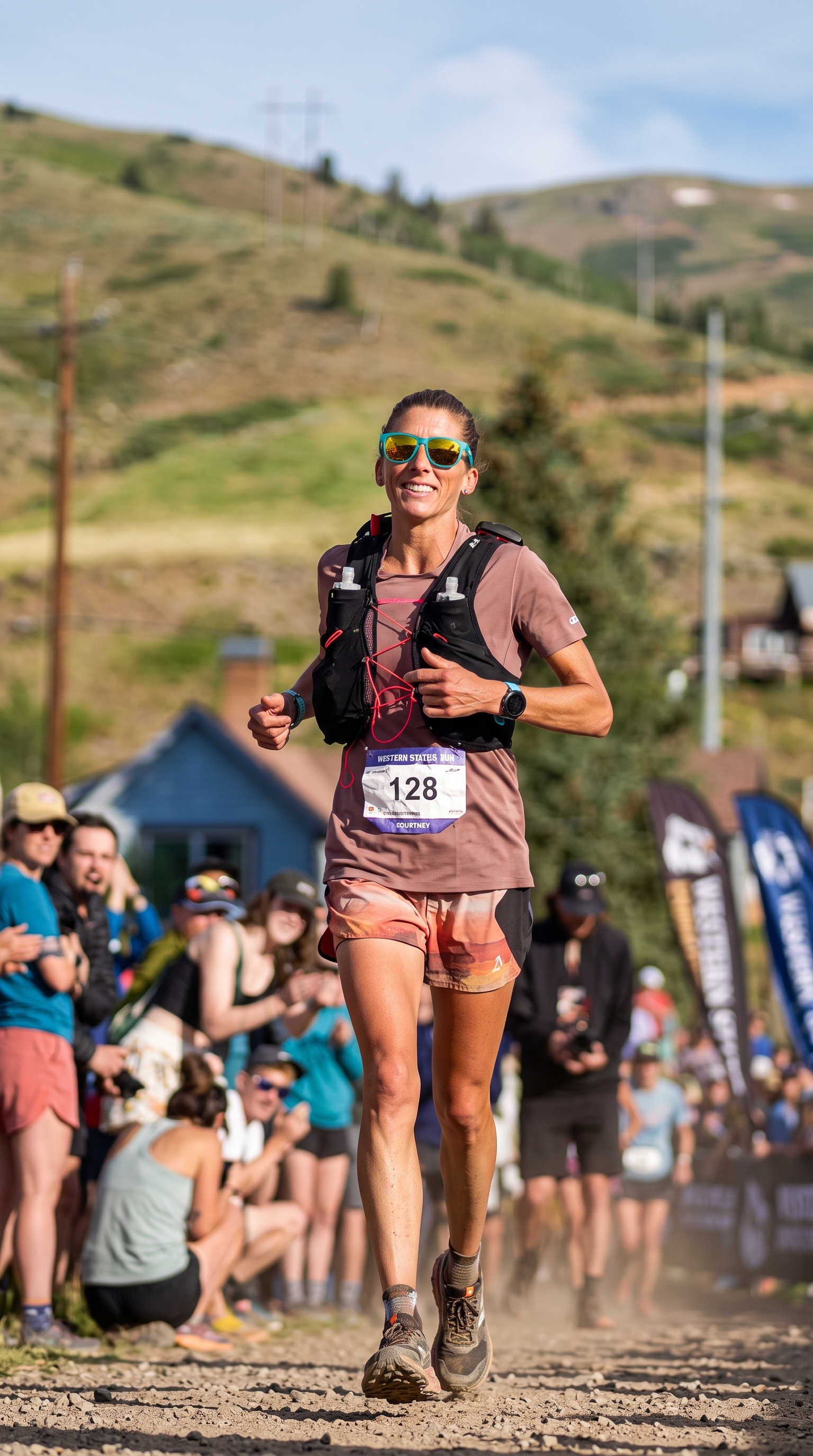
2. Hardrock 100 (July 14, 2023 - Just 20 days later) - Time: 26:14:12 (New Course Record, 4th place overall). - Profile: Extreme high-altitude loop in Colorado's San Juan Mountains, with an average elevation of 11,000 feet and 33,000 feet of climb. - Muscular stress: Hypoxic strain on the lungs and heavy slow-twitch concentric climbing.
!Courtney Dauwalter at Hardrock 100 in Colorado
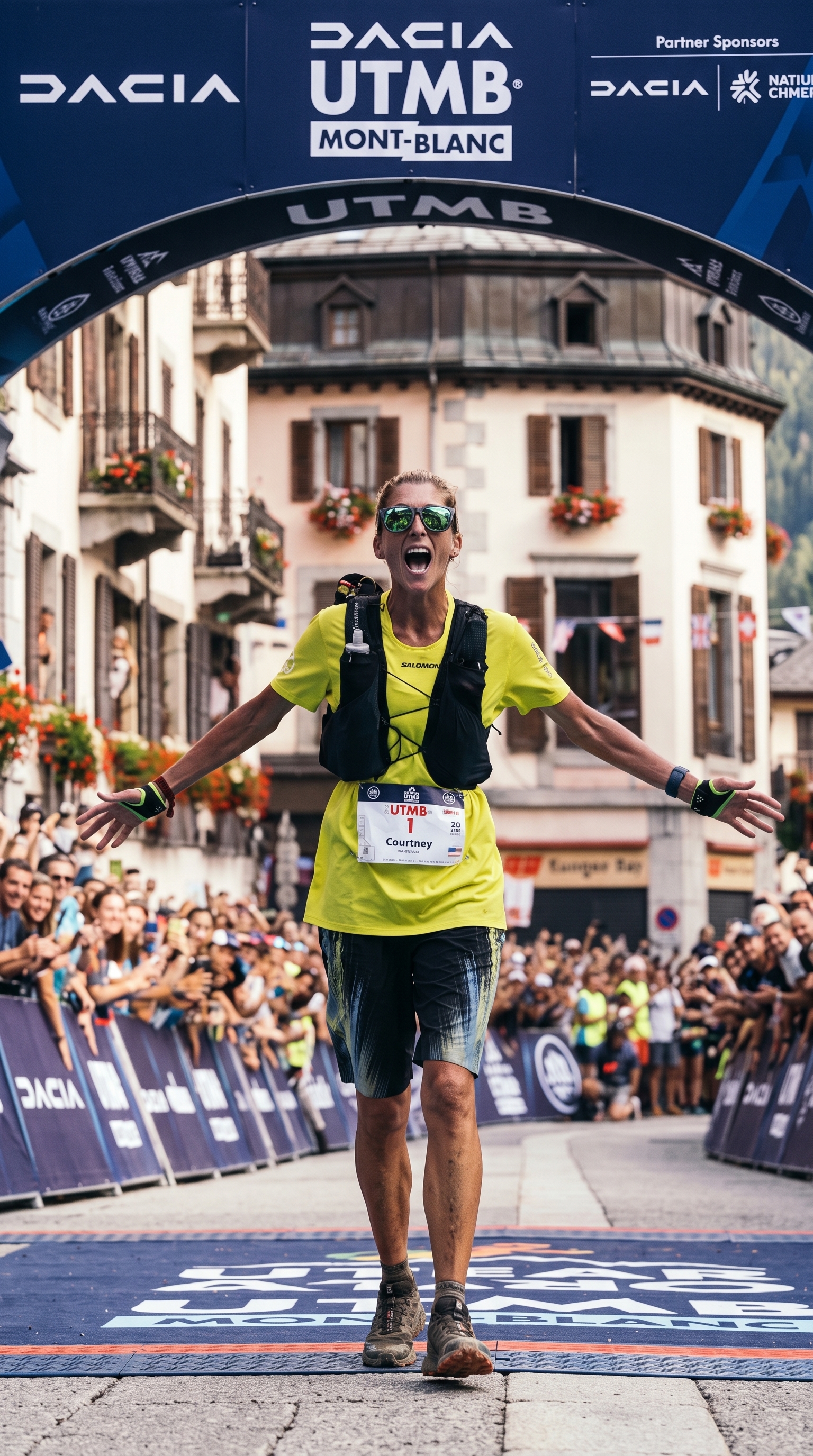
3. UTMB Mont-Blanc (September 1, 2023 - 48 days later) - Time: 23:29:14 (Outright victory, cementing the Triple Crown). - Profile: 106 miles circling the Mont Blanc massif through rain, mud, and technical alpine passes with 32,800 feet of climbing. - Muscular stress: Total cumulative fatigue and intense psychological pressure from a world-class field.
!Courtney Dauwalter winning UTMB Mont-Blanc
The Recovery Protocol: How Dauwalter Rebuilt Her Engine
Most runners who attempt back-to-back long runs or back-to-back races end up injured because they rush back into structured training too quickly. Dauwalter's approach between races relied on four non-negotiable recovery principles:
1. Zero Mileage in the Immediate Window In the week following Western States and Hardrock, Dauwalter ran almost zero miles. While many elites obsess over "flushing their legs" with mandatory shakeout jogs, Dauwalter listened purely to tissue signals. If her quads felt tender going down stairs, she walked, sat in the sun, and ate candy. Active recovery only began when baseline soreness vanished.
2. Intuitive Fueling Over Strict Calorie Math Dauwalter does not track macronutrient grams or weigh food on scales. Instead, she eats what her body craves: burgers, nachos, beer, ice cream, pancakes, and fruit.
From a physiological perspective, this high-energy density approach is surprisingly effective. Elite ultrarunners burn between 12,000 and 18,000 calories during a 100-miler. Chronic low energy availability (LEA) suppresses endocrine function and slows collagen repair. By entering a deliberate caloric surplus post-race, Dauwalter accelerated soft tissue healing.
3. The "Pain Cave" as a Destination, Not a Hazard Dauwalter famously visualizes physical discomfort as a physical room she enters: "The Pain Cave." When extreme fatigue sets in at mile 75, she does not panic or try to distract herself. She welcomes it, imagines picking up a chisel, and works on making the cave bigger.
By removing the fear of pain, she lowers the cortisol spikes that typically accompany suffering, preserving glycogen and neuromuscular recruitment late into an event.
!Courtney Dauwalter smiling through mountain ultrarunning pain
What Everyday Runners Can Learn for Multi-Race Challenges
Whether you are preparing for back-to-back weekend long runs, a spring half marathon followed by an autumn marathon, or your first 50K, apply these lessons:
Respect the Eccentric Damage Downhill running produces micro-tears in muscle fibres that take up to 21 days to fully repair. Even if your cardiovascular system feels fresh after a hard race, your tendon and bone architecture remains vulnerable. Keep impact stress low for at least two weeks post-event.
Swap Junk Volume for Pure Sleep During recovery blocks, sleep is your most potent performance enhancer. Human growth hormone (HGH) release peaks during slow-wave sleep. If you have to choose between a 5:30 AM easy run and two extra hours of deep sleep, choose sleep every time.
Ditch the Rigid Training Rules If a scheduled workout on your calendar says "8x800m track intervals" but your hamstrings feel heavy and irritable, adapt the plan. Switch to an easy trail stroll or rest completely. Longevity belongs to runners who adapt rather than those who blindly follow spreadsheets.
To build your own durable endurance base without burning out, check out our ultramarathon training plan and review our guide to mid-run fueling strategies.
Find races: Browse trail and ultra running events on Your Run Guide to find your next mountain or multi-stage adventure.