Comrades Marathon: The World's Oldest Ultra and the Brutal 12-Hour Cutoff
Founded in 1921 as a living memorial to fallen soldiers, the 90km Comrades Marathon features iconic hills, an agonizing 12-hour cutoff, and unforgettable human drama.
· 7 min read · Race Spotlights
At exactly 5:30 PM outside the stadium in Durban or Pietermaritzburg, an official stands facing away from the approaching runners. He raises a pistol into the sky. On the stroke of the twelfth hour, a cannon fires, the gun cracks, and the official turns his back on the course.
A heavy steel gate slides shut.
Runners who miss that moment by a single second are turned away, denied their medals, and marked as Did Not Finish after running nearly 90 kilometres (56 miles) of punishing South African asphalt.
This is the Comrades Marathon, the oldest and largest ultramarathon in the world. It is not just a sporting contest; it is a national cultural ritual woven from sacrifice, brotherhood, and raw endurance.
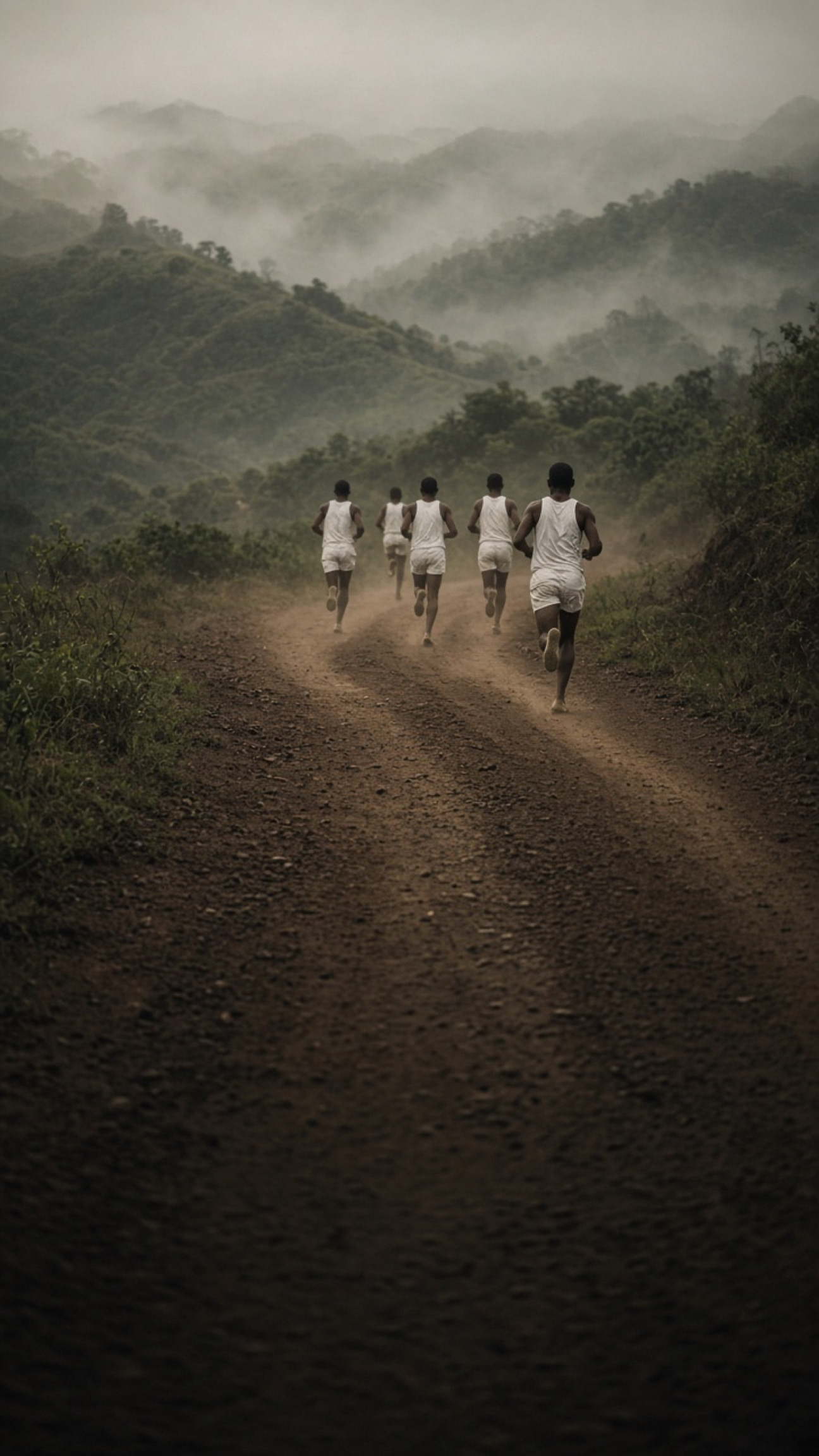
!Comrades Marathon runners taking on the 90km challenge
Born From the Ashes of World War I
Most great road races trace their origins to civic pride or athletic clubs. Comrades was born from war.
In 1921, a veteran of the First World War named Vic Clapham approached athletics officials with an unusual proposition: he wanted to create an endurance race between Pietermaritzburg and the coast at Durban to honour his fallen comrades who had died during the grueling campaigns in East Africa.
Clapham had witnessed soldiers march for days through malarial swamps and scorching heat with little food or water. He believed that an annual ultra-distance foot race would serve as a living memorial to camaraderie and fortitude.
Athletics administrators initially dismissed the idea, claiming 90 kilometres on rutted dirt wagon trails would kill the competitors. Clapham persisted for three years until officials finally granted him permission and a loan of one pound.
On May 24, 1921, thirty-four runners set off from the Pietermaritzburg City Hall. Sixteen made it to Durban. Bill Rowan won the inaugural race in 8 hours and 59 minutes.
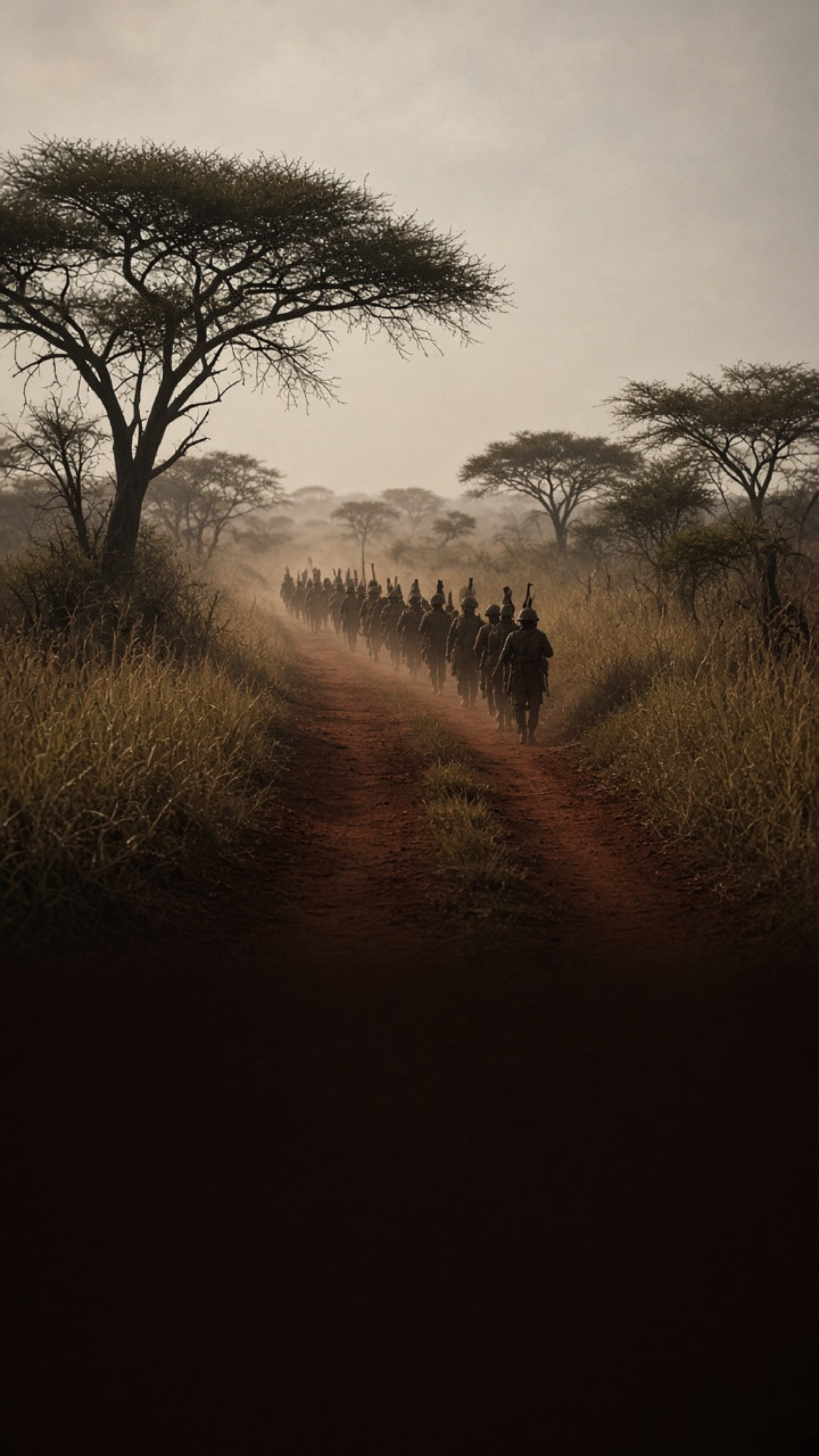
!The historic march that inspired the Comrades Marathon
Up Run vs Down Run: The Big Five Hills
Comrades alternates direction every year:
- Up Run: Starts at sea level in Durban and climbs inland to Pietermaritzburg (elevation 650m / 2,130ft), covering approximately 87 km.
- Down Run: Starts in Pietermaritzburg and descends to the coastal stadium in Durban, covering approximately 90 km.
Runners often assume the Down Run is easier because of its net descent. Veteran Comrades runners know better. The Down Run subjects the quadriceps and patellar tendons to thousands of continuous eccentric braking impacts, leaving legs shredded long before the final stretch into Kingsmead.
Both directions cross the legendary "Big Five" hills:
1. Cowies Hill: Steep early climb out of Westville on the Up Run. 2. Fields Hill: A brutal 3km ascent with an average gradient exceeding 7%. 3. Botha's Hill: Punishing climb leading into the Valley of a Thousand Hills. 4. Inchanga: The spiritual halfway point, notorious for strong midday headwinds and heat. 5. Polly Shortts: The feared final monster at mile 48 on the Up Run, where thousands of runners are reduced to a walk.
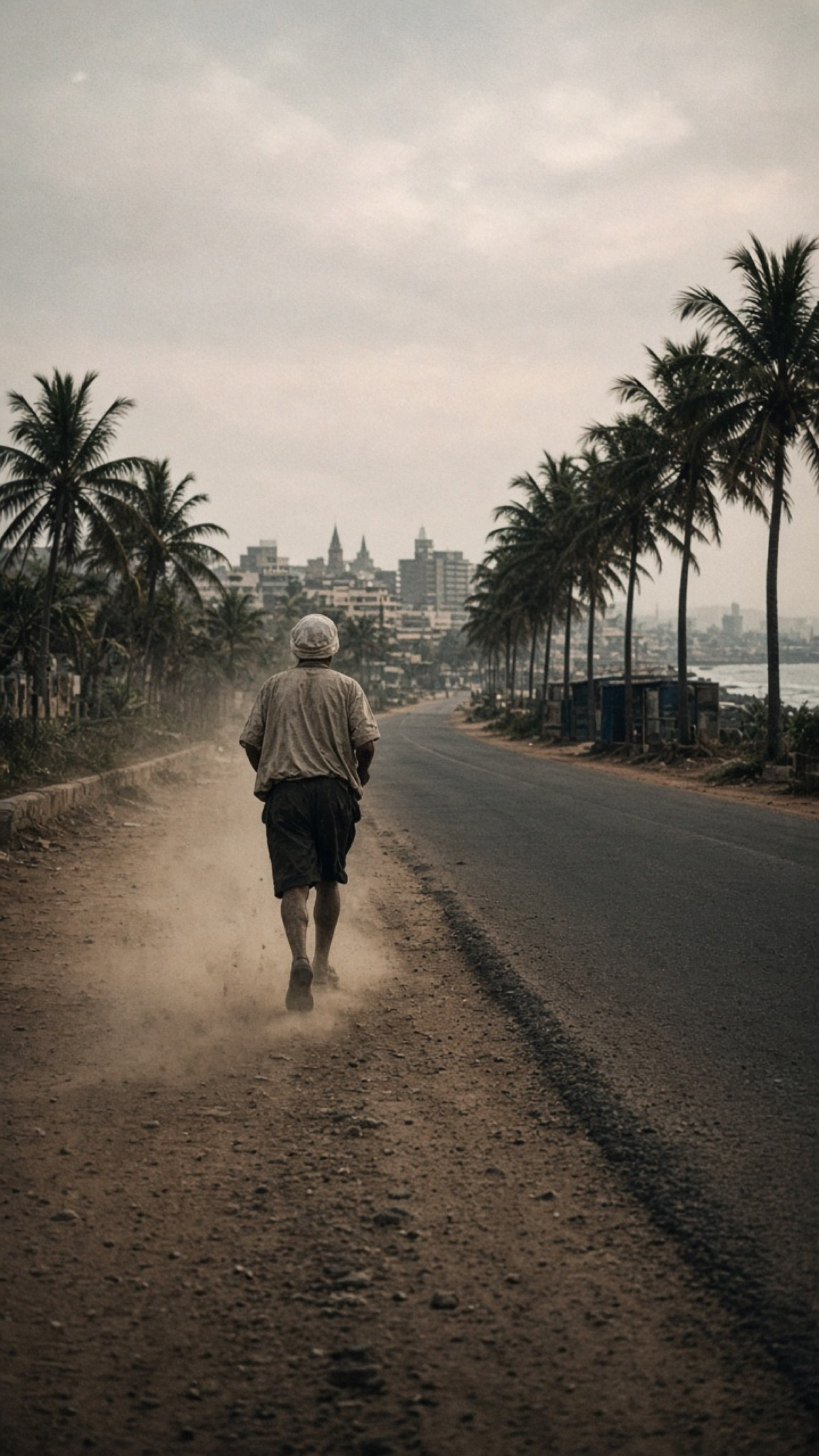
!Bill Rowan, the first winner of the Comrades Marathon in 1921
The 12-Hour Cutoff: Where Drama Peaks
While elite runners like Bruce Fordyce (9-time champion), Tete Dijana, and Gerda Steyn finish in five to six hours, the emotional soul of Comrades lives at the back of the pack.
Unlike modern marathons that offer generous 6-to-7 hour windows, Comrades enforces six strict cutoff checkpoints along the course, culminating in the final 12:00:00 cutoff at the stadium gates:
- 11:58: The final straight fills with staggering, limping runners. Spectators chant and scream.
- 11:59: Athletes dive across the timing mats on hands and knees.
- 12:00: The pistol fires. Stewards step across the track, blocking exhausted runners barely ten feet away from the finish mat.
There are no participation medals at Comrades. If you do not cross before the gun, your race does not exist in the record books.
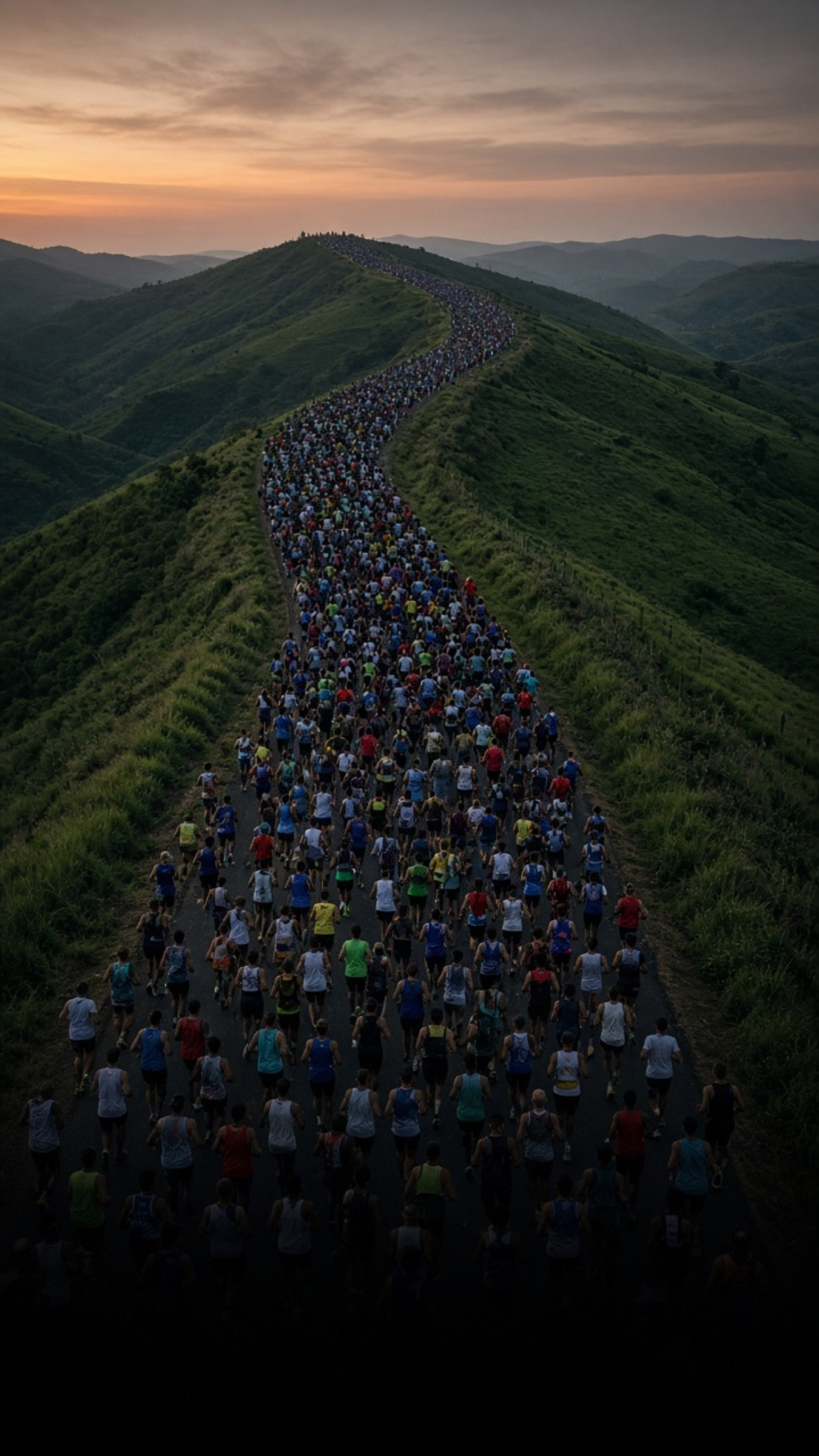
!Modern Comrades Marathon runners celebrating together
Training Lessons from 90 Kilometres on Road
Tackling Comrades requires a distinct training philosophy compared to a standard 42.2 km marathon:
1. Build Quad Resistance Early Because Comrades is run entirely on hard asphalt rather than soft trail dirt, your legs must adapt to severe impact loads. Include weekly downhill tempo segments and eccentric quad strength exercises (such as Bulgarian split squats and slow eccentric step-downs) to build impact tolerance.
2. Practice Walk Breaks from Mile 1 The golden rule of Comrades is to walk the steep hills before you are forced to walk them. Walking early preserves muscle glycogen and drops core body temperature, allowing you to run smoothly across the flatter tablelands of Drummond.
3. Qualifying and Pacing Discipline To enter Comrades, you must run an official qualifying marathon in under 4 hours and 50 minutes. Do not start at your marathon PR pace. The opening 20 kilometres must feel embarrassingly slow.
To prepare for ultra-endurance challenges, explore our ultramarathon training guide and calculate your baseline splits with our running pace calculator.
Find races: Browse road marathons and distance races in Durban and South Africa on Your Run Guide to plan your Comrades qualification and tune-up races.