The Barefoot Olympic Champion Nobody Saw Coming: The Abebe Bikila Story
In 1960, an unknown Ethiopian soldier showed up to the Rome Olympics without shoes that fit. He ran the marathon barefoot, won gold, and changed distance running forever.
· 5 min read · Running Culture
He had no shoes. He had no name recognition. And he ran one of the most iconic Olympic marathons in history on the cobblestone streets of Rome, completely barefoot.
When the world tuned in to watch the 1960 Olympic Marathon in Rome, nobody was paying attention to the quiet 28-year-old soldier from Ethiopia. By the time he crossed the finish line under the Arch of Constantine, Abebe Bikila had not only won gold and set a world record, but he had single-handedly announced East Africa's arrival as a global distance running powerhouse.
Here is the story of the most iconic marathon performance in history.
!Abebe Bikila lining up to start the race
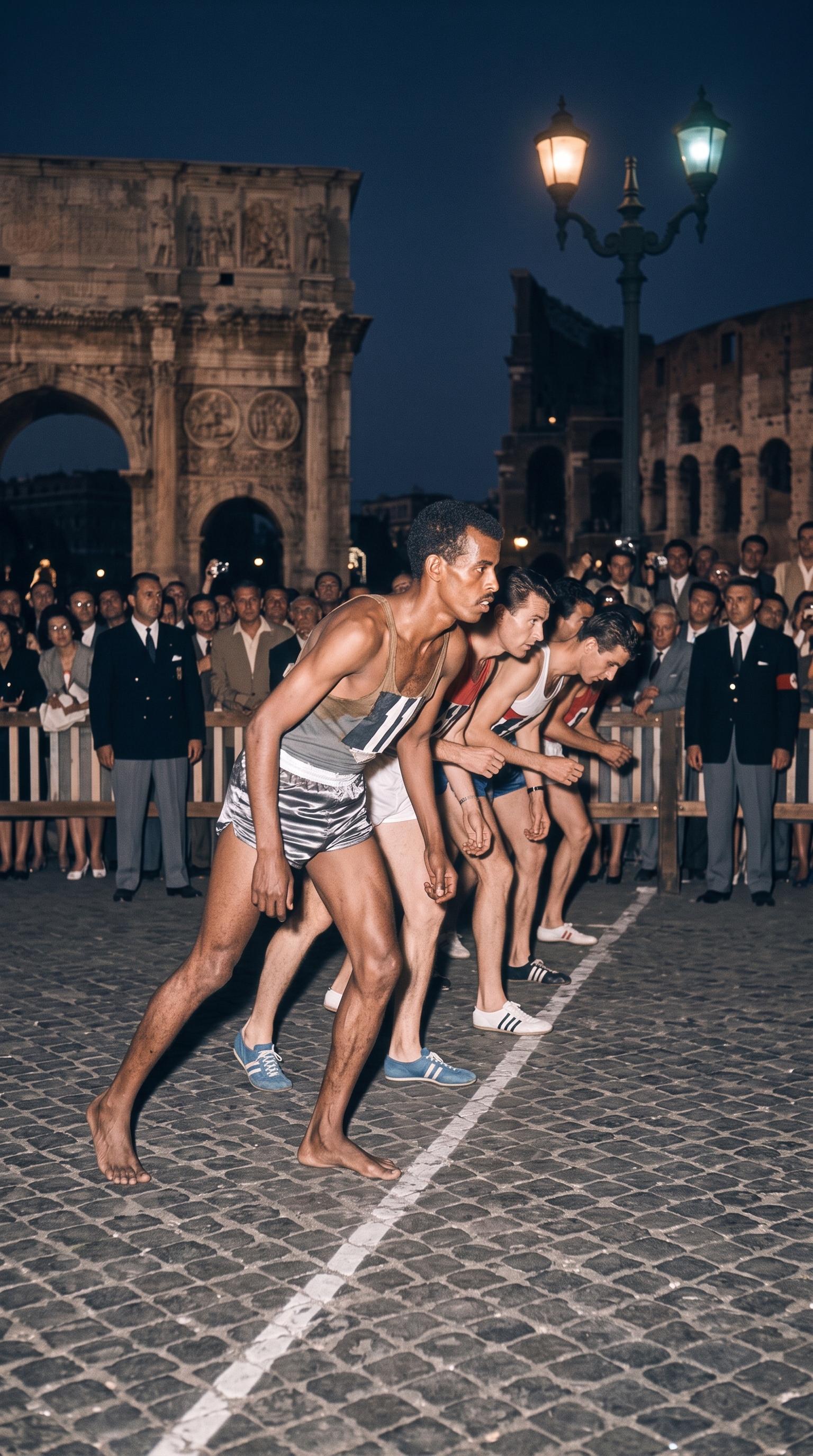
The shoes that didn't fit
Bikila was a relatively late addition to the Ethiopian Olympic team, replacing another Ethiopian runner.
When the team arrived in Rome, they were provided with running shoes by Adidas, the official sponsor of the 1960 Games. Bikila tried on a few pairs, but none of them fit comfortably. After attempting to train in shoes that gave him blisters, he made a decision that would sound insane to modern runners: he decided to race the Olympic marathon completely barefoot.
!Close up of bare feet on the starting line
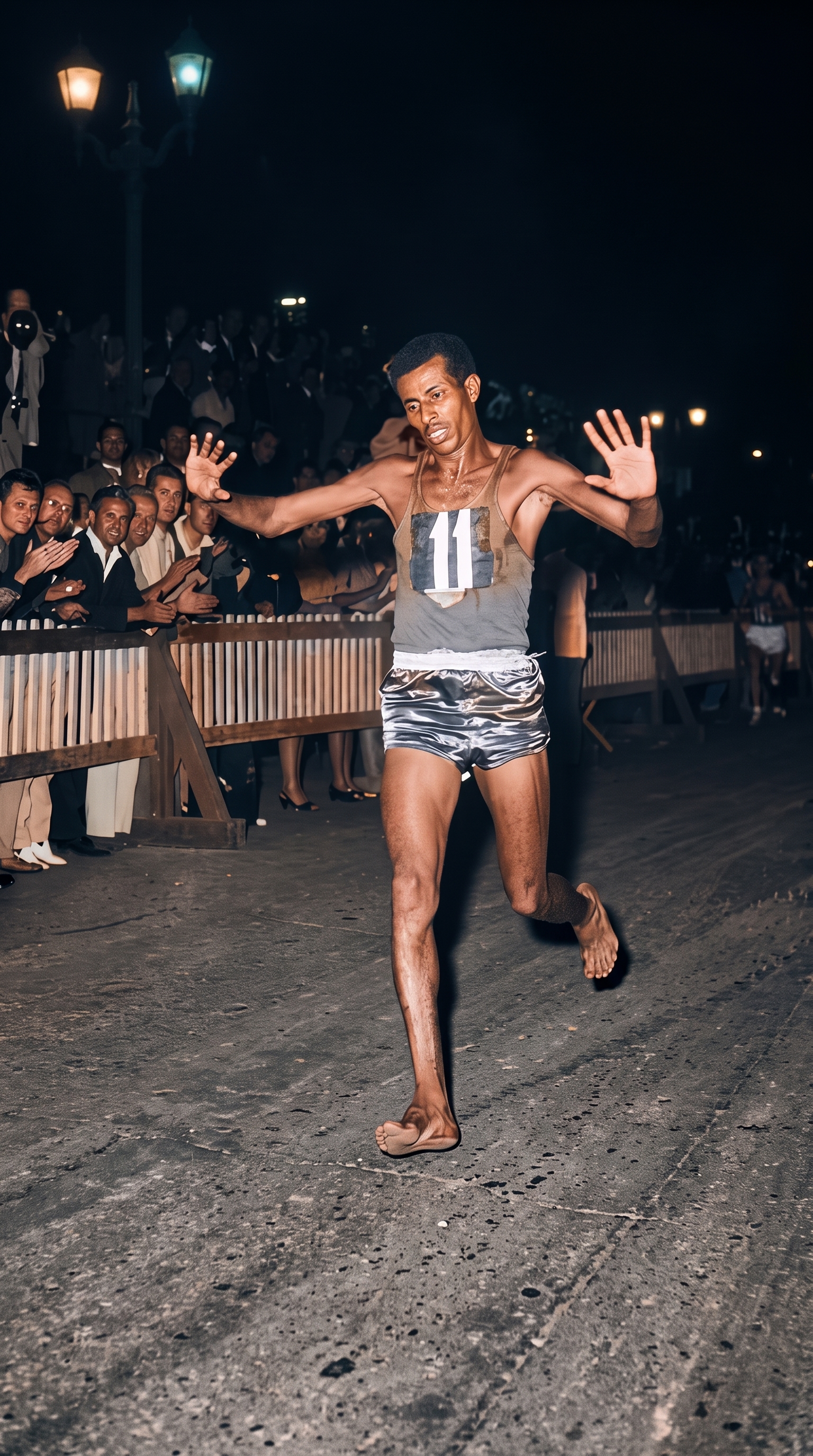
While the media was shocked, this was not entirely foreign to him. He had spent months training barefoot in the highlands of Ethiopia. His feet were conditioned for the harsh impact of the road.
Running into the night
To avoid the brutal late-summer Italian heat, organizers scheduled the marathon for the late afternoon. By the time the runners hit the halfway mark, the sun had set.
The race wound past ancient ruins, illuminated by Italian soldiers holding torches along the Appian Way. It was a dramatic setting for a brutal physical test.
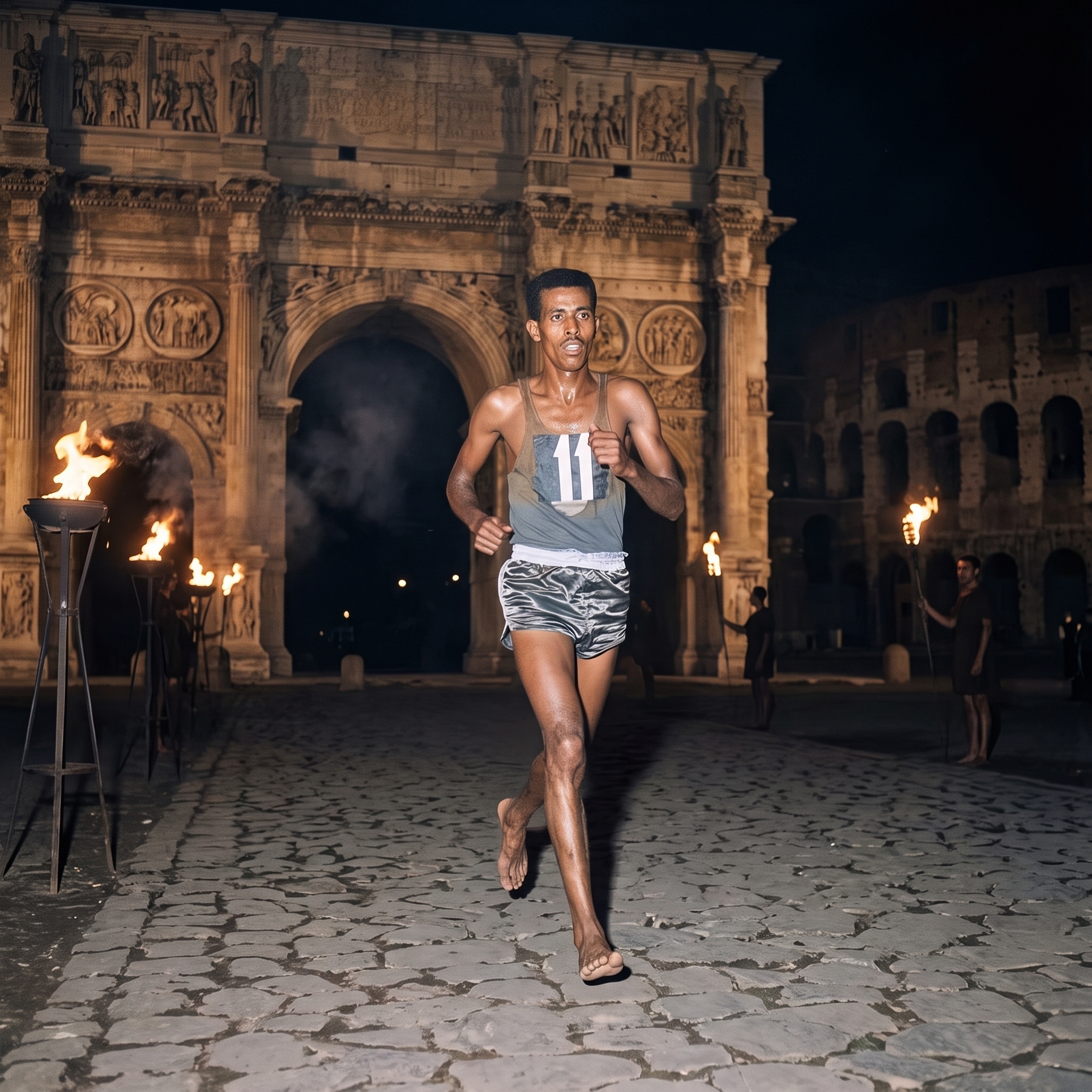
Bikila's coach, Onni Niskanen, had warned him to watch out for Rhadi Ben Abdesselam of Morocco, who was wearing bib number 26. As the race progressed, Bikila found himself running shoulder-to-shoulder with a runner, but he couldn't see the bib number. Assuming the favorite was still ahead, Bikila pushed the pace relentlessly, unaware that the man struggling to keep up with him *was* Rhadi.
A world record finish
With just a kilometer to go, past the Obelisk of Axum (a monument stolen from Ethiopia by Italian troops decades earlier), Bikila surged.
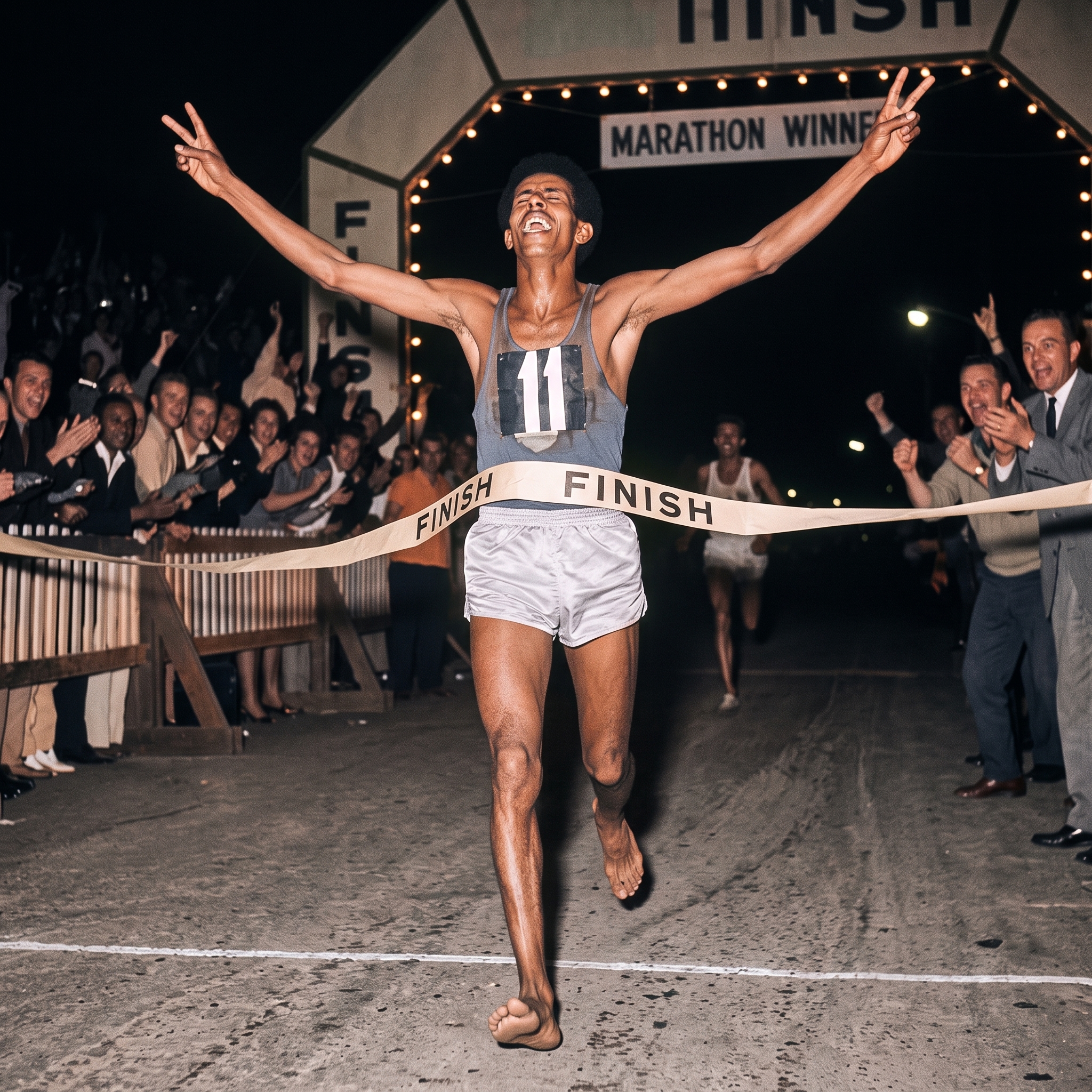
He crossed the finish line in 2:15:16, beating the existing world record by just over a second. He did not look exhausted. While other runners collapsed across the line, Bikila reportedly began performing jumping jacks and stretches, later telling reporters he felt he could have run another 10 kilometers.
!Bikila crossing the finish line barefoot
The sequel: doing it again with shoes
Critics called his barefoot victory a fluke. Four years later at the 1964 Tokyo Olympics, Bikila proved them wrong.
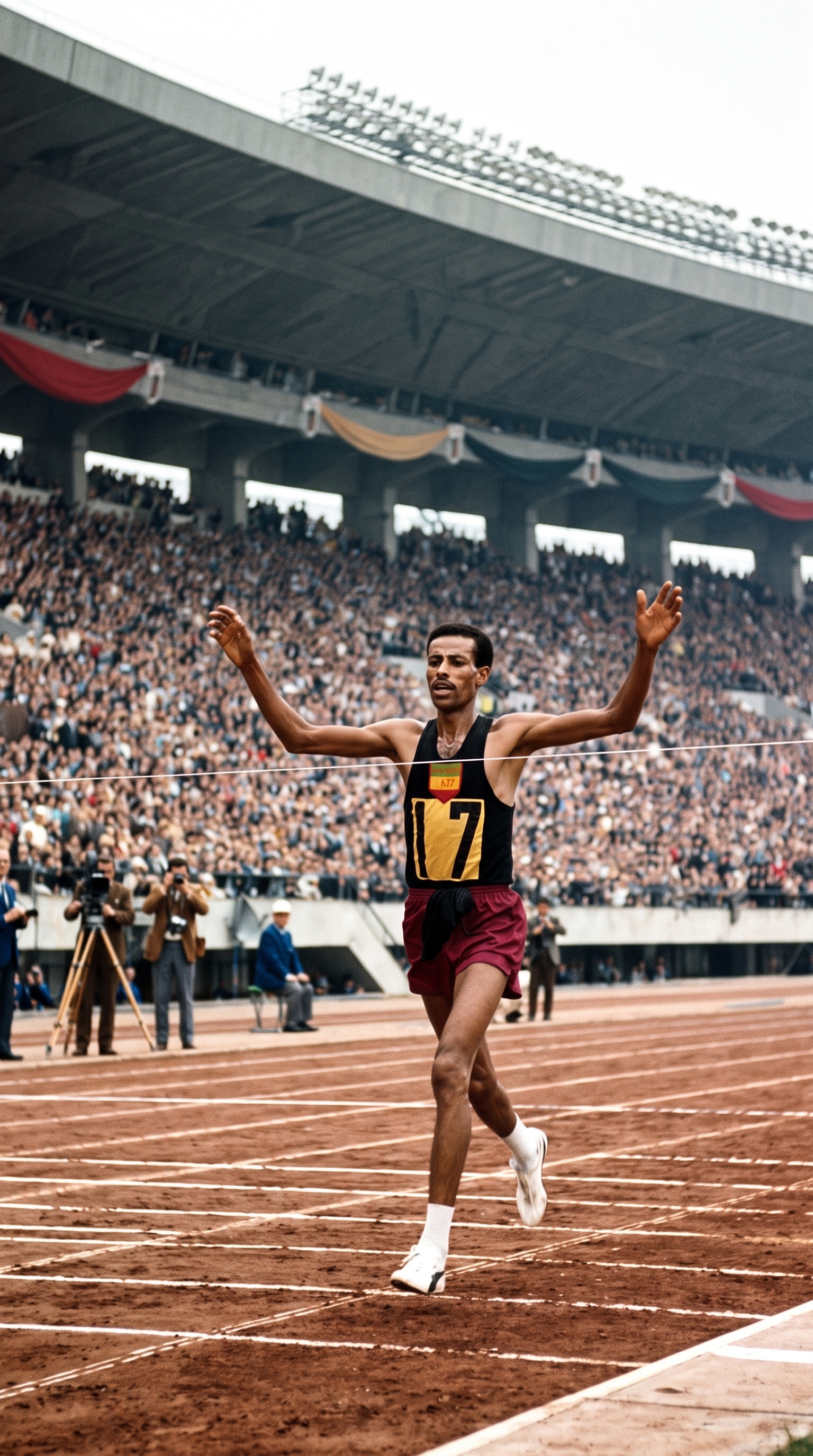
Just six weeks before the race, he underwent an appendectomy. Despite the interrupted training, he arrived in Tokyo ready to compete. This time, he wore shoes.
He dominated the field, winning his second Olympic gold medal in 2:12:11 (another world record), becoming the first man in history to successfully defend an Olympic marathon title.
!Bikila running with shoes later in his career
The legacy of the barefoot champion
Abebe Bikila did more than win medals. He shattered the psychological barrier for African runners. His victory in Rome opened the floodgates for generations of Ethiopian and Kenyan athletes who now dominate the sport.
Today, you don't need to run barefoot to chase your own marathon goals. Whether you are aiming for a world record or just hoping to finish your first race, consistent training is the key. Let our AI Run Planner build a schedule that fits your life, or use our Pace Calculator to dial in your race-day strategy.
Find races: Browse marathons and road races in Rome on Your Run Guide to experience the historic cobblestone streets for yourself. Or, if you want to find an event closer to home, search our global race directory.